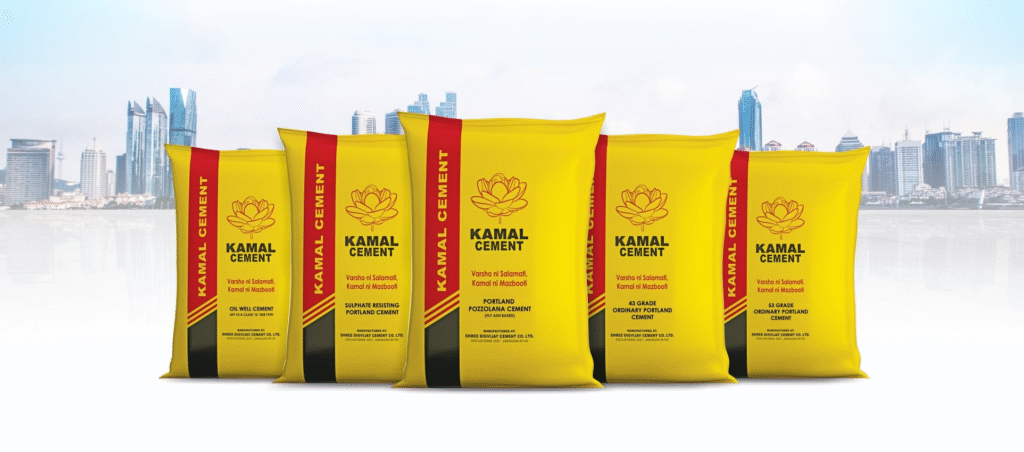
Here’s a company that makes cement but somehow manages to trade at a P/E ratio fatter than your neighborhood startup chaiwala’s margins. Shree Digvijay Cement Co. Ltd (SDCCL), incorporated in 1944, sells cement under the brand Kamal—the same Kamal you might have seen on trucks and wall paintings in dusty small towns. They just fought off a ₹22.79 crore tax demand in the Supreme Court, but investors still wonder: is this cement bag full of gold or just dust with a dividend sprinkled on top?
2. Introduction
Cement stocks in India are like political promises—always in demand, always hyped, and always dusty. SDCCL is a micro-player compared to Ultratech, Ambuja, and ACC. But unlike them, it has one quirky advantage: it owns a captive port in Sikka, Jamnagar. Yes, this cement company literally has its own “ghar ka bandar.” Imagine Ambuja explaining to Adani Port that they don’t need them because they already run their own baby port.
The brand Kamal has been around for decades. The company plays in multiple cement categories: PPC, OPC 53 Grade, SRPC (for coastal constructions), Oil Well Cement (yes, cement for petroleum wells—talk about niche), and its self-declared “Cement ka Sardar,” which sounds like a Bollywood title Ajay Devgn would star in.
The problem? Their size. With just ~1.5 million tonnes capacity (FY24 utilization at ~90%), they’re like a paanwala standing outside D-Mart. They’re visible, sure, but the big business is happening inside. The company does have growth plans, with a brownfield expansion doubling grinding capacity to 3 million tonnes by Q4FY25.
But here’s the spicy masala: despite their scale, they’re sitting at a valuation multiple usually reserved for tech unicorns. Why? Either investors see them as a hidden gem or they’re just overpaying for nostalgia.
Would you bet on a 1944-born cement company to suddenly flex like an Ambuja?
3. Business Model – WTF Do They Even Do?
SDCCL sells cement under “Kamal” brand in 50 kg bags, jumbo bags, and bulk for B2B and B2C customers. Their distribution is fairly standard—dealers, non-trade customers, and even government contracts. Their USP is not product innovation (let’s face it, cement is cement), but rather its port facility, which reduces logistics costs and ensures steady clinker import/export.
Their verticals are:
Cement Production – 13.48 lakh tonnes produced in FY24, selling 13.61 lakh tonnes.
Clinker Production – 10.34 lakh tonnes, essentially the raw stage of cement.
The “Cement ka Sardar” premium branding is basically an attempt to upsell cement with the promise of crack-free concrete. (Because clearly, all other cement brands were selling crack-full concrete?).
So, they are basically a cement maker + logistics handler + coastal port operator. A weird combo that works in Gujarat, but hard to scale nationwide.
4. Financials Overview
Metric
Latest Qtr (Jun’25)
YoY Qtr (Jun’24)
Prev Qtr (Mar’25)
YoY %
QoQ %
Revenue
₹196 Cr
₹177 Cr
₹216 Cr
10.8%
-9.3%
EBITDA
₹24 Cr
₹22 Cr
₹28 Cr
9.1%
-14.3%
PAT
₹13.8 Cr
₹11.3 Cr
₹18 Cr
22.4%
-23.3%
EPS (₹)
0.93
0.76
1.24
22.4%
-25.0%
Commentary: Q1 FY26 saw YoY growth but a clear QoQ dip. Cement players often blame monsoons, coal cost, or “weak demand sentiment.” Here, PAT margin is okayish, but annualized EPS = ₹3.72. At CMP ₹97, P/E = 26. Not bad… but wait, Screener shows 52. Why? Because last year’s profit was weak. So, whether you see this stock as “reasonable” or “laughably expensive” depends on your patience (and your calculator).