James Warren Tea Ltd: ₹161 Cr Sales, Zero Debt & Tea Estates on OLX
Date of Publishing -
Spotted a factual error — a wrong number, date, or fact? Tell us and we will check the source.
1. At a Glance
James Warren Tea Ltd is that old-school Assam tea planter (est. 1983) which has suddenly decided to behave like a real estate broker. From brewing CTC and orthodox teas to auctioning off entire estates, the company is running half as a tea producer and half as “MagicBricks for gardens.” Market cap ~₹134 Cr, Sales ~₹161 Cr, Profit ~₹35 Cr, Debt = Zero. Stock P/E? Laughably low at 3.8. Basically, the chai is strong, but the corporate story is stronger.
2. Introduction
Imagine a company with 4,000 hectares of tea gardens in Assam, certified by every European food safety norm possible (HACCP, EU MRL, Ethical Trade Partnership). It’s selling teas in Germany, UK, Japan, CIS, and even Pakistan (so basically, every cricket rival nation drinks their chai). Yet, the market values it less than the cost of a South Delhi farmhouse.
Why? Because while Tata Consumer is busy selling “organic turmeric chai latte” in New York, James Warren is still stuck selling bulk teas at Guwahati auctions, dependent on the mood swings of global tea prices. To add to the masala, they are now selling entire tea estates – Rajah Alli (₹19 Cr), Dhoedaam (₹64 Cr). Delisting from Calcutta Stock Exchange already done. Who knows, next AGM may be held in a café instead of a boardroom.
3. Business Model – WTF Do They Even Do?
Think of James Warren Tea as a hybrid:
Core business: Cultivation, manufacture, and sale of tea – both CTC and orthodox. Sales are routed via auction or private sales.
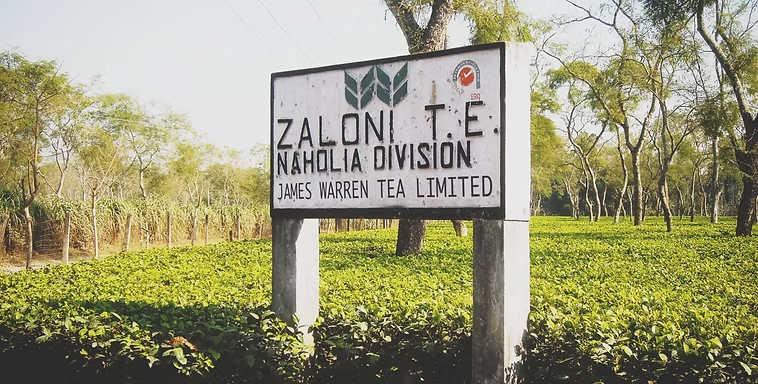
Estates: Thowra (flagship, Sivasagar), Rajah Alli, Deamoolie, Dhoedaam, Tippuk, Zaloni, Balijan. Each has its own “fan base” in Germany, UK, Japan.
Brands: Assam1860 – first Indian tea brand with 100% Rainforest Alliance approval. Fancy packaging, garden-fresh positioning.
Products: Loose tea (₹200 per 250 gm), Tea bags (nylon mesh, ₹150 per box), orthodox leaf for exports.
Revenue model (FY23):
Sale of finished goods – 89%
Other operating – 3%
Other income – 8% (read: land/asset play already creeping in).
Exports just ~3%. Rest all domestic. So the “international tea exporter” tag is more marketing than reality.