1. At a Glance
Patanjali Foods Ltd — the reincarnation of Ruchi Soya — has gone from insolvency headlines to boardroom bragging rights. It’s now a ₹63,975 Cr FMCG + edible oil giant with 25 manufacturing plants, 84 super distributors, and a yoga guru as its brand ambassador. In FY25, edible oils still pay the bills (72% of revenue), while the foods & FMCG segment tries to become the next big thing… slowly. Debt has melted from ₹3,696 Cr in FY22 to ₹788 Cr, but promoters still have 37.8% of their shares pledged, because even Swamiji believes in leverage.
2. Introduction
Patanjali Foods is basically what happens when you mix a stressed oil company, a court-approved acquisition, a heavy dose of brand yoga, and enough retail distribution muscle to make even HUL nervous in tier-2 towns.
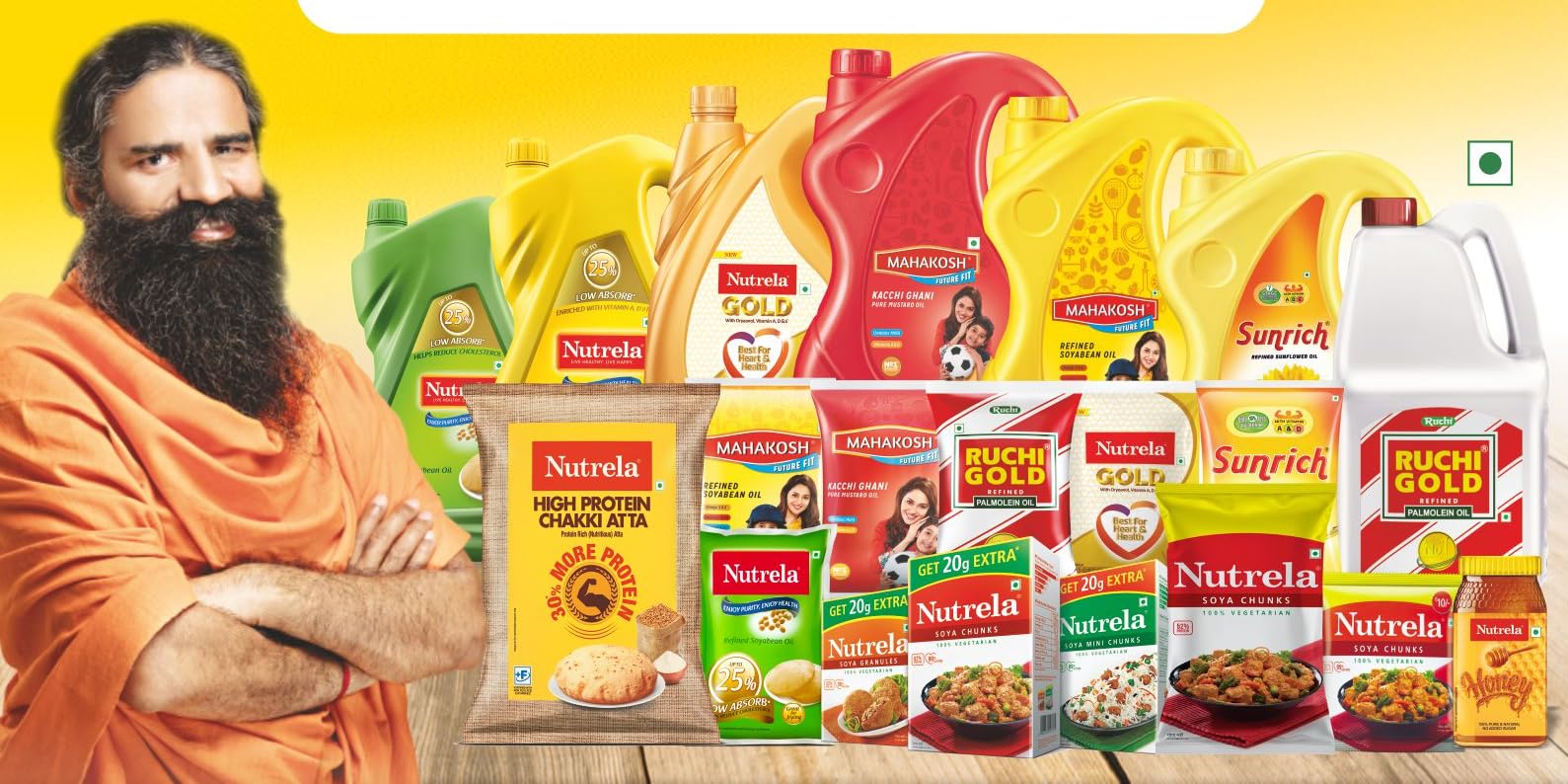
Once Ruchi Soya — a commodity oil refiner at the mercy of global palm and soya prices — it now enjoys FMCG-style gross margins in some product categories while still churning giant edible oil volumes. The brand umbrella includes Patanjali, Nutrela, Mahakosh, and Sunrich, giving it a bizarre portfolio where soya chunks sit next to biscuits, and palm oil shares shelf space with protein powder.
But make no mistake — this is still an edible oil-led giant in the middle of an image makeover. The food & FMCG push is growing in SKU count but struggling in demand. The newly approved ₹1,100 Cr acquisition of Patanjali Ayurved’s home & personal care business will