At a Glance
Wakefit makes mattresses and furniture, selling them under its own name online and in its own shops.
Sales in the year to March 2026 came to ₹1,488.94 crore, 16.9% above the year before. Sales through its own physical shops grew 49% over the same twelve months. Mattresses made up 61.4% of the total and furniture another 29.3%.
Before tax the company earned ₹91.10 crore, against a loss of ₹35.00 crore the year before. That makes the year to March 2026 the first of the two in the black.
After tax the figure is larger rather than smaller, at ₹189.18 crore. That is unusual, and it has a single cause. The company recognised a tax credit of ₹98.07 crore in the final quarter. The credit is an accounting entry for tax relief expected on past losses. No money arrived with it.
Raw material costs moved sharply in the three months to March 2026. Polyol and TDI are the two chemicals that foam is made from. On the open market they rose between 30% and 160% in that quarter. Management responded with price rises totalling 15%, spread across March and April 2026.
A mattress is mostly air held in place by chemistry. That chemistry is priced by an industry with nothing to do with beds.
The company listed its shares in December 2025. It manufactures at plants in Karnataka, Tamil Nadu and Haryana.
Introduction
Wakefit sells mattresses, furniture and home furnishings in India under its own brand.
It began in 2016 selling one thing: a mattress, compressed and rolled into a box, delivered to the buyer’s door. Cutting out the showroom and the distributor was the whole idea. A mattress that can be posted is a different product from one that needs a van and a Sunday afternoon.
From there the range widened. The company now makes furniture and smaller home items alongside the beds. It sells through its own website and through shops carrying its own name.
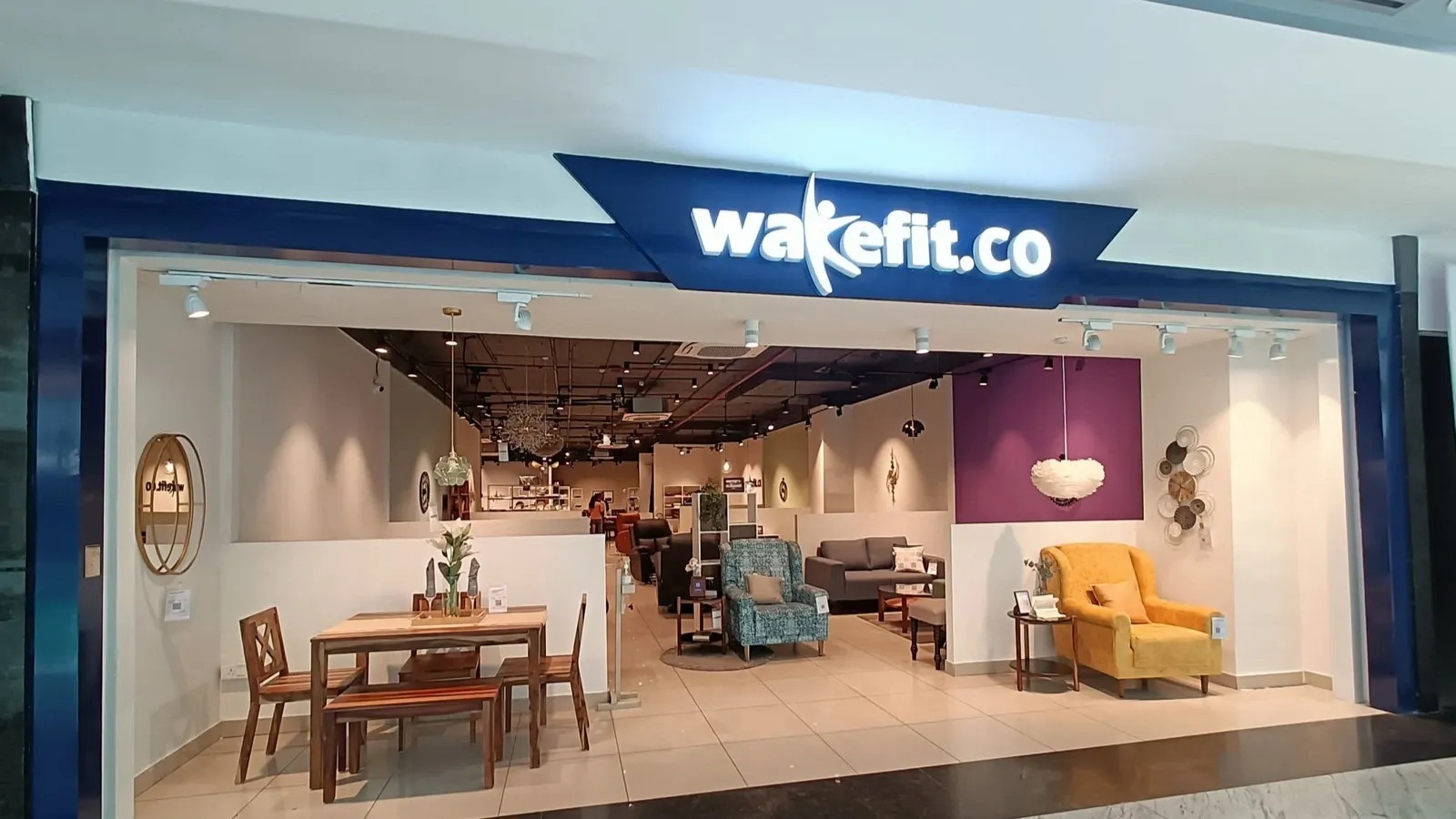
The shops are the significant change. A business built on avoiding physical retail has spent recent years opening physical retail. The openings cover the larger cities and the tier of towns below them. Sales through those shops grew 49% in the year to March 2026.
Manufacturing has not been spread as widely. Production is held at plants in Karnataka, Tamil Nadu and Haryana. Three states carry everything the brand puts in front of a buyer.
The company listed its shares on 12 December 2025. The offer raised ₹1,289 crore in total. Of that, ₹377 crore was new money for the company itself. The rest went to shareholders selling part of what they already held. An offer for sale moves ownership between people and puts nothing into the business.
The year to March 2026 was the first full year covered by those disclosures. Sales reached ₹1,488.94 crore, 16.9% above the year before. The company earned ₹91.10 crore before tax, having lost ₹35.00 crore the year before.
The products have changed, the selling has changed, and the factories have stayed where they were.
US
Now live
US Stocks terminal is live
13,000+ US tickers · EDGAR fundamentals · screener and filings feed — the same terminal, for American markets.
Explore →
Business Model: WTF Do They Even Do?
Wakefit does nearly the whole job itself: it designs the product, makes it, and delivers it to the person who will sleep on it.
That is less common than it sounds. Most furniture reaches a home through a chain of people who each add something and take something. This company engineers the foam, runs the factory, and puts the item on the doorstep.
What it sells splits three ways. Mattresses are the largest part, at 61.4% of sales in the year to March 2026. Furniture, including wardrobes made from engineered wood, accounts for 29.3%. Furnishings and décor — the pillows, sheets and smaller things — make up the remaining 9.3%.
How it reaches buyers splits two ways. Its own website and its own shops are called owned channels. They carried 67.2% of sales in the year to March 2026, up from 57.0% the year before. The rest goes through other companies’ websites and through multi-brand stores.
The difference between those two matters to a brand. On somebody else’s website, the shopper belongs to the website.
The plan joining it together is ordinary retail logic. A mattress brings a customer in. Furniture, which costs more, is what the company hopes that customer buys next. The shop network is where both are put in front of the same person.
The cost side is where the business is least in control. Foam is