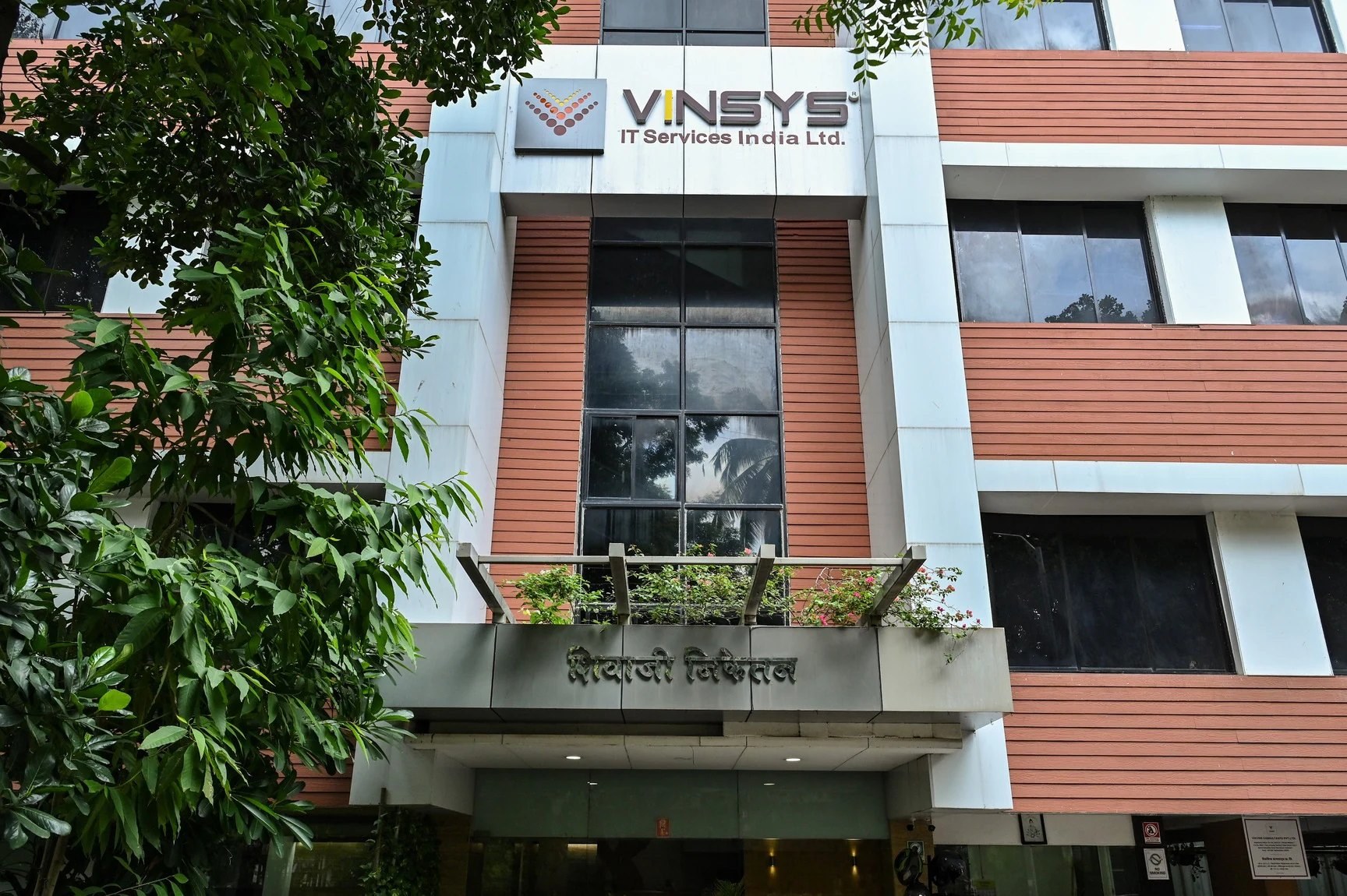
Vinsys IT Services India Ltd – H1 FY26 Results: ₹120 Cr Half-Year Sales, 30% Growth Flex, but Margins Doing Yoga Poses
1. At a Glance – Blink and You’ll Miss the Irony
₹565 crore market cap, ₹385 stock price, ROE flirting at ~26%, ROCE flexing near 29%, and a half-year revenue number of ₹120 crore that casually equals the previous half like a déjà vu meme. Vinsys IT Services India Ltd is that SME stock which looks like a disciplined IT-training monk from afar, but once you zoom in, you see ambition, acquisitions, Saudi dreams, ESOP drama, and margins that occasionally forget leg day. The company clocked ~30% YoY sales growth at the half-year level, but profits decided to take a breather, dropping YoY. Return over 3 months is negative double digits, so the market clearly woke up grumpy. Yet, with zero promoter pledging, a chunky 68% promoter holding, and global operations spanning Pune to Qatar, Vinsys is neither a meme stock nor a boring PSU uncle. It’s that overachieving cousin who studies hard, joins every extra class, but still forgets to revise before exams. Curious already? Good. That’s the point.
2. Introduction – Welcome to the Skill Factory with a Passport
Vinsys IT Services India Ltd was incorporated in 2008, back when “upskilling” wasn’t a LinkedIn buzzword but a survival tactic. Fast-forward to today, and the company operates in IT training, digital learning, software development, manpower staffing, foreign languages, and even runs something called a Business Academy—because why not add one more vertical when Excel sheets still have space?
Listed on NSE SME, Vinsys has quietly built a global footprint while many peers are still arguing with Zoom calls. The company claims to have trained over 10 million professionals, which frankly sounds like half of LinkedIn India, but the number is straight from disclosures. With operations across India, the Middle East, North America, and Africa, Vinsys behaves less like an SME and more like a mini-MNC wearing SME clothes.
But here’s the fun part: despite aggressive growth, international expansion, and a ₹47 crore FY25 order book, the stock price has been… moody. Investors seem impressed by revenue growth but suspicious about margin volatility and working capital stretching like chewing gum. So is this a global skill-training powerhouse in the making, or an over-diversified syllabus without enough exam time? Let’s open the textbook.
3. Business Model – WTF Do They Even Do?
Imagine a Swiss Army knife, but instead of blades, it has training modules, LMS platforms, staffing contracts, cybersecurity audits, and German language courses. That’s Vinsys.
Their Corporate Training & Certification vertical is the star performer, covering 17 domains and over 326 courses. This is where corporates come to upskill employees without sending them back to college. Then comes Digital Learning, which includes VR-based training (yes, goggles and all), LMS platforms, and digital content creation.
The Software Development vertical builds SaaS products, cybersecurity solutions, managed IT services, and runs proprietary platforms like VinLMS, VinCRM, VinHRMS, and VinProctomate. Basically, if there’s a “Vin” prefix, chances are Vinsys built it.
Add Manpower & Staffing, which handles hiring, payroll, and HR logistics—cash-flow friendly but working-capital heavy. Then there’s Foreign Language Services, covering 150+ languages, because global clients don’t want Google Translate embarrassing them. Finally, the Business Academy, which focuses on professional development programs.
Revenue wise, FY25 splits roughly as:
Learning Solutions: ~50%
Manpower & Staffing: ~38%
Technology Services: ~12%
Question for you: does diversification reduce risk here, or just increase Excel complexity?
4. Financials Overview – Numbers That Deserve a Slow Clap (and a Side-Eye)
Result Type Detected: HALF-YEARLY RESULTS (locked). Annualised EPS = Latest EPS × 2.
Half-Yearly Comparison Table (₹ in crores)
Source table
Metric
Latest H1 FY26 (Sep-25)
H1 FY25 (Sep-24)
Prev Half (Mar-25)
YoY %
HoH %
Revenue
120
92
120
30.4%
0.0%
EBITDA
13
15
25
-13.3%
-48.0%
PAT
9
11
19
-18.2%
-52.6%
EPS (₹)
6.02
7.45
13.01
-19.2%
-53.7%
Annualised EPS (Half-Yearly): ₹12.04
So yes, revenue grew nicely YoY, but profitability slipped. EBITDA margins compressed, PAT followed obediently, and EPS clearly didn’t get the growth memo. The sequential drop is sharper because the previous half had stronger margins. Is this temporary execution cost, Middle East expansion expense, or staffing-heavy contracts eating margins? The numbers don’t answer that—but they definitely raise an eyebrow.
Would you accept lower margins today for global scale tomorrow?
5. Valuation Discussion – Fair Value Range Only, No Crystal Ball
Let’s do this calmly.
1) P/E Method
Current Price: ₹385
Annualised EPS: ₹12.04
Implied P/E: ~32x
Peer median P/E in education & training services hovers lower, but quality global players trade higher. A reasonable educational range could be 20x–26x.
Fair Value Range (P/E): ₹240 – ₹313
2) EV/EBITDA Method
EV: ~₹588 crore
TTM EBITDA: ~₹37 crore
EV/EBITDA: ~15.9x
Sector comfort band: 12x–16x
Fair Value Range (EV/EBITDA implied equity): ₹300 – ₹380 (approximate, range-based)
3) DCF (High-Level, Conservative)
Using moderate growth assumptions, normalized margins, and conservative discounting, intrinsic value lands in a broad ₹280–₹360 zone.
Educational Fair Value Range: ₹280 – ₹360
Disclaimer: This fair value range is for educational purposes only and is not investment