1. At a Glance
Vindhya Telelinks is one of those companies that looks ridiculously cheap on paper and then quietly reminds you why markets are not charity organisations.
Market cap of ₹1,475 Cr, investments worth ₹3,098 Cr, stock trading at 0.35x book value, earnings yield north of 15% — and yet the stock is down 26% in one year. Classic Indian PSU-energy vibes, except this one is from the MP Birla Group, not the government.
Q3 FY26 slapped investors with reality:
Revenue fell 31% YoY to ₹717 Cr and PAT slipped into a loss of ₹1 Cr, wiping out the “steady compounder” narrative at least for the quarter. ROE is hovering around 5%, ROCE stuck below 8%, and working capital continues to behave like an overenthusiastic toddler.
So what is Vindhya Telelinks really?
A telecom infra veteran sitting on huge listed investments, running a low-margin EPC + cable business, heavily dependent on government-funded projects, and currently dealing with cyclical pain + execution pressure.
Is this a deep-value opportunity hidden under telecom dust… or a classic case of cheap getting cheaper?
Let’s dig in.
2. Introduction
Vindhya Telelinks is not a startup story. It is not a PE-fuelled hypergrowth dream. It is a 40+ year old infrastructure manufacturer-executor that has survived multiple telecom cycles, policy U-turns, and BharatNet delays without completely falling apart. That itself deserves a slow clap.
The company operates in two worlds:
- EPC contracts, largely funded by the Government of India
- Manufacturing of cables and fibre products, riding telecom, power, railways, and renewable infra demand
For years, Vindhya has quietly executed massive projects for BSNL, BBNL, Railways, Defence, and power utilities. No flashy concalls, no loud investor presentations, just boring execution — which worked fine when telecom capex was stable.
But FY25–FY26 has been rough.
Telecom spending slowed, EPC execution got delayed, receivables ballooned, and margins came under pressure. Add higher interest costs and you get the Q3 FY26 loss —
not because the business collapsed, but because this business has zero margin for error.
The irony?
Despite operational stress, the balance sheet investments alone are worth double the market cap.
That’s Vindhya Telelinks in one line:
Operationally average, financially paradoxical.
3. Business Model – WTF Do They Even Do?
Let’s simplify this for a lazy but smart investor.
Segment 1: EPC (≈60% of revenue)
This is where Vindhya behaves like a government contractor.
They design, procure, and execute infrastructure projects — mainly:
- Telecom networks
- BharatNet fibre rollout
- Power and utility infrastructure
Clients are mostly:
- BSNL
- Bharat Broadband Network Ltd (BBNL)
- State utilities
Translation:
✔ Big orders
✔ Pan-India presence
❌ Thin margins
❌ Delayed payments
❌ Bureaucratic execution hell
EPC is not a “great business”. It is a volume game with working capital risk, and Vindhya plays it because scale gives them survival.
Segment 2: Cables & Fibre (≈40%)
This is the slightly better business.
Vindhya manufactures:
- Optical fibre cables
- Copper communication cables
- Railway signalling & quad cables
- Solar PV cables
- FRP rods & glass rovings
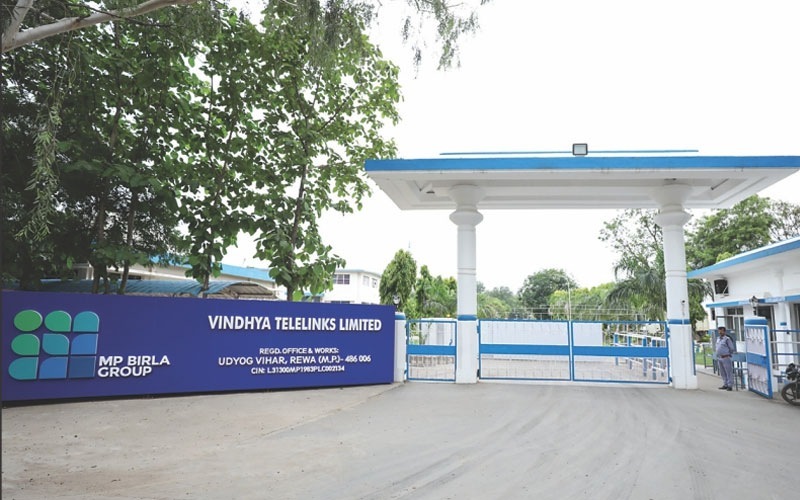
Manufacturing happens at Rewa, Madhya Pradesh, with:
- 48 lakh fibre km capacity per annum
Raw materials come largely from group companies and Hindalco, which helps with supply stability but does not magically fix margins.
This segment benefits when:
- Telecom capex picks up
- Railways expand signalling
