Vijay Solvex Ltd Q2 FY26 (Half Yearly Results) – When Mustard Oil Meets Ceramic Ambitions and Windmills That Don’t Spin
1. At a Glance
Vijay Solvex Ltd — where mustard seeds dream of becoming vanaspati and windmills dream of working again. Incorporated way back in 1987, this ₹224 crore market cap company from the Data Group is still squeezing out every drop of oil — figuratively and literally. With a current price hovering around ₹699, down 30% over the past year, VSL’s stock chart looks like a slow slide on an oily floor.
For the half-year ended September 2025, the company reported a revenue of ₹1,07,877.65 lakh (₹1,078.77 crore) and a PAT of ₹700.99 lakh (₹7.01 crore). The edible oil segment alone contributed roughly 69% of FY23 revenue, with vanaspati adding 16% and ceramics limping at 1%.
Its trailing P/E stands at a modest 12.8 — almost half the industry average of 25.6 — and its ROE of 5.52% is as humble as the company’s dividend yield (a classic 0.00%). Despite sitting on a fat book value of ₹1,094 per share, the stock trades at a mere 0.64x P/B. Value investors might call it a steal; traders might call it stale oil.
But let’s be fair: for a business balancing mustard oil, porcelain cups, and non-functional windmills, even staying solvent (pun intended) is an achievement.
2. Introduction
Imagine a family business empire that sells edible oil, makes bone china cups, and owns windmills that don’t generate power anymore. Welcome to Vijay Solvex Ltd (VSL) — the flagship edible oil division of the Data Group.
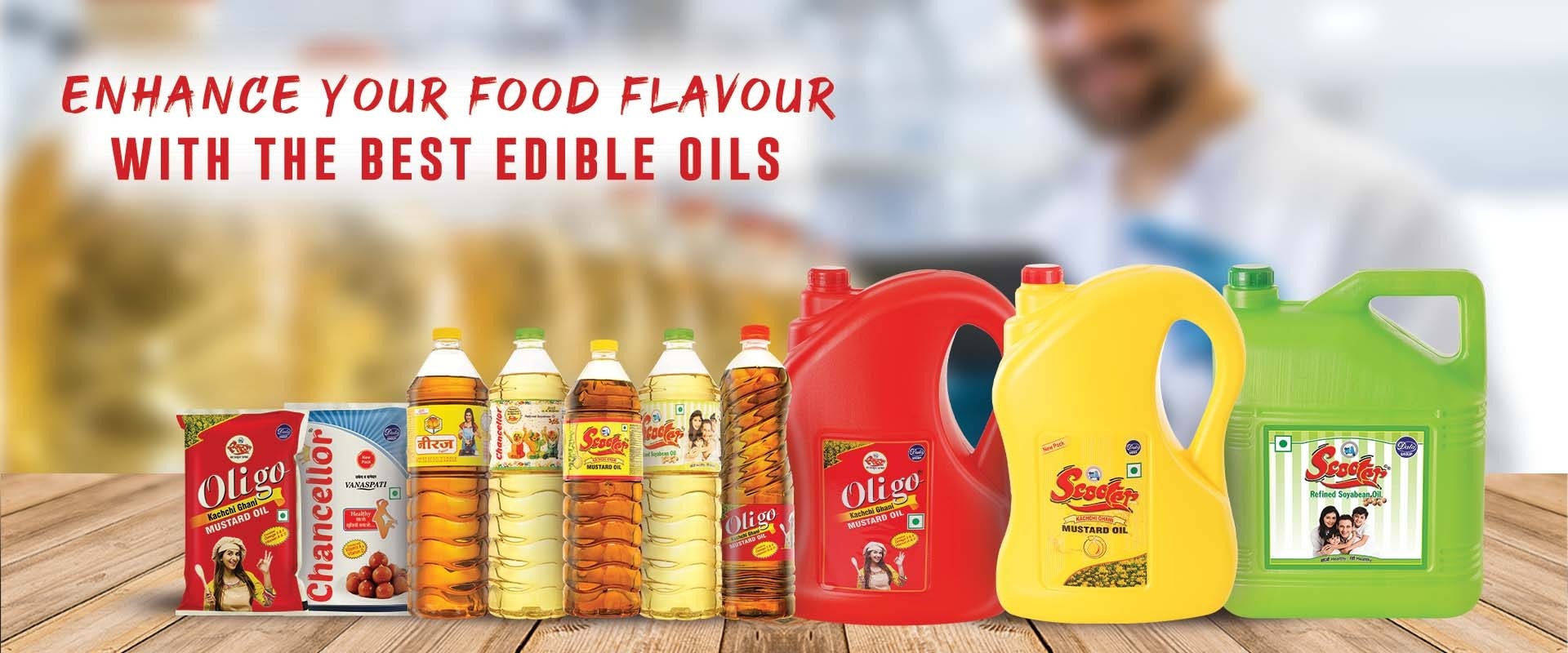
Born in Alwar in 1987, this company has been pressing mustard seeds and corporate patience alike for nearly four decades. Its iconic brands — Scooter, Chancellor, Neeraj, and Oligo — are household names across North India’s kitchens, particularly for those who still prefer the earthy sting of kachchi ghani over corporate blandness.
Yet, for all its spicy aroma, VSL’s financial curry often lacks salt. Despite ₹2,096 crore in TTM sales, operating margins barely cross 1.4%. The windmill segment, meanwhile, has been grounded due to “non-viability.” (Translation: the only thing spinning is the explanation.)
The management is tight-knit — literally a family affair — with the Data dynasty controlling nearly 69% of shares. Reappointments of Managing Director Vijay Data and WTD Daya Kishan Data have been duly rubber-stamped till 2028, ensuring that the mustard remains in the same hands.
If diversification were an art, VSL would be Picasso — making edible oils, ceramics, and power all under one corporate brushstroke. Whether this artistic blend translates to investor value is the real plot twist we’re about to explore.
3. Business Model – WTF Do They Even Do?
Let’s break this down — because Vijay Solvex’s portfolio looks like someone mixed a grocery list with an engineering catalog.
Core Business: Edible Oil. The company processes crude and refined edible oils, primarily mustard-based, under its popular Scooter, Chancellor, Neeraj, and Oligo brands. From kachchi ghani to vanaspati, it does it all — crushing seeds, refining oils, producing de-oiled cakes, and selling the leftovers too. Their extraction and refinery units in Alwar boast a capacity of 1.47 lakh TPA for extraction and 1.05 lakh TPA for refining and vanaspati production.
Ceramic & Insulator Division. Because why not? The company manufactures fine bone china crockery, ceramic gift items, grey insulators, and high-tension porcelain insulators — exported to countries like the UK, Germany, Hungary, and Sri Lanka. In FY23, this division contributed a meagre 1% of revenue — basically pocket change in ceramic form.
Wind Power. VSL owns 2.3 MW of windmills in Jaisalmer. Unfortunately, since FY23, the company has admitted that this segment “is not financially viable.” So yes, technically, it’s a wind business, but only metaphorically.
In short:
Main course: Edible oils (profitable, low margin).
Half-Yearly Results Lock: September 2025 (H1 FY26)
Source table
Metric
Latest Qtr (Sep’25)
YoY Qtr (Sep’24)
Prev Qtr (Jun’25)
YoY %
QoQ %
Revenue (₹ Cr)
615.32
431.82
460.42
42.5%
33.7%
EBITDA (₹ Cr)
8.67
5.74
2.63
51.0%
229.6%
PAT (₹ Cr)
6.09
6.22
1.06
-2.1%
474.5%
EPS (₹)
19.02
19.42
3.31
-2.1%
474.5%
Commentary: VSL’s revenue jumped a solid 42.5% YoY, proving Indians still love their mustard. But profits slipped marginally YoY despite higher sales — a classic case of inflation biting into already paper-thin margins. QoQ improvement, though, was dramatic. EPS shot up from ₹3.31 in June to ₹19.02 in September, like a pressure cooker whistle after months of silence.
Operating margin improved to 1.41% — not spectacular, but hey, it’s edible oil, not software.
5. Valuation Discussion – Fair Value Range Only
Let’s play the valuation game:
P/E Method: Current EPS (TTM): ₹54.4 Industry P/E: 25.6 Company P/E: 12.8 So, Fair Value Range = 12.8× to 25.6× EPS = ₹696 – ₹1,392
EV/EBITDA Method: EV/EBITDA = 6.74 Assume sector median = 10× Fair Value = (10 ÷ 6.74) × CMP ≈ ₹1,036