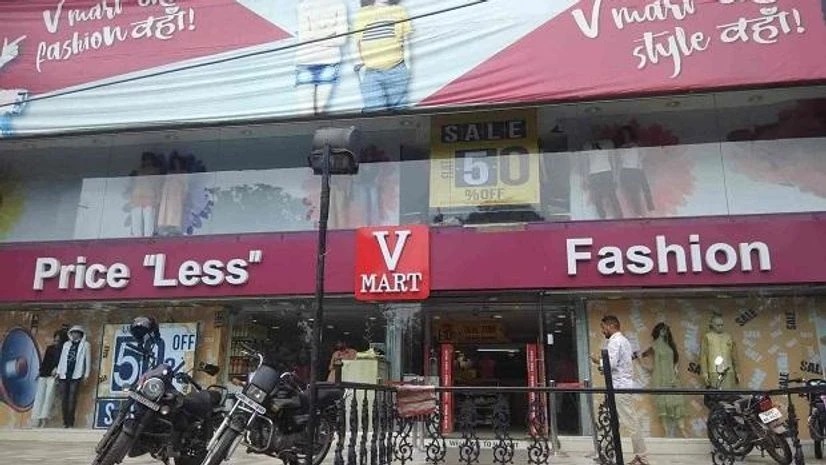
V-Mart Retail Ltd Q2 FY26 – The ₹807 Crore Quarter Where Tier-3 Fashion Went Mainstream (But Profits Played Hide and Seek)
1. At a Glance
If “Retail therapy” had a middle-class cousin from Gorakhpur, it would probably be called V-Mart. The company—India’s Tier 2 and Tier 3 fashion lifeline—just dropped its Q2 FY26 results, and the headline reads like a Netflix dramedy: Revenue up 22% YoY to ₹807 crore, but PAT down to a loss of ₹8.9 crore. You read that right—revenue was flexing while profits were ghosting.
At a market cap of ₹6,152 crore and a stock price of ₹775, V-Mart’s stock trades at a P/E of 61.1x. Meanwhile, ROE crawls at 3.08% and ROCE at 8.5%, barely enough to impress even your CA uncle. Debt stands at ₹801 crore (Debt-to-Equity: 0.95x), meaning they owe enough to fill a shopping cart at their own store.
But hey—488 stores, 42 lakh sq. ft. retail area, and 3.6 million monthly footfalls prove that Bharat still shops, especially when T-shirts cost less than a Domino’s pizza.
So, what happens when India’s most humble fashion chain tries to pull off an omnichannel glow-up while juggling losses, labour cases, and LimeRoad drama? Let’s dig in.
2. Introduction – Retail Royalty of the Non-Metro Kingdom
V-Mart Retail Limited is what happens when a Delhi startup idea meets a Patna budget. Born out of the value retail concept, V-Mart caters to the kind of shopper who compares the price tag before the design tag. Its empire stretches across Tier II, III, and IV towns, where “mall culture” is less about Zara and more about zindagi ke zaroori kapde.
Over the past decade, V-Mart has managed something remarkable—turning small-town shopping into a ₹3,499 crore annual business. It’s like the Reliance Trends of the heartland, except with fewer celebrity ads and more “Buy 2 Get 1 Free” banners.
The company’s focus? Affordable fashion. Around 80% of revenue comes from apparel, mostly priced between ₹80 and ₹800, and another 20% from footwear, FMCG, and general merchandise. Think T-shirts for ₹199, shirts for ₹499, and dreams of profitability—priceless.
But it hasn’t been all runway glamour. After acquiring the struggling Unlimited stores and fashion e-commerce platform LimeRoad, V-Mart’s balance sheet started resembling a clearance sale—everything reduced except debt. Yet, there’s method to this madness. The omnichannel strategy (offline + online) is finally kicking in, losses from LimeRoad are down 54% YoY, and V-Mart’s tech stack is getting smarter than its mannequins.
If you’ve ever wondered how Bharat shops when Amazon isn’t delivering, this story’s your answer.
3. Business Model – WTF Do They Even Do?
Let’s be honest: explaining V-Mart’s business is like explaining why your aunt still shops at Big Bazaar’s ghost outlets—it’s about trust, convenience, and discounts that make you feel rich for five minutes.
V-Mart Retail operates five main divisions:
V-Mart Aspire: Youth-focused stores flaunting trendy, low-cost fashion—basically H&M for the “bhaiya, thoda sasta lagao” crowd.
V-Mart Plus: The bread-and-butter stores serving family shoppers—shirts for dad, kurtis for mom, and frocks for the kid, all under one fluorescent roof.
V-Mart Corporate: Dubbed “Gold Line Fashion,” this one’s for working professionals who want to look good on ₹25,000 salaries.
V-Mart Values: The hyper-local avatar. Think price tags tailored to the economic pulse of smaller towns.
LimeRoad: The company’s online wing, trying to prove that even value shoppers scroll for style.
It’s a 100% leased store model—no real estate headaches, just rent headaches. Their strength lies in execution—getting new stores operational in small towns faster than politicians inaugurate them.
Their retail area of 42 lakh sq. ft. and monthly 3.6 million footfalls scream scale. And because 98% of their sales still come offline, LimeRoad’s role is to make sure V-Mart isn’t the Nokia of retail when everyone’s buying on apps.
4. Financials Overview
Metric
Latest Qtr (Sep’25)
YoY Qtr (Sep’24)
Prev Qtr (Jun’25)
YoY %
QoQ %
Revenue (₹ Cr)
807
661
885
22.1%
-8.8%
EBITDA (₹ Cr)
72
39
126
84.3%
-42.9%
PAT (₹ Cr)
-8.9
-56.5
33.6
84.3%
-126.4%
EPS (₹)
-1.12
-7.14
4.23
84.3%
-126.5%
Commentary: A turnaround? Kinda. V-Mart’s revenue growth of 22% YoY looks great until you notice the bottom line doing the limbo. Last year’s massive loss of ₹56.5 crore narrowed to ₹8.9 crore, showing signs of improvement—but one bad festive season and those numbers can vanish faster than Diwali discounts.
At ₹775 a share and annualized EPS of ₹14.5, P/E stands at 61.1x—making the stock more expensive than your gym membership you don’t use.
5. Valuation Discussion – Fair Value Range Only
Let’s do this number-by-number:
a) P/E Method: Annualized EPS = ₹14.5 Industry P/E = ~49.1 V-Mart’s P/E = 61.1
If it traded near peers (49x): Fair Value = ₹14.5 × 49 = ₹710 At current 61x: ₹885
So, P/E-based fair range: ₹710–₹885.
b) EV/EBITDA Method: EV = ₹6,930 crore; EBITDA (TTM) = ₹437 crore EV/EBITDA = 15.4x
Assume fair multiple 13–15x (sector average): Fair EV = ₹5,681–₹6,555 crore Subtract debt ₹801 crore → Fair Equity Value = ₹4,880–₹5,754 crore Divide by shares (7.94 crore) → ₹615–₹725
c) DCF (Simplified): Using FCF yield of 2% and 10% WACC → fair range ₹700–₹850.
✅ Fair Value Range (Educational Purpose Only): ₹700–₹850 per share. Not investment advice, only an auditor’s fever dream of rationality.
6. What’s Cooking – News, Triggers, Drama
V-Mart’s FY25-26 headlines read like a soap opera:
25 new stores in Q2 FY26 (21 V-Mart + 2 Unlimited)—because the cure to low margins is apparently more stores with low margins.