1. At a Glance – Shock Absorber with a Small Dent
V-Guard is that rare Indian consumer durable brand which your electrician, your parents, and your CA all trust equally. As of now, the company sits at a market cap of about ₹13,869 crore with the stock hovering near ₹318, licking its wounds after a rough year (-10% 1Y, -14% in 3 months). Q3 FY26 revenue came in strong at ₹1,403 crore, up ~10.6% YoY, while PAT slipped ~5% YoY due to a one-time ₹22.11 crore labour-code exceptional charge. Translation: business fine, accounting hiccup.
The balance sheet is clean (debt ~₹70 crore, D/E 0.03), ROCE is a respectable ~17%, and dividends keep flowing like Kerala monsoon rain (₹1.50/share for FY25). But valuation? Spicy. At ~56× P/E, Mr Market clearly believes V-Guard is more than just stabilizers and fans. Question is — is the optimism already priced in, or is there more current left in the wire?
2. Introduction – From Stabilizers to Smart Homes
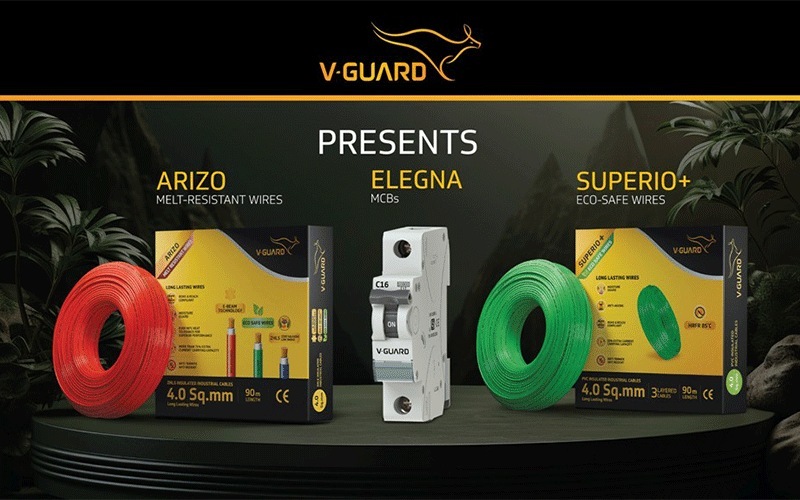
Founded in 1977 by Kochouseph Chittilappilly, V-Guard started as a humble voltage stabilizer brand in South India and slowly invaded Indian households one socket at a time. Today, it sells everything from wires, pumps, and switchgears to BLDC fans, water heaters, kitchen appliances, and smart inverters with app control. Basically, if it plugs into a wall, V-Guard wants a piece of it.
The journey hasn’t been flashy, but it has been consistent. No crazy leverage, no unrelated diversification, no “we are also entering crypto mining” nonsense. Growth has come from expanding product categories, deepening distribution, and slowly pushing premium SKUs. However, the last few years show margin pressure, rising competition, and valuation that
assumes execution will remain near-perfect. That’s where the fun (and risk) begins.
3. Business Model – WTF Do They Even Do?
Think of V-Guard as a household infrastructure brand. Not lifestyle-cool like Dyson, but deeply functional. The company operates across four buckets:
- Electricals (38.7% H1 FY26): Wires, cables, pumps, switchgear — boring but sticky.
- Electronics (30.5%): Voltage stabilizers, inverters, batteries, solar systems — the OG cash cow.
- Consumer Durables (26.6%): Fans, water heaters, air coolers — competitive but growing.
- Sunflame (4.2%): Kitchen appliances — the new kid trying to behave.
About 65% manufacturing is in-house, rest outsourced. Management wants to push this to 70–75% over the next few years via backward integration (battery plant, fan factory). Distribution is the real moat: 35 branches and 100,000+ channel partners. Try replicating that — your working capital will cry.
4. Financials Overview – Q3 FY26 Scorecard
| Metric | Latest Qtr (Q3 FY26) | YoY Qtr (Q3 FY25) | Prev Qtr (Q2 FY26) | YoY % | QoQ % |
|---|---|---|---|---|---|
| Revenue (₹ Cr) | 1,403.5 | 1,268.9 | 1,272.0 | 10.6% | 10.3% |
| EBITDA (₹ Cr) | 96 | 85 | 85 | ~13% | ~13% |
| PAT (₹ Cr) | 57.1 | 60.2 | 66.0 | -5.2% | -13.5% |
| EPS (₹) | 0.97 | 1.07 | 1.51 | -9.3% | -35.8% |
Annualised EPS (Q3 rule):
Average of Q1–Q3 FY26 EPS = (1.28 + 1.51 + 0.97) / 3
