01 — At a Glance
The Microfinance Boom That Turned into a Recession
- 52-Week High / Low₹23.8 / ₹11.2
- H1 FY26 Revenue₹1,701 Cr
- H1 FY26 PAT-₹588 Cr
- TTM EPS-₹5.40
- Annualised Loss (H1 × 2)-₹1,176 Cr
- Book Value / Share₹13.2
- Price to Book0.88x
- Gross NPA (Sep 2025)12.42%
- Net NPA (Sep 2025)5.02%
- AUM (Sep 2025)₹18,655 Cr
Flash Summary: Utkarsh just posted a H1 loss of ₹588 crore. Gross NPA went from 2.51% (FY24) to 12.42% (Sep’25) in 18 months. The bank is losing ₹1,176 crore annually at the current run rate. The stock has collapsed 46% in one year, 38% in 6 months, and 25% in 3 months. CARE Ratings downgraded the outlook to Negative. And yet, somehow, management is still talking about “cautious optimism.” If this is optimism, what does pessimism look like? A padlock on the Varanasi HQ?
02 — Introduction
A Bank That Tried to Do Good and Learned How Bad That Can Be
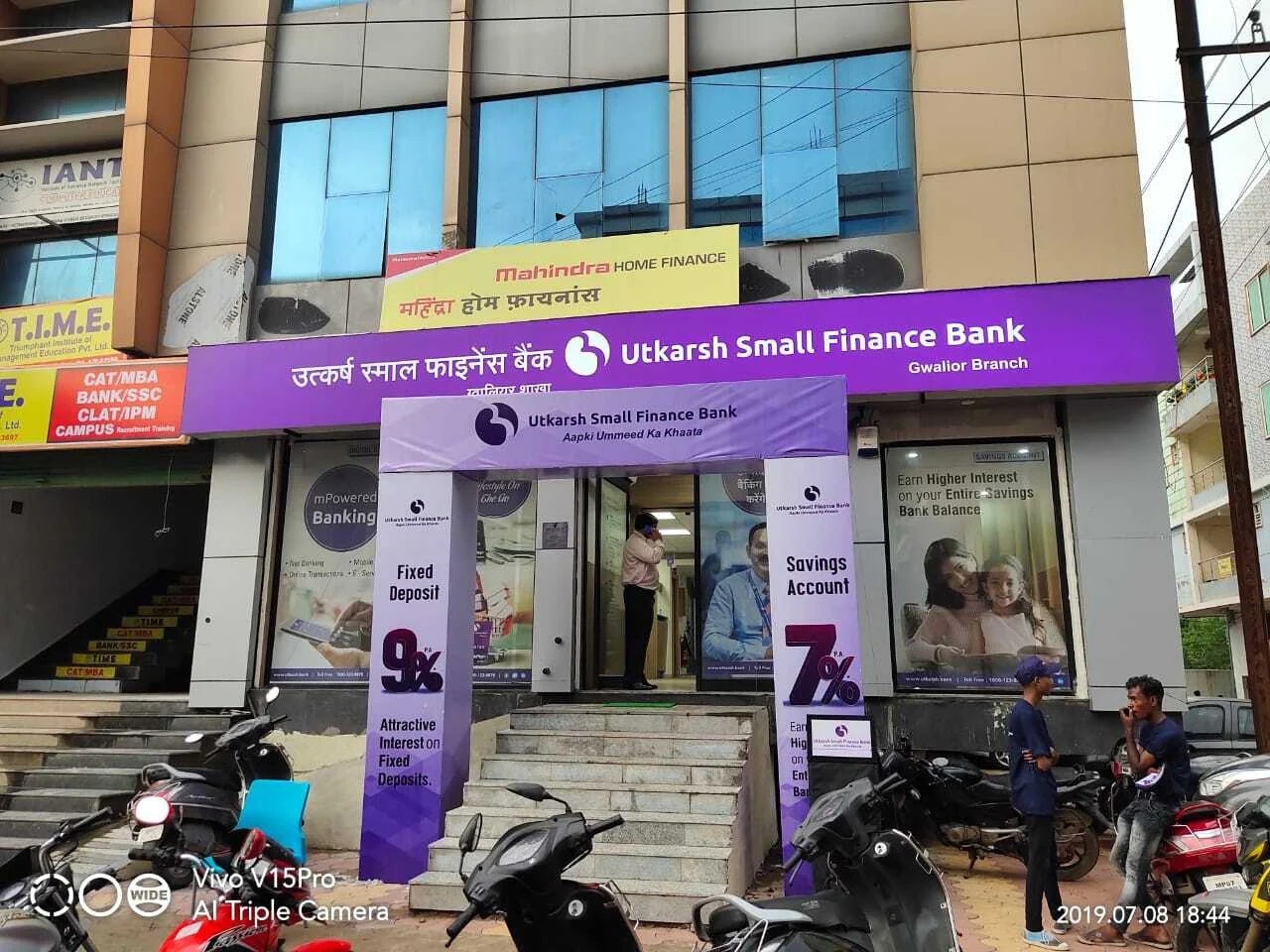
Utkarsh Small Finance Bank, headquartered in Varanasi (yes, the Ganges city), started with a mission that sounded noble: lend money to poor women in rural Bihar and Uttar Pradesh using the joint liability group (JLG) model. No collateral. Just trust. And maybe a silent prayer.
The model worked—for a while. Deposits grew. Branches expanded. By FY24, the bank had 1,092 branches across 26 states. But then came the MFIN Guardrail 2.0 regulation in April 2025. It said: “Sorry, we’re capping how much each borrower can borrow from all lenders combined.” It was supposed to prevent over-leveraging. Instead, it triggered a cascade of asset quality deterioration that would make a CFO’s heart stop.
Fast forward to Sep 2025. Gross NPA at 12.42%. Net NPA at 5.02%. H1 FY26 loss of ₹588 crore. The bank that once dreamed of being India’s rural banking hero is now fighting for survival. The concall in February 2026 had management using words like “recalibration,” “resilience,” and “cautious optimism.” All wonderful words when your balance sheet isn’t actively melting.
CARE Ratings Update (Jan 2026): Outlook revised to Negative from Stable. Capital adequacy at 17.21% (still above 15% regulatory minimum, but barely). Bank says it raised ₹950 crore via rights issue in Nov’25 to bolster capital. Tier-II bonds rated CARE A; Negative. This is what “we’re worried but not panicking” looks like in credit parlance.
03 — Business Model: Loans to the Poor via Joint Liability
Turns Out Group Lending Works Better When There’s No Group Stress
Utkarsh’s core business is microfinance—specifically, JLG loans. A group of 5-10 women jointly borrow ₹50,000 to ₹2,50,000 to start a small business (dairy, tailoring, etc.). No collateral. Social pressure ensures repayment. Beautiful model.
Then the bank realized: wait, we can also do secured loans, MSME loans, housing loans, and even commercial vehicle financing. Diversification! The loan portfolio shifted—micro-banking reduced from 62% (FY24) to 44% (Sep’25). Secured loans increased from 34% (FY24) to 47% (Sep’25). Good strategy. Bad timing.
The problem: by the time Utkarsh was diversifying, MFIN Guardrail 2.0 came along and basically said: “Your JLG borrowers? Yeah, they can’t borrow from us anymore if they’ve already borrowed from three other banks.” Overnight, the most reliable, geographically dense lending base—the thing that made Utkarsh special—became a credit time bomb.
Micro-Banking44%of loan book
Secured Loans47%of loan book
MSME Loans6%of loan book
Housing & Others3%of loan book
Reality check: By Nov’25, management guided that MBBL (Micro Banking Business Loans—individual loans vs JLG) is growing 80% YoY but is still <10% of micro-banking loans. Translation: they're desperately trying to find less-stressed lending verticals, but the damage to the JLG portfolio is too vast to offset. They're plugging holes in the Titanic with toothpicks.
04 — Financials Overview
H1 FY26: The Quarter That Made Accountants Weep