1. At a Glance – The Swiss Army Knife of Indian Healthcare (and Some FMCG Drama)
TTK Healthcare is that one company which, if explained at a family wedding, will cause at least three uncles to interrupt you mid-sentence. “Arre, they make gripe water na?” “No no, condoms!” “Wait, heart valves also?”
Yes. All of that. Together. Under one roof. With papad on the side.
As of January 2026, the company sits at a market cap of ~₹1,399 crore with a stock price hovering around ₹989. The P/E is ~20x, ROCE ~9.3%, ROE ~6.9%, and dividend yield just above 1%. Over the last three months, the stock is down ~15%, six months ~24%, and one year ~27%. Basically, the stock market has been emotionally distant, even though the company itself is operationally very busy.
Q3 FY26 numbers show revenue of ₹209 crore and PAT of ~₹11 crore, a YoY profit decline of ~6% and marginal sales growth of ~2%. Operating margins remain thin at ~3%. Debt is negligible (~₹27 crore), current ratio is a comfortable 5.7, and interest coverage is strong. Balance sheet-wise, TTK is calm. P&L-wise, it’s… complicated.
What makes TTK Healthcare fascinating is not explosive growth, but portfolio chaos: baby care, sexual wellness, medical devices, animal health, papad manufacturing, and legacy pharma vibes – all stitched together with conservative capital allocation and old-school promoter DNA.
So the real question is: is this diversification genius, or is it corporate khichdi? Let’s dig.
2. Introduction – One Company, Five Businesses, Zero Boredom
TTK Healthcare belongs to the TT Krishnamachari Group, the same lineage that gave India TTK Prestige – the pressure cooker monopoly that survived generations of Indian kitchens and pressure from mother-in-laws alike. Compared to Prestige’s clean consumer appliance story, TTK Healthcare is… adventurous.
This is not a “pure play” anything. It’s a multi-vertical healthcare + FMCG hybrid that has evolved over decades. Some businesses are ancient (Woodward’s Gripe Water has been around since 1928), some are modern (digital-first sexual wellness platforms), some are capital intensive (heart valves, orthopaedics), and some are delightfully low-tech (extruded papad).
Over the years, the company has also shown it is not emotionally attached to businesses. In FY23, it sold its Human Pharma division for ₹805 crore, a transaction that inflated profits massively that year and permanently distorted long-term P&L comparisons. That single sale explains why FY23 EPS looks like it drank six Red Bulls.
Post that sale, TTK Healthcare today is leaner, more consumer-facing, and more dependent on operational execution rather than one-off exits. The market, however, is still adjusting to this “post-Pharma-sale normal”.
Add to this:
– a failed delisting attempt,
– death of two promoter-group members,
– USAID cancelling male contraceptive orders,
– inventory write-offs,
– NPPA notices,
and you get a company that has had more boardroom drama than a daily soap.
Yet, despite all this, operations continue. Products sell. Cash flows survive. Dividends get paid. Very Indian. Very resilient.
3. Business Model – WTF Do They Even Do?
Think of TTK Healthcare as a mall, not a shop.
A. Consumer Products
This is the most recognisable face of the company.
– Woodward’s Gripe Water: Market leader in infant colic relief, sold in India since 1928. Distributed via 27 warehouses, 2,600+ distributors, 650+ salespeople, and ~4 lakh outlets. In FY25, volumes declined sharply, especially in the southern market. Management has acknowledged brand fatigue and plans a brand refresh (logo, identity) in FY26.
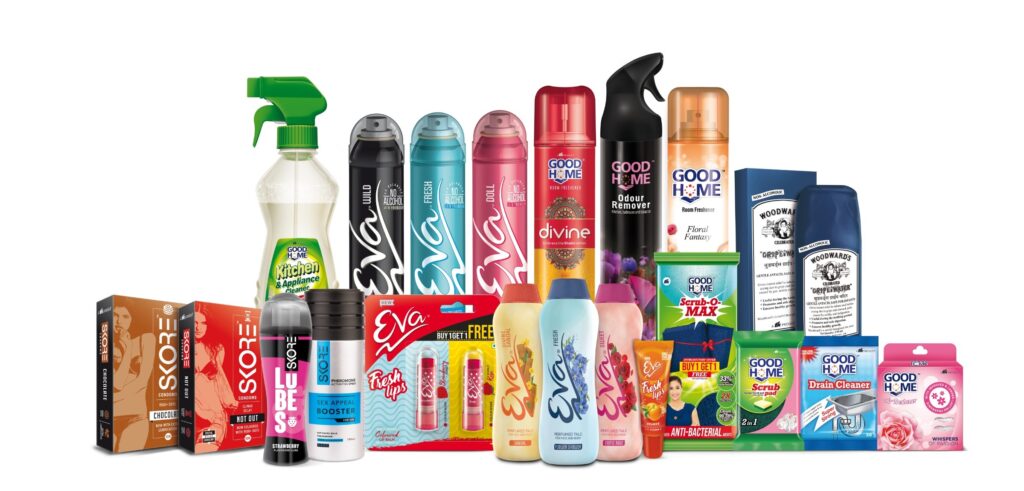
– Eva Deodorants: Grew ~5% in FY25. Rashmika Mandanna is now the brand ambassador, because apparently every Indian brand needs her.
– Good Home: Home and air fresheners. FY25 growth ~15% with new product launches.
This segment is steady, not explosive. Classic FMCG – distribution-heavy, margin-sensitive, brand-dependent.
B. Protective Devices
This is where things get spicy.
– Skore Condoms: One of the key players in India’s condom market.
– Love Depot: Digital-first pleasure products platform.
– MsChief: Another sexual wellness brand.
This segment contributes ~26% of FY25 revenue (male contraceptives). However, FY25 saw a write-off of ~₹6 crore due to USAID cancelling purchase orders post a stop-work order. This hurt profitability and exposed reliance on institutional export orders.
C. Foods Business
Yes, papad.
TTK is India’s largest manufacturer of extruded food products (fryums) with ~21,000 MT capacity. Sold B2B and via exports under the “Fryums” brand. This business is surprisingly scalable, relatively asset-light compared to medical devices, and contributes ~17% of revenue.
D. Animal Welfare Division
Veterinary products: feed supplements, fertility inducers, antibiotics, enzymes.
– Network: ~9,000 vets, ~900 stockists.
– Brands: Orcal-P, Tefroli, Ossomin, Nutricell.
This segment contributes ~16% of revenue and is quietly stable. No hype, no glamour, just cows, poultry, and repeat orders.
E. Medical Devices
The most complex and capital-heavy segment.
– Orthopaedics: Joint replacements, with technical collaborations across the US, Germany, UK, Italy.
– Heart Valves: Full in-house manufacturing (frame, disc, sewing ring), ~20,000 valves per annum capacity.
– New product: Fixed Bearing Knee (CITIUS) planned in Q1