01 — At a Glance
The Holding Company That Accidentally Became An Acquisition Machine
- 52-Week High / Low₹702 / ₹257
- Q3 FY26 Sales₹258 Cr
- Q3 FY26 PAT₹105 Cr
- Q3 FY26 EPS₹4.64
- Annualised EPS (Q3×4)₹18.56
- Book Value₹266
- Price to Book1.35x
- Dividend Yield1.87%
- Debt / Equity0.05x
- Interim Dividend (Feb 2026)₹6.70/share
The Auditor’s Opening Rant: TSF Investments closed Q3 FY26 with ₹258 crore revenue (+693% YoY, but this is a lie because of subsidiary consolidation), ₹105 crore PAT (-2.5% YoY, because new subsidiaries run at lower margins), and just threw ₹6.70 per share (134% payout) at shareholders in February. Simultaneously, they’ve bought stakes in Axles India (now 63% owner, upgraded to subsidiary in April 2025), are buying more of IMPAL (India Motor Parts) every quarter, and sold their stake in Sundaram Composite for ₹24.65 crore in September. The stock is down 41% in six months because Dalal Street cannot parse a holding company that treats M&A like a hobby and dividend distributions like a career. Let’s decode this automotive chaos.
02 — Introduction
The Sundaram Family’s Automotive Piggy Bank
TSF Investments (ticker: TSFINV) isn’t a company. It’s a holding company. And holding companies are to the stock market what sourdough starters are to a gluten-free diet — everybody thinks they’re complicated, most people have no idea what’s happening inside, and your broker probably has no framework to value them.
The company was born as **Sundaram Finance Holdings** back when the Sundaram family (one of South India’s most prominent industrialist dynasties) decided that lending money to mortals was beneath them. Pivot: We’ll buy pieces of other automotive companies instead. Today, SFHL (rebranded as TSF Investments, because “Finance” was misleading) sits on a ₹5,738 crore investment portfolio and functions as a **Core Investment Company (CIC)** — a regulatory classification that means “we buy stakes in other companies and hope you don’t ask us questions.”
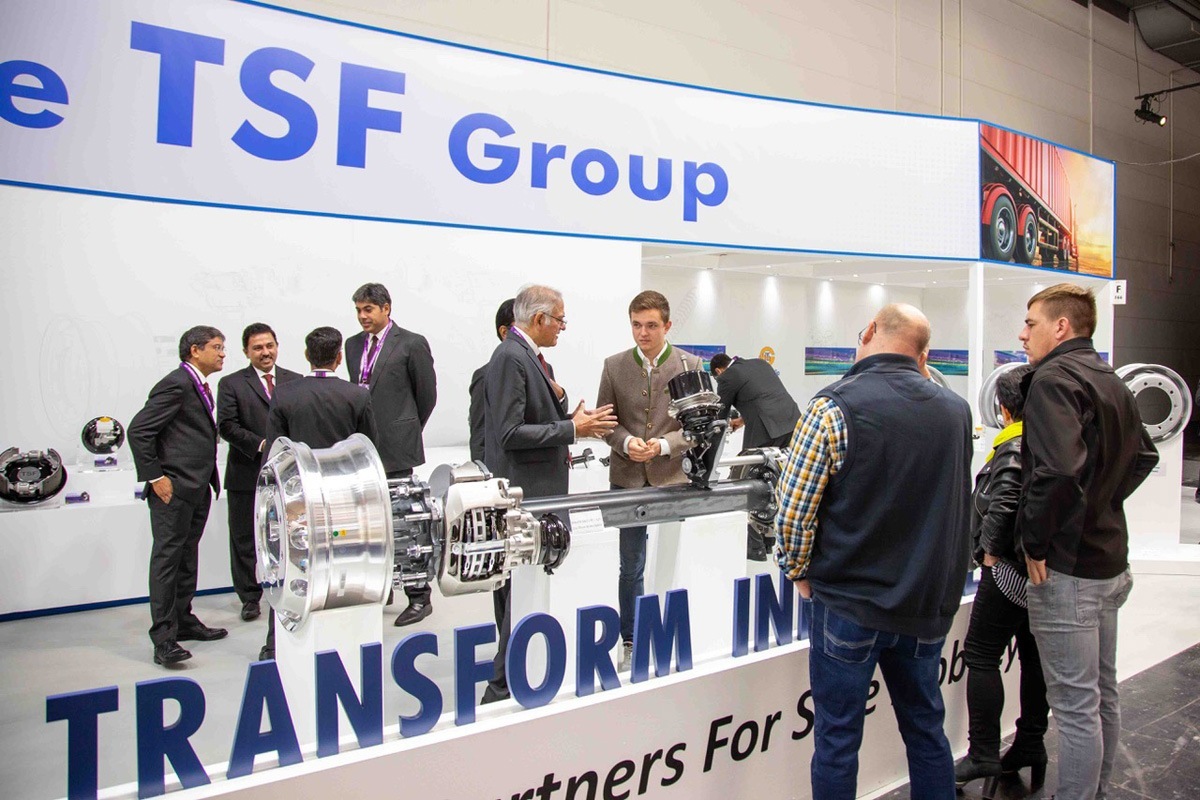
The portfolio: **Brakes India** (23.6% stake — market leader in automotive braking systems), **Turbo Energy** (32% stake — turbocharger manufacturer), **Wheels India** (24% stake — wheels and suspension), **Axles India** (63% stake as of April 2025 — newly promoted to subsidiary status), **IMPAL** (20%, expanding to 25% by June 2026 — automotive spare parts distribution), and a motley crew of foundries, die-casters, and outsourcing companies.
The chaos:
• April 2025: Bought 24% of Axles India for ₹183 crore. Suddenly a subsidiary.
• June 2025: Acquiring 5% more of IMPAL. Because apparently ₹5,700 crore in holdings isn’t enough.
• September 2025: Sold 39% of Sundaram Composite to Brakes India for ₹24.65 crore. Exit strategy.
• February 2026: Interim dividend of ₹6.70 per share (134% payout). Paid more than they earned.
• Right now: Stock down 41% in six months, trading at ₹359 against a 52-week high of ₹702.
The Real Question: Is this a holding company optimizing its portfolio for long-term value, or a dividend ATM that occasionally buys automotive companies when the mood strikes? Let’s find out.
03 — Business Model: WTF Do They Even Do?
Own Automotive Companies. Collect Dividends. Repeat.
Imagine taking ₹5,700+ crore and distributing it across a dozen automotive companies (some 25% owned, some 100% owned, some you’re actively acquiring stakes in). Then you collect dividends when their business is good, occasionally sell pieces when valuations pop, and hand 130%+ of your profit back to shareholders every quarter. That’s TSF Investments.
The structure is **Core Investment Company (CIC)** status — a regulatory classification meaning “we buy and hold stakes in other companies. That’s literally our entire business.” Zero lending. Zero NBFC regulation headaches. Just equity stakes and dividend harvest.
The portfolio breakdown (as of March 2025, with April 2025 updates):
Crown Jewels:
• Brakes India (23.6%): Market leader in automotive braking systems. Profitable. Dividend-paying. The crown jewel.
• Turbo Energy (32%): Turbocharger manufacturer. Growing. Essential for modern engines. Directional momentum.
• IMPAL (20%, expanding to 25% by June 2026): Largest automotive spare parts distributor in India. Distribution moat. Classic.
Growth Plays:
• Axles India (63%, upgraded to subsidiary April 2025): Axle housing manufacturer for commercial vehicles. Previously an associate (equity-accounted). Now consolidated. This is why Q3 revenue jumped 693%.
• Wheels India (24%): Makes wheels and air suspension. Steady, profitable, growing alongside CV demand.
Niche Positions:
• Sundaram Dynacast (26%): Precision zinc and aluminum die-casting. Technical, profitable, niche.
• Dunes Oman LLC (44%): Iron castings from Oman. International diversification (or tax optimization, depends on mood).
• SBSL (Sundaram Business Services) (100% subsidiary): Outsourcing services to Australian clients. The only unit that actually has employees doing “work.”
The Real Business Model: Own stakes → Collect dividends (₹209.52 crore in FY25) → Occasionally acquire more when opportunity knocks (Axles India April 2025) → Occasionally sell non-core stakes when valuations pop (Sundaram Composite September 2025 for ₹24.65 crore) → Hand 130%+ of profits back to shareholders as dividends because hoarding cash is not in the Sundaram DNA → Confuse the stock market with financial statements that make no sense because new subsidiary consolidations distort year-on-year comparisons.
The consolidation trap: When Axles India was upgraded from “associate” (equity-accounted) to “subsidiary” (fully consolidated) in April 2025, suddenly all of Axles India’s operational revenue and profit hit TSF’s consolidated P&L. This is why Q3 FY26 sales are ₹258 crore vs. Q3 FY25’s ₹37 crore. The “693% growth” is mostly an accounting sleight of hand. The real question: Is this making TSF more profitable? Nope. PAT was basically flat YoY, because Axles India runs at lower margins than the holding company’s pure dividend-collection model.
💬 Drop a comment: Do you think TSF should remain a pure holding company collecting dividends, or go aggressive on M&A and become an integrated auto components conglomerate?
04 — Financials Overview
Q3 FY26: The Numbers Game