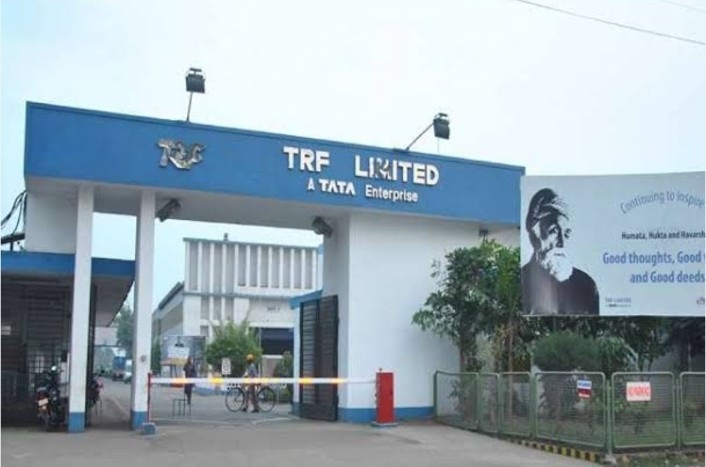
1. At a Glance – The Comeback Kid with a Limp
TRF Ltd is that Tata Group company which spent a decade in ICU and is now finally walking… slowly… with a walker. As of Jan 29, 2026, the market cap stands at ₹298 Cr, CMP at ₹272, down 33% over one year and -16.5% in the last three months, because markets hate patience.
Latest quarterly numbers? Q3 FY26 revenue at ₹19.9 Cr, down 14.7% YoY, but PAT came in at ₹5.74 Cr (yes, profits despite falling sales). ROCE is a spicy 21.8%, EV/EBITDA just 5.7x, and P/E a sleepy 17x while peers are partying at 40–80x.
Debt? Once a monster, now trimmed to ₹122 Cr. Debtor days improved from a horrifying 160 days to 93 days. Promoter holding is 34.1%, i.e., Tata Steel hasn’t run away, but also hasn’t hugged minorities tightly.
So what is this stock? A turnaround story waiting for merger closure… or a boring engineering uncle stock with good manners but poor growth? Let’s open the blue Tata file.
2. Introduction – From Capital Goods Disaster to Tata Steel’s Side Project
TRF Ltd was incorporated in 1962, which means it has survived wars, socialist India, license raj, liberalisation, and demonetisation — not bad.
For most of the last decade, TRF was a case study in how NOT to run an EPC/material handling business: collapsing revenues, huge losses, ballooning debt, and receivables that aged like whisky.
Then entered Tata Steel Limited, which today owns 34.11% of TRF. Since then, TRF has stopped behaving like an unruly PSU cousin and started acting like a disciplined Tata group subsidiary.
Losses were plugged. Legacy projects were closed. Provisions were written back. Debt was repaid using preference capital from Tata Steel. Suddenly, TRF became profitable — not fast-growing, but alive.
The catch? Sales are still shrinking. This isn’t a growth story. It’s a clean-up + merger arbitrage + survival story. Are you okay with that? Or are you still hunting for 30% CAGR
dreams?
3. Business Model – WTF Do They Even Do?
TRF is into bulk material handling systems — basically, the unglamorous but critical machinery that moves coal, iron ore, limestone, and clinker from Point A to Point B without human beings breaking their backs.
Two divisions:
Project Division
- Turnkey EPC for material handling systems
- Clients: power plants, steel plants, cement, ports, mining
- Includes design, manufacture, erection, commissioning
Product Division
- Manufacturing of equipment at Jamshedpur
- Crushers, conveyors, screens, stackers, reclaimers
Add-on business: Lifecycle Services — O&M, refurbishments, maintenance. This is boring but high-margin, recurring, and sanity-saving.
In simple terms: TRF doesn’t sell dreams. It sells steel structures, motors, belts, and engineering sweat. If India builds infrastructure, TRF gets work. If capex pauses, TRF goes into hibernation.
Question for you: would you rather own a flashy tech stock or the company that moves raw material so the tech factory can even exist?
4. Financials Overview – Profits Are Back, Sales Are Not
Quarterly Comparison (₹ Cr)
| Metric | Latest Qtr (Q3 FY26) | YoY Qtr (Q3 FY25) | Prev Qtr (Q2 FY26) | YoY % | QoQ % |
|---|---|---|---|---|---|
| Revenue | 19.89 | 23.31 | 22.34 | -14.7% | -11.0% |
| EBITDA | 6.70 | 11.51 | 5.07 | -41.8% | +32.1% |
| PAT | 5.74 | 11.27 | -6.81 | -48.4% | Massive |
| EPS (₹) | 5.22 | 10.24 | -6.19 | -49.0% | Massive |
Annualised EPS (Q3 rule):
Average of Q1, Q2, Q3 EPS × 4 ≈ muted, but trailing EPS stands at ₹5.42.
Commentary:
- Revenue decline is structural, not accidental
- Margins are volatile due to project nature
- Profitability largely supported by
