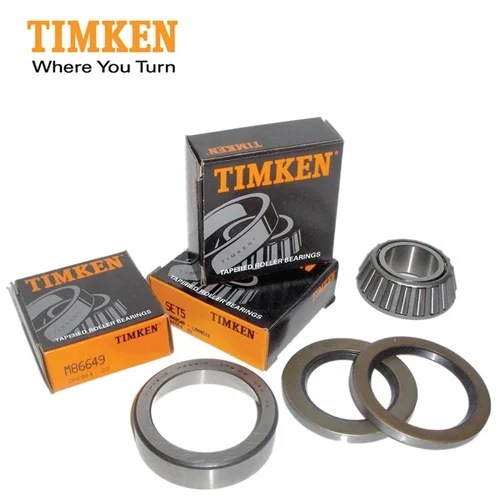
1. At a Glance – Blink and You’ll Miss the Drama
Timken India is currently a ₹23,979 crore market cap industrial aristocrat trading at ₹3,190, flexing a 55.7x P/E, a ROCE of ~21%, and a balance sheet so clean it could pass a forensic audit without deodorant. Over the last 3 months, the stock is up 5.5%, over 6 months ~10.9%, and over 5 years ~19% CAGR, which is respectable… until you notice the 3-year return is just ~2%. That’s not compounding — that’s a long industrial nap.
Latest Q3 FY26 results (Dec 2025) show Revenue ₹764 crore (+13.8% YoY) but PAT collapsed to ₹49.8 crore (-32.9% YoY). EPS came in at ₹6.63, which at a ₹3,190 price basically asks investors to believe in destiny, parent support, and Bharuch plant blessings.
Debt? ₹15 crore — basically pocket change. Dividend yield? 1.13% — polite but not seductive. Promoter holding stands at ~51%, down materially from ~68% two years ago, while DIIs have marched in like disciplined army units.
If this were a Bollywood movie, Timken India is the disciplined elder son — great pedigree, strong morals, but currently going through a midlife valuation crisis.
So the question is simple:
Is this a temporary profit hiccup… or a structural margin migraine?
2. Introduction – From Tata Timken to Global Machine Royalty
Timken India began life in 1987 as Tata Timken Limited, a 40:40 JV between TISCO and The Timken Company. By 1999, Timken USA said “thank you Tata ji” and bought out the Indian parent. Since then, Timken India has been the Indian arm of a global bearings and power transmission empire operating in 42 countries.
This is not a commodity bearing company selling grease-soaked metal rings from a roadside godown. Timken plays in engineered bearings, tapered roller bearings, spherical & cylindrical roller bearings, and increasingly in industrial services, automation, renewables, and railways.
India contributes ~73% of revenue, the US ~18%, and others ~9%. On a geographic basis, North America still drives ~48% of group exposure, but Timken India itself is largely an India growth story riding
capex cycles, railways, mining, renewables, and aftermarket demand.
But here’s the twist:
Despite solid long-term growth, Timken India is now priced like a SaaS company, while behaving like a capital goods manufacturer with depreciation, capex, and tax officers knocking regularly.
That mismatch is where today’s discomfort begins.
3. Business Model – WTF Do They Even Do?
Let’s simplify Timken India for a lazy but smart investor.
Step 1: They Make Bearings
But not bicycle bearings. These are high-load, high-precision bearings used in:
- Railways
- Wind turbines
- Mining equipment
- Construction machinery
- Aerospace & defence
- Trucks and heavy vehicles
- Industrial automation
Step 2: They Sell Engineering, Not Just Metal
The company also sells:
- Linear motion systems
- Lubrication systems (via Beka)
- Drives, gears, belts, chains
- Clutches & brakes
- Maintenance contracts & refurbishment
So once a Timken bearing enters a factory, Timken engineers don’t leave. They invoice again.
Step 3: Parent R&D Does the Heavy Lifting
Timken India benefits massively from Timken USA’s global R&D, plus the Timken Technology Centre in Bangalore, one of only four globally. That means:
- Lower R&D risk
- Faster product localization
- Ability to enter new sectors like renewables & rail
Step 4: Manufacturing Muscle
Plants at:
- Jamshedpur – tapered roller bearings
- Bharuch (Gujarat) – cylindrical, spherical & slewing bearings
And yes — ₹700 crore capex later, Bharuch is now operational.
So the business model is rock-solid.
The question is execution during heavy capex years.
4. Financials Overview – Numbers Don’t Lie, But
