Thirumalai Chemicals Ltd Q2 FY26: ₹445 Cr Sales, ₹–33 Cr Loss, Debt Hits ₹2,086 Cr — Is This Capex Hangover or a Chemistry Experiment Gone Wrong?
1. At a Glance
Welcome to Thirumalai Chemicals Ltd (TCL) — where chemistry isn’t just a science, it’s a mood swing. The ₹2,713 crore market-cap company closed Q2 FY26 at ₹265 per share, down over 8% in 3 months and 20% in a year, giving investors more acidity than its Malic Acid product.
Revenue for Q2 FY26 stood at ₹445 crore, down 15.2% YoY, and net loss widened to ₹33.4 crore. The company’s margins have melted faster than sugar in acid, with OPM slipping to –1.9% and PAT margin deep in red at –7.5%. Meanwhile, debt balloons have floated to ₹2,086 crore, courtesy of an ongoing ₹705 crore capex and a 40,000 TPA U.S. plant that’s still under construction.
With an ROE of –4.13% and a microscopic ROCE of 0.26%, Thirumalai Chemicals right now looks like it needs a caffeine shot stronger than its sulfuric acids. Promoter holding dropped 5.7% last quarter (ouch!), while the company raised ₹450 crore via preferential allotment at ₹277 per share to fund its U.S. dreams. Investors are asking — is this expansion chemistry, or just toxic leverage?
2. Introduction – The Acid Trip of FY26
Let’s start with a chemical reality check. Thirumalai Chemicals Ltd, one of India’s largest producers of Phthalic Anhydride (PAN), Malic Acid, Fumaric Acid, and Diethyl Phthalate (DEP), has built its empire on molecules that make other industries shine — plastics, paints, foods, and fragrances. Ironically, it’s the one looking faded right now.
This is the same company that once flaunted 22% operating margins (FY22), but has since been smacked by commodity volatility, energy prices, and global demand stagnation. Imagine a chemistry topper who suddenly forgot the periodic table — that’s Thirumalai’s profit curve.
The FY24 margin collapsed to 2% (down from 9% in FY23), and now it’s chilling at negative territory. Meanwhile, the management’s “expansion-first, profit-later” approach is in full swing, with a ₹705 crore Dahej capex and an ambitious U.S. greenfield plant underway.
And yet, there’s something oddly fascinating here — despite everything, the company keeps pushing. Maybe it’s blind optimism, maybe it’s a strategic masterstroke, or maybe it’s just… a lab experiment gone long-term.
3. Business Model – WTF Do They Even Do?
Thirumalai Chemicals is not your average paint-and-powder stock. It makes the stuff that makes the stuff — the chemical backbone of everything from Asian Paints’ hues to Parle’s tangy candies.
Here’s a simple breakdown:
Phthalic Anhydride (PAN) – The company’s bread and butter. Used in plasticizers, pigments, and resins. Basically, if it bends or shines, PAN had a hand in it.
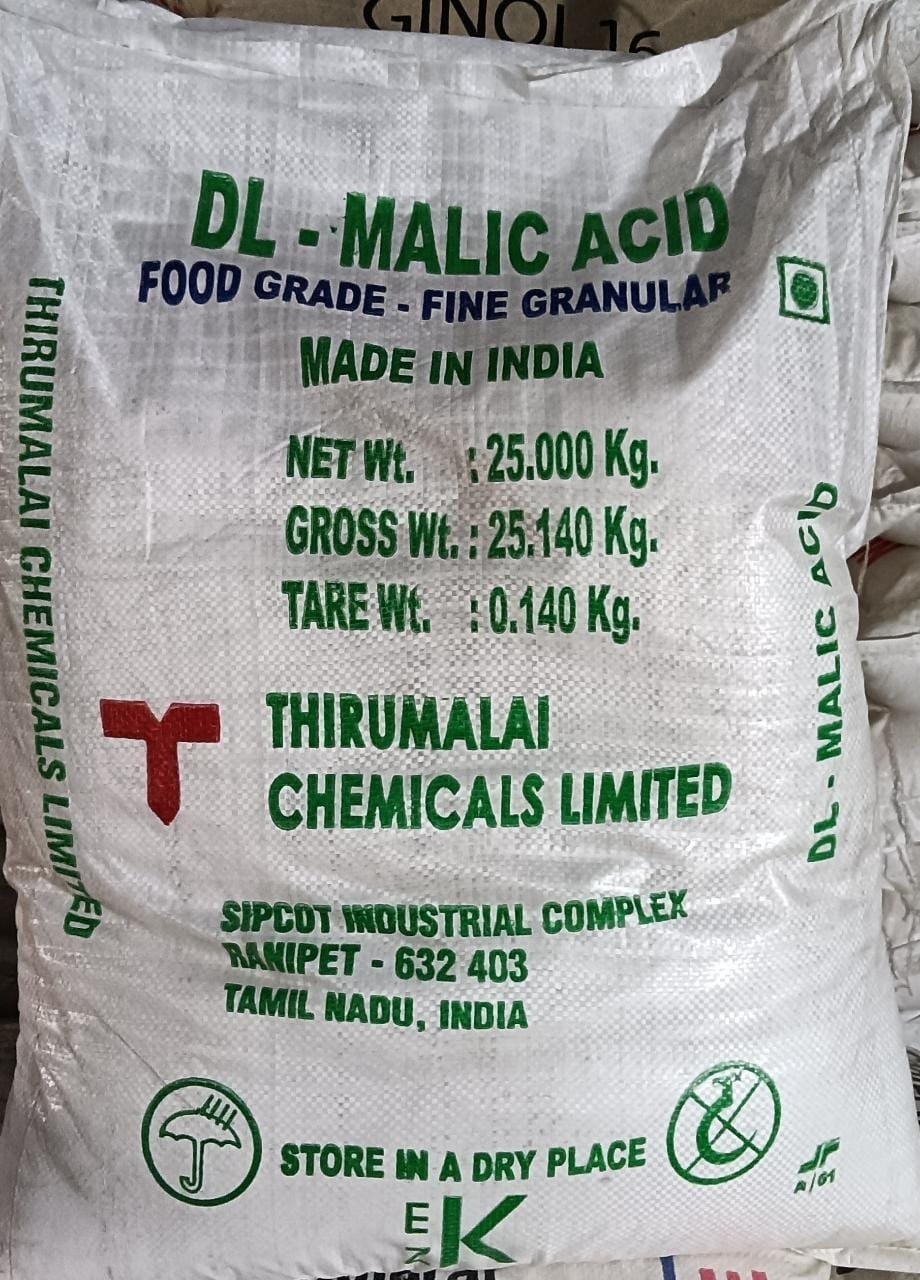
Malic Acid – Gives that tart kick to beverages and candies. Also used in skincare and metal cleaning. Fun fact: TCL is the only producer of Malic Acid in Southeast Asia.
Fumaric Acid – A workhorse used in food, pharma, resins, and animal feed. Thirumalai is the largest producer in India and Southeast Asia.
Diethyl Phthalate (DEP) – Used to make plastics flexible, perfumes stable, and toothbrushes durable.
The company operates two manufacturing units — Ranipet and Dahej, with total capacity of 1,72,000 TPA, plus a Malaysian plant through a subsidiary.
So yes, they make acids, esters, and anhydrides — not the kind that burn through your hand, but maybe through your portfolio (temporarily, we hope).
Commentary: TCL’s top line may have only slipped modestly, but the bottom line fell like a lead balloon. EBITDA is negative, profit is MIA, and the P/E ratio? Let’s just say it took early retirement. However, compared to the previous quarter’s ₹–60 crore loss, the ₹–33 crore loss actually feels like progress — in the way losing less hair feels like regrowth.
5. Valuation Discussion – Fair Value Range (Educational Purpose Only)
Let’s play chemist and crunch a few educational numbers.

One Response
Good evaluation but peer comparison is with wrong companies. The only one competitor is IG Petrochemical because both are manufacturing same products