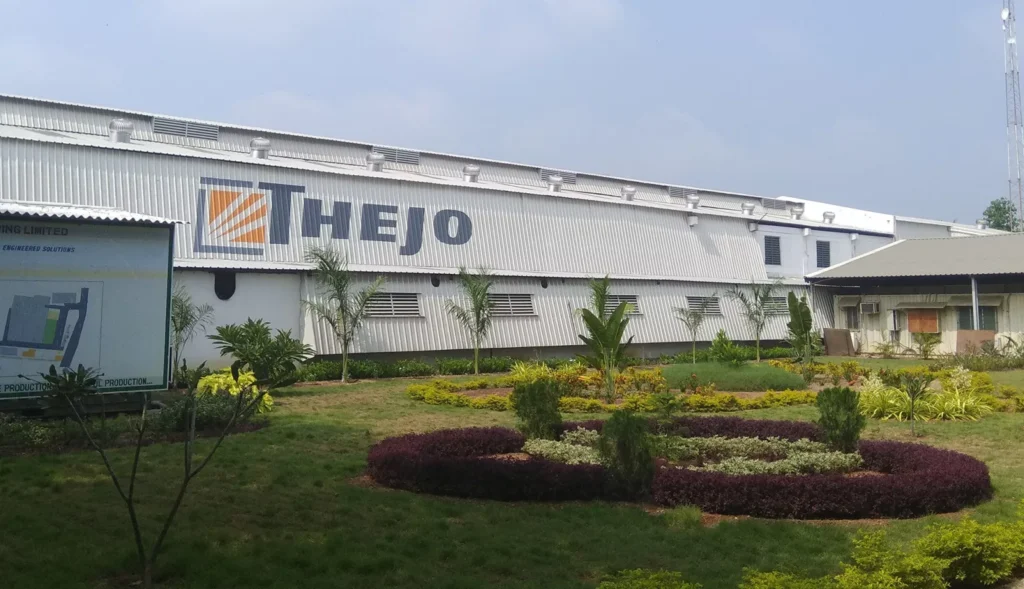
1. At a Glance
Thejo Engineering isn’t making memes or apps—it’s in the gloriously unsexy world of bulk material handling. Since 1986, they’ve been keeping mining, steel, cement, and ports moving by designing and manufacturing engineered rubber and polyurethane products—belt cleaners, spillage controls, impact beds, abrasion protection kits, the works. FY25 saw ₹552 Cr revenue, ₹52 Cr PAT, and an ROCE of 22%. Sounds steady… until you notice the stock’s 1-year drop of 26% and a P/E of nearly 50. That’s right—investors are paying luxury-handbag prices for conveyor-belt margins.
2. Introduction
When people say “industrial products,” they picture big machines, sparks flying, maybe some hard hats. Thejo is the silent partner in all that noise—making the small, tough, high-wear parts that keep conveyor belts from tearing themselves apart.
They sell into mining, power, steel, cement, ports, fertilisers—basically the kind of industries that measure raw material in tonnes, not kilos. If your business involves moving mountains (literally), Thejo’s the one keeping your belts clean, your material flow smooth, and your equipment corrosion-free.
In the last decade, Thejo’s grown revenues by ~11% CAGR, profits by ~14% CAGR, and somehow kept ROE above 18%. The problem? FY25’s growth hit a speed bump with revenue dipping 1%, PAT dropping 9%, and the market clipping the stock price like a bored barber.
3. Business Model (WTF Do They Even Do?)
- Core Products – Rubber & polyurethane engineering components for belt cleaning, spillage control, abrasion/impact protection, screening systems.
- Services – On-site installation, maintenance, and performance contracts
- for core sector industries.
- Revenue Mix – Primarily from India, but with a growing export footprint.
- Moat – Deep domain expertise + long-term industry relationships + customised solutions for harsh operating environments.
The business thrives on industrial capex cycles—when mining and steel expand, Thejo rides along. But unlike consumer goods, you can’t just “create demand”—you’re chained to industrial health.
4. Financials Overview
FY25 Revenue: ₹552 Cr (↓ 1% YoY)
FY25 PAT: ₹52 Cr (↓ 9% YoY)
OPM: 16% (vs 18% FY24)
ROCE: 22.1%
ROE: 18.2%
EPS: ₹46.00
📌 Fresh P/E Calculation
Q4 FY25 EPS = ₹14.03 → Annualised = ₹56.12
CMP ₹2,271 → P/E = 40.5 (vs TTM 49.3—slightly better looking in quarterly extrapolation).
🗯 Auditor-style aside: “Margins fell, profits dipped, but P/E stayed rich—either the market knows something or we’re all just romanticising conveyor parts.”
5. Valuation
1️⃣ P/E Method
Peer median P/E ≈ 50 (Kaynes Tech excluded to avoid distortion).
Fair Value = ₹46 × 40 = ₹1,840
2️⃣ EV/EBITDA Method
FY25 EBITDA = ₹88
