1. At a Glance
₹551 crore market cap. Stock price hovering around ₹105. Down 39% in one year, down 33% in six months, and still trading at 0.76× book value like a discounted Diwali sofa nobody wants to lift upstairs. On paper, this looks like a value investor’s buffet — low price-to-book, promoter holding of 72.1%, zero pledge, and a sudden 178% YoY jump in quarterly profit.
But then you notice the fine print.
Debt at ₹528 crore, interest coverage of 2.14, contingent liabilities of ₹519 crore, and cash flows that behave like Mumbai weather — unpredictable and slightly threatening.
Latest quarter (Q3 FY26) shows ₹82.3 crore revenue and ₹13 crore PAT, with EBITDA margins staying north of 23%. Looks respectable. But zoom out, and the stock has delivered 0% return over five years. So the obvious question — is this a hidden turnaround story or just a very well-dressed financial maze?
Let’s open the hood.
2. Introduction – A Financial Supermarket with Too Many Aisles
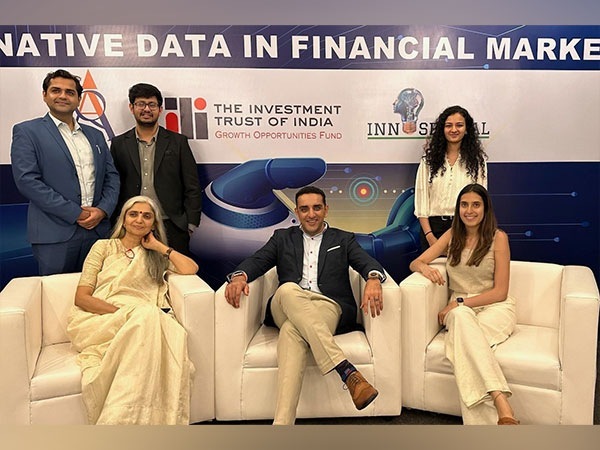
The Investment Trust of India Ltd (TITIL) was incorporated in 1991 and decided very early that focus is overrated. Lending? Yes. Broking? Yes. Mutual funds? Obviously. Gold loans, education loans, distressed assets, investment banking, PMS, equity research, commodities, startups, and probably astrology consulting (okay, not yet).
This is not a single business. This is a financial services thali — a little bit of everything, served hot, but with no idea what the main course is.
Over the years, TITIL has created 11 wholly owned subsidiaries, multiple step-down entities, associates, and recently even a jewellery charter company. The corporate structure looks less like a pyramid and more like tangled earphones.
Yet despite all this complexity, FY25 delivered ₹362 crore in revenue and ₹46 crore in PAT, while TTM PAT slipped to
₹35 crore, showing volatility that would make a crypto trader proud.
So, is diversification helping or hiding something? Let’s break it down.
3. Business Model – WTF Do They Even Do?
Think of TITIL as a financial holding company with ADHD.
a) Financing Activities
This includes:
- 3-wheeler & CV loans
- Gold loans
- Education loans
- Micro business loans
- Personal loans for students & faculty
This vertical contributed ~13% of FY23 revenue, but carries a disproportionate chunk of the ₹528 crore debt. Lending is leverage-heavy by nature, but returns here are modest — ROA at 3.23%, ROE at 6.22%.
b) Broking & Trading
The star performer.
- Brokerage & related services contributed ~48% of FY23 segment revenue.
- Includes equities, derivatives, commodities trading via subsidiaries like ITI Securities and Antique Stock Broking.
This is where margins come from — but also where earnings fluctuate violently with market cycles.
c) Investment Banking & Advisory
IPO advisory, corporate advisory, startup advisory. Sounds fancy. Contributes ~11% of revenue. More brand-building than cash machine.
d) Asset Management & Investment Services
Debt securities, long-short equity fund, startup-focused growth fund. Only ~3% of revenue, but high headline value.
e) Mutual Fund Distribution
Low-margin, volume-driven, competitive. No
