01 — At a Glance
The Engine Maker That Runs India’s Farm Economy
Q3 FY26 delivered ₹473 crores in revenue with ₹42.10 crores net profit. Full-year FY25 saw ₹1,682 crores in sales and ₹166 crores in PAT. EPS FY25: ₹136.64. Annualised Q3 EPS: ₹138.60 (Q3 EPS ₹34.65 × 4). The business is printing money. The stock price isn’t reflecting it yet.
- 52-Week High / Low₹4,726 / ₹3,291
- Q3 FY26 Revenue₹473 Cr
- Q3 FY26 PAT₹42.1 Cr
- FY25 Full Year EPS₹136.64
- Annualised EPS (Q3×4)₹138.60
- Book Value₹323
- Price to Book11.3x
- Dividend Yield2.87%
- Debt / Equity0.00x
- Interest Coverage672x
The Boring Reality: Swaraj Engines is a boring, cash-generative, zero-debt tractor engine manufacturer that nobody in Mumbai’s stock market cafes talks about because it doesn’t have a WhatsApp forwarding campaign. FY25 delivered ₹1,682 crores in revenue (+18.6% YoY), ₹166 crores PAT, and a 56.2% ROCE that would make most industrial companies weep with envy. They’re also quietly building a ₹220 crore capex project to expand capacity from 195,000 to 240,000 engines per annum. The math is sitting right there. The stock return over 1 year: +8.56%. Meanwhile, a dog meme token is up 300%. Welcome to India’s equity market, where logic goes to die.
02 — Introduction
They Build Engines. For Tractors. And Make Insane Profits Doing It.
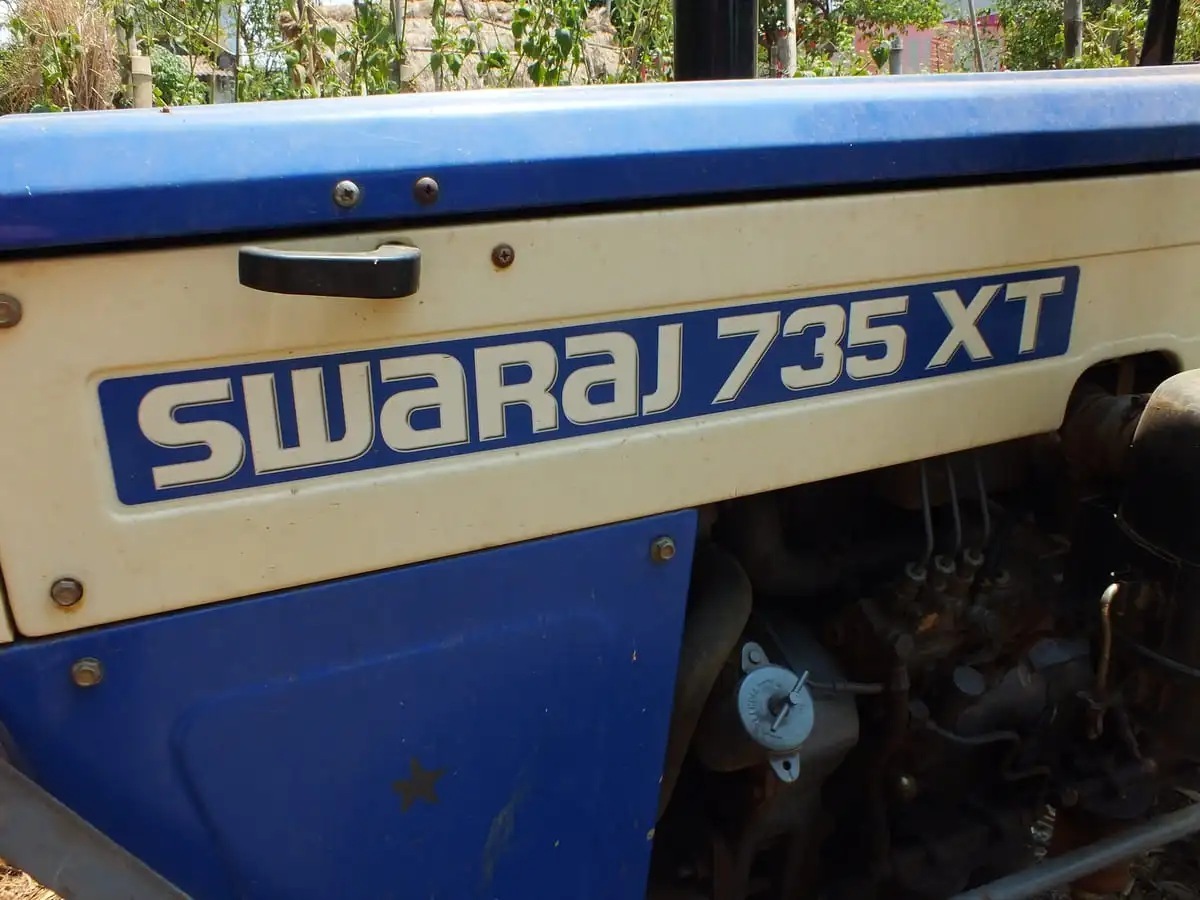
Let’s start with the boring headline: Swaraj Engines manufactures diesel engines ranging from 22 HP to 65 HP+, exclusively for Swaraj tractors owned by Mahindra & Mahindra. That’s it. That’s the business model. They source raw materials, assemble engines, and sell them to M&M at negotiated prices. No crypto. No blockchain. No “transformational pivot.” Just the unsexy, industrial grunt-work of keeping India’s agricultural economy fed with horsepower.
Except here’s the punchline: it’s one of the most profitable engine manufacturers in the country. In FY25, they sold 168,820 engines at an average price of ~₹9,965 per engine. They maintain a 56.2% ROCE — meaning ₹56 of earnings on every ₹100 deployed. Zero debt. Zero pledges. Dividends that make retail investors’ eyes water (1,045% dividend payout in FY25 alone, because they literally paid out more cash than annual profit). And a market cap of ₹4,423 crores that trades at roughly 17x their annualised earnings — a stunning discount to compounders in the “growth” sectors.
The company was incorporated in 1985, jointly promoted by Punjab Tractors and Kirloskar Oil Engines. For decades, it was a sleepy subsidiary. Then Mahindra & Mahindra acquired Punjab Tractors in 2007 and quietly ran this operation like an industrial ATM. In June 2024, Mahindra acquired the remaining 17% stake from Kirloskar Industries, now holds 52.1%, and promptly announced a ₹220 crore capex expansion. Translation: they’re betting big that India’s tractor engine demand will grow faster than current capacity.
Q3 FY26 just reported ₹473 crores in revenue (+37% YoY volume growth in engines), ₹42.1 crores in PAT, and sold 47,563 engines in a single quarter. That’s not a number anyone celebrated. That’s a number they put in a filing and moved on. Because this is how boring excellence looks in India’s equity market.
The Unsexy Appeal: When your business model can be explained in two sentences, and your financials are this boring, the market doesn’t bother pricing it in. That’s not a weakness. That’s an opportunity wearing a khaki uniform.
03 — Business Model: What Do They Actually Make?
Engines. For Tractors. That’s The Whole Thesis.
Swaraj Engines manufactures diesel engines for Swaraj tractors sold by Mahindra & Mahindra across India. The supply arrangement is exclusive — all Swaraj tractors with Swaraj engines are manufactured by this company. M&M buys them at pre-agreed prices, integrates them into Swaraj tractors, and sells those tractors to farmers across India. Revenue mix in FY24 was 97% engines, 3% spares and parts.
The product range spans 20 HP (for smaller plots, older farmers, budget-conscious buyers) to 65 HP+ (for larger landholdings, commercial operations, the agribusiness crowd). They’ve recently commercialised 40 HP and 47 HP models and are developing TREM V-compliant engines for future regulatory requirements. Working capital is negative (they get paid before they pay suppliers), which is the holy grail of industrial business models.
Manufacturing happens at a single plant in SAS Nagar, Ropar, Punjab. Capacity was expanded from 150,000 to 195,000 units per annum and is now being expanded again to 240,000 units. Recent sales volumes: FY25 at 168,820 units (the highest ever), FY24 at 138,761 units, FY23 at 137,005 units. Basically, they’ve been running at near-full capacity for three years and decided it’s time to add more.
Q3 Vol (Units)47,563Single Quarter
FY25 Capacity195,000Units / annum
New Capacity240,000Coming Soon
Utilisation~87%FY25 Average
The Concentration Risk Nobody Mentions: They sell exclusively to Mahindra. If Mahindra decides to source engines from someone else, this company becomes a hollow shell. However, M&M owns 52% of Swaraj Engines — they control both the buyer and the seller. Conflict of interest? Maybe. Alignment of incentives? Absolutely. This is not a customer risk. This is a captive supply agreement with the owner in the room.
💬 Here’s the real question: Why is a company with 56% ROCE, zero debt, and exclusive supply to India’s largest tractor maker trading at only 17x annualised earnings? Drop your theory in the comments.
04 — Financials Overview: Q3 FY26
The Numbers That Nobody Is Talking About
Result type: Quarterly Results | Q3 FY26 EPS: ₹34.65 | Annualised EPS (Q3×4): ₹138.60 | Full-year FY25 EPS: ₹136.64
| Metric (₹ Cr) |
Q3 FY26
Dec 2025 |
Q3 FY25
Dec 2024 |
Q2 FY26
Sep 2025 |
YoY % |
QoQ % |
| Revenue | 473 | 346 | 504 | +37.0% | -6.1% |
| Operating Profit | 62 | 44 | 68 | +40.9% | -8.8% |
| OPM % | 13% | 13% | 14% | +0 bps | -100 bps |
| PAT | 42.1 | 32 | 49.68 | +31.6% | -15.2% |
| EPS (₹) | 34.65 | 26.30 | 40.90 | +31.7% | -15.3% |
Reading the Tea Leaves: Q2 was stronger than Q3 in absolute terms (₹504 cr vs ₹473 cr), which is a seasonal pattern in tractor demand. Q3 YoY shows monster growth (+37% revenue, +39.5% PAT), but that’s being compared to a weak Q3 FY25 (₹346 crores). Full-year FY25 delivered ₹1,682 crores in revenue — the highest ever. Annualised Q3 EPS at ₹138.60 is roughly in line with FY25’s ₹136.64. The OPM has stayed steady at 13–14% — it’s not a margin story, it’s a volume story. And that volume is tied directly to tractor sales, which have been booming on the back of good monsoons and rural capex. Do the monsoons flop? This company flinches.
05 — Valuation: Fair Value Range
Is This Stock Cheap, Expensive, Or Just Boring?
Method 1: P/E Based
FY25 EPS = ₹136.64. Annualised Q3 EPS ≈ ₹138.60 (recent run-rate). Current P/E = ₹3,640 ÷ ₹136.64 = 26.6x. Industrial smallcaps typically trade at 15x–25x for quality compounders. Swaraj’s 56% ROCE and stable margins justify a premium. Fair P/E band: 20x–30x.
Range: ₹2,733 – ₹4,098
Method 2: EV/EBITDA Based
FY25 EBITDA ≈ ₹259 Cr (operating profit ₹227 cr + D&A ₹20 cr, TTM approx). Enterprise Value = ₹4,286 Cr. EV/EBITDA = 16.5x. Capital goods and industrial equipment manufacturers typically trade 12x–18x EBITDA. Swaraj at 16.5x is bang in the middle. EBITDA growth at 15% YoY justifies holding this multiple.
Fair EV (12x–18x): ₹3,108 Cr – ₹4,662 Cr → Per share (near-zero net debt):
Range: ₹2,495 – ₹3,738
Method 3: DCF Based
FY25 Operating CF = ₹177 Cr. Conservative FCF = ₹120 Cr (after capex). Growth: 12–15% for next 5 years (tied to tractor demand). Terminal growth: 4%. WACC: 10% (low-risk industrial business).
→ PV of 5-year FCFs (10% WACC): ~₹735 Cr
→ Terminal Value (4% growth / 6% cap rate): ~₹2,000 Cr
→ Total EV: ~₹2,735 Cr (net debt: ₹1 Cr, so ~₹2,734 Cr equity)
Range: ₹2,190 – ₹3,350
Fair Min: ₹2,400
CMP: ₹3,640
Fair Max: ₹4,100
CMP ₹3,640
⚠️ EduInvesting Fair Value Range: ₹2,400 – ₹4,100. CMP at ₹3,640 sits in the upper-middle of the range. This fair value range is for educational purposes only and is not investment advice. Please consult a SEBI-registered investment advisor before making any financial decision.
06 — What’s Cooking: News, Triggers & Drama
Boring News From A Boring Company (Which Is A Good Thing)