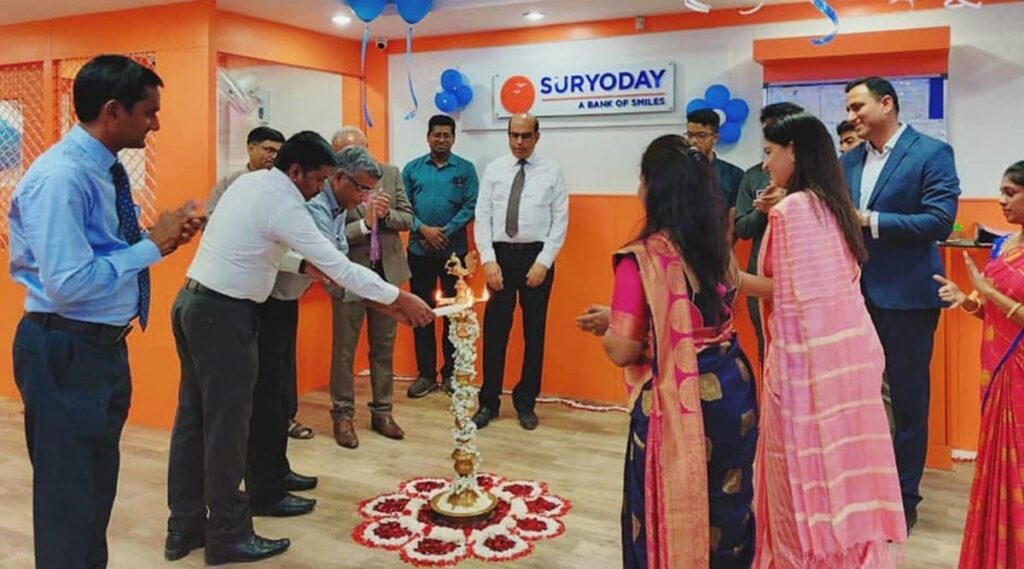
Suryoday Small Finance Bank Ltd Q3 FY26 – GNPA explodes to 7.2%, EPS ₹3.44, Book Value ₹187, Stock at 0.75× P/B: Growth Party or Asset Quality Hangover?
1. At a Glance – Blink and You’ll Miss the Red Flags
₹1,483 crore market cap. Stock price ₹140. Book value ₹187. Price-to-book at a juicy-looking 0.75×. Sounds cheap, right? But wait, this is not a roadside momo stall where cheap automatically means tasty.
Suryoday Small Finance Bank (Suryoday SFB) just reported Q3 FY26 results, and while headline PAT came in at ₹36.6 crore, the real masala is elsewhere. Gross NPAs have ballooned to 7.2%, Net NPAs to 4.6%, and Provision Coverage Ratio has collapsed to 37.7%. That’s not a typo — that’s a full-blown asset quality migraine.
On the flip side, advances grew to ₹10,251 crore in FY25, deposits jumped to ₹10,580 crore, and NIM is still a fat 9.0%. The bank serves 3.4 million customers, operates 710 outlets, and employs 8,649 people who are probably very busy collecting EMIs right now.
Three-month stock return? –9.2%. Six-month return? +4.65%. Market clearly can’t decide whether this is a turnaround story or a horror sequel.
So the big question: is Suryoday a temporarily bruised street fighter… or a microfinance hangover refusing to go away?
2. Introduction – From NBFC Hustler to SFB Headaches
Suryoday started life in 2008 as an NBFC, got into microfinance in 2009, and finally upgraded itself to a Small Finance Bank in 2017. The mission was noble: bank the unbanked, lend to the underbanked, and earn spicy margins while doing social good.
For years, microfinance was the golden goose. High yields, fast disbursements, group lending discipline — what could possibly go wrong?
Then came reality.
Economic shocks, borrower stress, CGFMU claims, rising delinquencies, and suddenly the same microfinance book started behaving like a reality show contestant — emotional, unpredictable, and expensive to manage.
FY25 and Q3 FY26 numbers show a bank in transition mode. Management wants more secured loans. Investors want cleaner books. Borrowers want flexibility. And the stock market wants answers.
This is not a boring PSU bank. This is a high-beta SFB where things move fast — sometimes forward, sometimes straight into a wall.
3. Business Model – WTF Do They Even Do?
Think of Suryoday as a financial kirana store with ambition.
Asset Side (Loans – the Money Out):
Joint Liability Group (JLG) Loans (50%) – microfinance backbone, also the main troublemaker lately
Microfinance still dominates, but management openly admits it’s trying to reduce the risk by shifting towards secured lending, targeting 55% secured assets over time.
Liability Side (Deposits – the Money In):
Retail Term Deposits ~60%
CASA 20.9%
Bulk Deposits ~19%
Deposits grew from ₹7,777 crore in FY24 to ₹10,580 crore in FY25, which is impressive. Cost of funds is 7.8%, reasonable but creeping up.
In short: lend high, borrow mid, pray hard.
4. Financials Overview – The Numbers Don’t Lie (But They Do Laugh)
Result Type Lock: 👉 Quarterly Results (Q3 FY26) EPS annualisation will follow Q3 rule.