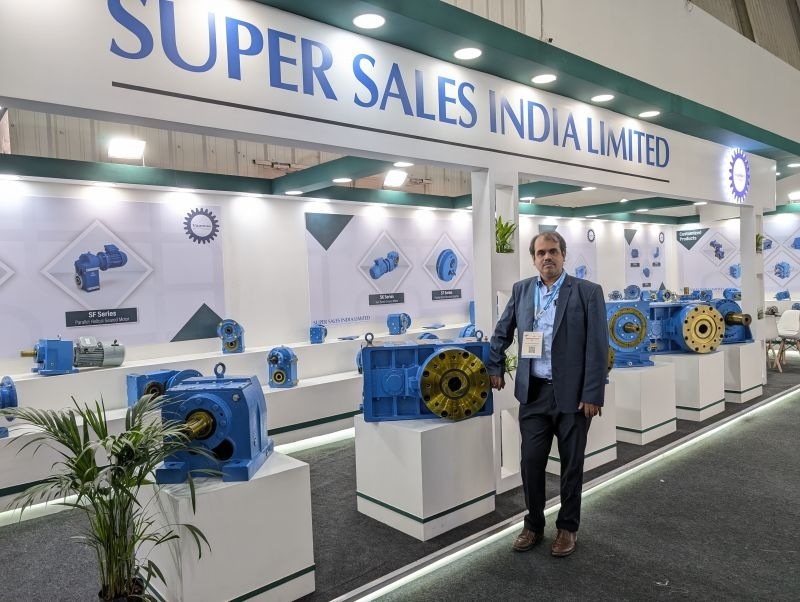
1. At a Glance – Blink and You’ll Miss the Profits
₹179 crore market cap. Stock price ₹582. Down 42.5% in one year, 25% in three months, and 34% in six months. If volatility were an Olympic sport, this stock would at least qualify for trials.
Super Sales India Ltd (SSIL) reported ₹103.86 crore in Q3 FY26 sales but still managed to post a ₹0.87 crore loss. That’s not diversification — that’s cardio for accountants. The company trades at 49× P/E, despite ROCE of 1.07%, ROE of -0.38%, and an interest coverage of just 1.73×.
Yes, it’s trading at 0.33× book value, but the book seems to be written in very optimistic font. Debt stands at ₹95 crore, market cap is ₹179 crore, and enterprise value is ₹238 crore.
This is a company where the balance sheet flexes, the revenue walks, and profits crawl… backwards.
Curious why a company with gears, yarn, and agency commissions still can’t stitch profits together? Let’s dive in.
2. Introduction – A Conglomerate with an Identity Crisis
Super Sales India Ltd is one of those old-school Indian companies founded in 1981 that decided, “Why do one thing well when you can do three things decently?”
It operates in:
- Engineering (gears & gearboxes)
- Textiles (yarn manufacturing)
- Marketing/Agency (LMW textile machinery sales & services)
On paper, this sounds like diversification. In reality, it often behaves like three businesses arguing over one profit line.
FY25 ended with ₹404 crore sales and ₹2 crore loss, while TTM profit is just ₹3 crore. Over the last three years, sales growth is -1.26%, and ROCE has slid from 16% (FY22) to 1% (FY25). That’s not a cycle — that’s a slow puncture.
So the question is simple:
Is SSIL a temporarily bruised
industrial veteran, or a permanently confused conglomerate?
3. Business Model – WTF Do They Even Do?
A) Engineering Division – Precision Gears, Imprecise Returns
SSIL manufactures high-precision gears and gearboxes for industries ranging from cement and sugar to cranes, recycling, mining, and packaging. This is the “serious” division — capital goods, industrial clients, export potential.
Sounds great, right?
Then why is consolidated ROCE stuck at 1%?
The issue isn’t capability. It’s scale, pricing power, and margins. Competing with specialized gear manufacturers while carrying textile baggage is like running a marathon with ankle weights.
B) Textile Division – Yarn Today, Margin Tomorrow (Maybe)
SSIL runs 105,000 spindles, producing ~25 tonnes of yarn per day. Yarn contributes 64.35% of FY24 revenue, including exports worth ₹65 crore.
But yarn is a brutal business:
- Commodity pricing
- Energy cost sensitivity
- Inventory cycles
- Zero mercy from markets
And SSIL feels all of it. Operating margins have fallen from 19% in FY22 to ~7% TTM.
This division pays the bills — barely — but doesn’t create wealth.
C) Marketing Division – Commission Without Control
This division sells and services LMW textile machinery and earns commissions, erection charges, and service income (about 9% of FY24 revenue).
