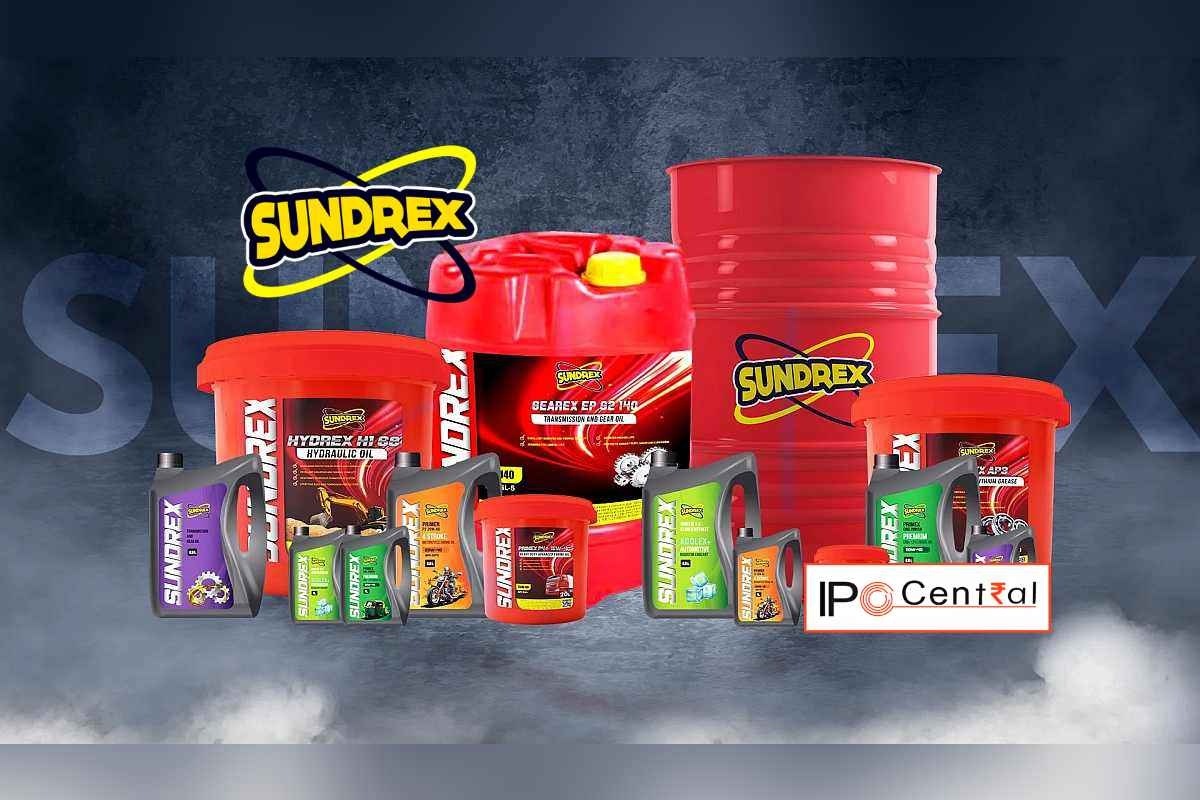
Sundrex Oil Company Limited has arrived at Dalal Street’s smaller cousin, NSE SME, with a ₹32.25 crore book-built IPO, hoping investors will slip smoothly into its lubricated growth story without too much friction. The company, incorporated in 2010, operates in a business that literally runs on oil—industrial lubricants, automotive oils, greases, transformer oils, and every fluid your factory machine secretly prays for at night.
The IPO price band of ₹81–₹86 values the company at a pre-issue market cap of about ₹115 crore. Financially, FY25 was spicy: revenue grew 41% year-on-year while profit after tax did a gym transformation with 112% growth. Return ratios look pumped, margins suddenly woke up post-FY24, and promoter holding sits at a clean 100% pre-IPO—no family drama, no distant chacha dilution yet.
But don’t relax too much. This is a B2B lubricant manufacturer in a brutally competitive industry where pricing power leaks faster than cheap engine oil. The IPO proceeds are mostly for working capital, some debt repayment, and a tiny capex sprinkle. In short: solid numbers, aggressive pricing, SME risks, and a product that literally reduces friction—except maybe in investor debates.
Curious already? Good. Let’s open the bonnet.
Introduction – Oil, But Not the Middle East Kind
Sundrex Oil is not drilling wells or flirting with OPEC headlines. It’s in the far less glamorous but absolutely essential business of blending, packaging, and selling lubricants to industries that would collapse into metal-on-metal screaming chaos without them. Think factories, fleets, transformers, refrigeration systems—basically everything that moves, heats, or spins.
Founded in 2010 and headquartered in Kolkata, the company has quietly built a B2B-focused lubricant operation with its own brand as well as contract manufacturing and toll blending services. This dual model lets Sundrex sell products under its own name while also acting as the backstage hero for other brands that want oil without owning a plant.
What suddenly brought Sundrex into the spotlight is FY25. Revenues jumped from ₹49.19 crore in FY24 to ₹69.12 crore, while PAT more than doubled from ₹2.57 crore to ₹5.44 crore. Margins expanded, ratios flexed, and the company decided this was the perfect moment to meet public investors—because optimism, like engine oil, works best when warm.
But IPO timing is everything. SME IPO investors are smarter, more suspicious, and far less forgiving. So the big question is: is this a well-oiled machine ready for scale, or just a nicely polished engine with limited horsepower?
Business Model – WTF Do They Even Do?
In simple terms, Sundrex Oil blends different base oils and additives to create lubricants that reduce friction, prevent rust, manage heat, and extend machinery life. In less simple terms, it operates across three broad verticals:
First, industrial lubricants—hydraulic oils, gear oils, transformer oils, refrigeration oils, and rust preventive oils used by factories and infrastructure players. These are high-volume, repeat-order products where consistency matters more than branding glamour.
Second, automotive lubricants—diesel engine oils (both monograde and multigrade) used by fleet operators, workshops, and B2B clients. This is a crowded space with big boys like IOCL and Castrol flexing brand muscle, so Sundrex plays the cost-efficiency and relationship game.
Third, contract manufacturing and toll blending. This is where Sundrex earns brownie points. Other brands outsource blending, packaging, and labeling to Sundrex, letting the company sweat its assets harder and improve capacity utilization without marketing spends.
The company also offers private labeling, meaning clients can slap their own brand name on Sundrex-manufactured oil. It’s like ghostwriting, but for lubricants.
As of June 30, 2025, Sundrex employed 73 people—not bloated, not skeletal. The focus is operational efficiency, logistics, and cost leadership rather than flashy expansion.
Now ask yourself: is boring, repeatable, industrial demand better than flashy consumer hype? In lubricants, boring is beautiful.
Financial Overview – Numbers That Suddenly Started Behaving
All figures below are in ₹ crore, as disclosed.
Metric
FY25
FY24
FY23
Total Income
69.12
49.19
27.79
EBITDA
9.19
5.13
1.99
PAT
5.44
2.57
0.40
EBITDA Margin
13.68%
10.43%
7.16%
PAT Margin
8.10%
5.22%
1.44%
This table tells a very specific story: FY25 is a structural break year. Revenue growth is strong, but the real magic is margin expansion. EBITDA margin jumped, PAT margin nearly doubled, and ROE shot up to 35.63%.
Now pause and ask: did demand suddenly explode, or did cost discipline finally kick in? The RHP doesn’t claim any miracle contracts—so this looks like operational leverage + scale benefits.
But here’s the uncomfortable investor question: are these margins sustainable in a price-sensitive B2B lubricant market?