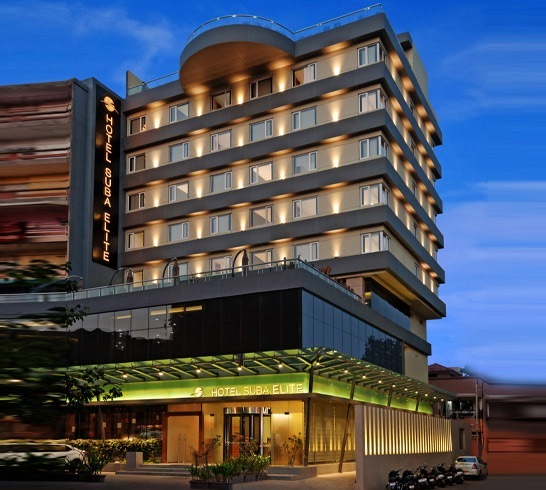
Suba Hotels is serving up a ₹75.47 crore IPO thali – fresh issue only, no promoter exit, which is rare in hotel land where promoters usually prefer “check-out” over “check-in.” The price band is ₹105–111, valuing it at ~₹269 crore market cap. FY25 revenue jumped 51% to ₹80 crore, PAT up 69% to ₹15.1 crore, and EBITDA margin at a juicy 29%. Post issue, EPS dilutes from ₹8.7 to ₹6.3, pushing the P/E up to ~17.8x. Debt/Equity at 1.06 shows hotels are still half-funded by bankers, not just happy tourists.
So here’s the audit quip: are you checking into a growth story or checking out with an overpriced bill?
2. Introduction
Hotels and IPOs have something in common: both overcharge when demand peaks. Suba Hotels is riding India’s mid-market hospitality boom, opening its IPO doors right when travel, weddings, and conferences are back with vengeance post-Covid.
Founded in 1997, the company has expanded aggressively into tier 2 & 3 cities. Why? Because in India, every wedding in Ranchi and every pharma conference in Nagpur needs a “business hotel with buffet breakfast.” Suba offers exactly that – neither a 5-star Taj with crystal chandeliers nor a shady lodge with flickering tube lights.
They operate 88 hotels with ~4,100 rooms. Out of this, only 5 are owned (227 rooms). The rest? Managed, franchised, or revenue-share. Classic “asset-light” pitch – less cement, more Excel sheets.
But here’s the mystery auditors always ask: if this is so asset-light and profitable, why raise ₹75 crore? Answer – ₹53 crore is for upgrading hotels and “last-mile funding” (read: fixing leaky AC ducts and buying new mattresses), balance for corporate uses.
3. Business Model – WTF Do They Even Do?
Suba isn’t a one-brand pony. They operate across categories:
Upscale & Upper Midscale – for corporates who want fancy but can’t afford JW Marriott.
Midscale – the sweet spot for tier-2 cities.
Economy – because sometimes all you need is a bed, Wi-Fi, and chai.
Revenue comes from:
Owned hotels – direct revenue.
Managed & franchised – fee income (asset light, higher margins).
Revenue share/lease – middle path.
So basically, they’ve turned “hotel ownership” into an OYO-lite but more legit. Unlike OYO, Suba hasn’t been sued by every second hotel owner yet.
Detective clue: 88 hotels running, 40 more in pipeline = growth runway. But scaling hospitality in tier 2 cities means you’re fighting Treebo, Ginger, Fortune, Lemon Tree, FabHotels, OYO, and even your local uncle with 10 rooms and a dhaba.
4. Financials Overview
Metric
Latest Qtr (Q4FY25)*
YoY Qtr (Q4FY24)
Prev Qtr (Q3FY25)
YoY %
QoQ %
Revenue (₹ Cr)
20.0
13.3
19.5
50.7%
2.6%
EBITDA (₹ Cr)
5.8
2.2
5.7
163.6%
1.8%
PAT (₹ Cr)
3.8
2.2
3.7
72.7%
2.7%
EPS (₹)
3.8
2.2
3.7
72.7%
2.7%
*Quarterly split derived from FY25 totals.
Auditor footnote: Annualised EPS = ₹15.2 pre-IPO, diluted to ₹6.3 post-IPO. Translation: more shareholders at the buffet, smaller slice of cake.
5. Valuation Discussion – Fair Value Range
a) P/E Method
FY25 PAT = ₹15.15 Cr.
Post issue shares = 2.42 Cr.
EPS = ₹6.25.
SME hotels usually trade 15x–20x.
Fair Value = ₹94 – ₹125.
b) EV/EBITDA
EBITDA = ₹23.3 Cr.
Net debt = 50.2 Cr borrowings – IPO repayment? assume negligible reduction. EV ≈ 319 Cr.
EV/EBITDA = ~13.7x. Fair SME hospitality band = 9–12x.