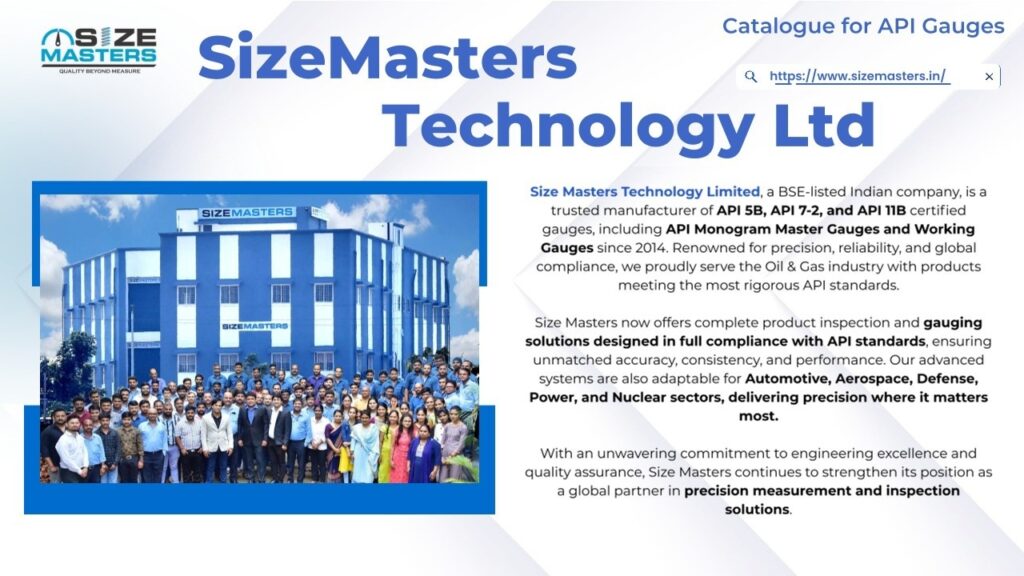
1. At a Glance
Sizemasters Technology Ltd is that rare Indian company which literally measures everything—and lately, it has started measuring profits too. With a market capitalisation of around ₹176 crore and a current price hovering near ₹176, the stock has quietly delivered about 27.8% return in three months and 23.8% over one year, while most people were busy arguing about PSU stocks on Twitter.
The latest quarterly numbers are where the masala is. September 2025 quarter revenue came in at ₹10.71 crore, up a jaw-dropping 208% YoY, while PAT stood at ₹1.24 crore, up 18.1% YoY. ROCE sits comfortably at 22.5%, ROE at 19.5%, and debt is almost a rounding error at ₹1.99 crore.
Sounds dreamy? Well, the valuation has also woken up. A P/E of 55.6, Price-to-Book of 10.4, and EV/EBITDA of 38x clearly tell you that the market is already treating this gauge-maker like it’s measuring the future, not the past.
This is a smallcap that went from “who?” to “hmm” very quickly. The question is—is Sizemasters actually mastering size, or is the market overshooting the scale?
2. Introduction
Once upon a time, this company was called Mewat Zinc Limited. That itself tells you everything about its midlife crisis. In September 2022, it ditched zinc, rebranded itself as Sizemasters Technology Ltd, packed its bags, shifted its registered office from Delhi to Pune, and decided to become a serious precision-gauge player. Honestly, this sounds less like a corporate strategy and more like a Bollywood transformation montage.
But jokes aside, the turnaround is visible in numbers. For years, Sizemasters was doing revenues that looked like a café’s monthly sales. Then suddenly FY24 and FY25 happened. Revenue jumped to ₹22.9 crore TTM, profits scaled up to ₹3.16 crore, and margins expanded like they just discovered operating leverage on YouTube.
The September 2025 quarter alone contributed nearly half of FY25 revenue. That’s either explosive growth—or extreme back-ended execution. Either way, it makes this company interesting enough to put under the microscope.
Sizemasters operates in a niche—precision gauges, API-certified thread gauges, and measurement instruments—which sounds boring until you realise that oil & gas, defence, auto OEMs, and engineering giants literally cannot function without accurate measurement. If you mess up a gauge, you don’t get bad reviews—you get accidents.
So yes, this company lives in a dull but critical corner of industrial India. The market loves such stories—especially when growth suddenly shows up.
But before we get excited, let’s ask the obvious question: what exactly does Sizemasters do, and how real is this growth?
3. Business Model – WTF Do They Even Do?
Sizemasters Technology Ltd manufactures and trades precision gauges and measuring tools. Think thread gauges, API gauges, special gauges, fixtures, electronic gauging systems, and measuring instruments used in oil & gas, automotive, defence, and heavy engineering.
In simpler words: they make tools that tell other companies whether their tools are correct. It’s a judge judging judges. Very meta.
The company is notably the first Indian thread gauge manufacturer with API certification, along with ISO
9001 and ISO/IEC 17025:2017 NABL accreditation. These certifications are not LinkedIn badges—you either have them or you don’t. And if you’re supplying to oil & gas or defence, not having them means you don’t even get invited to the party.
Clients include the usual industrial Avengers: Tata, Hero, Ashok Leyland, HAL, BHEL, BEL, DRDO, Bosch, Motherson, KSB, Wilo, and even Coca-Cola (because even fizzy drinks need precision somewhere).
Exports go to 27+ countries, spanning the Middle East, Europe, SAARC, and the Americas. This means the company is not just dependent on Indian capex cycles—it’s also riding global industrial demand.
Revenue-wise, 97% comes from product sales, with interest income and forex gains making up the rest. This is a clean manufacturing-led model, not some financial engineering jugad.
Now here’s where things get slightly adventurous. Sizemasters has started dabbling in subsidiaries and LLPs—calibration services, automation design, telecom infrastructure services. Some are active, some haven’t even started operations yet.
Is this diversification strategic? Or management enthusiasm running faster than execution? We’ll come back to that. For now, let’s look at the numbers that made the stock famous.
4. Financials Overview
Result Type Lock
The latest announcement clearly states “Unaudited Standalone and Consolidated Financial Results for the quarter ended September 30, 2025.”
So this is QUARTERLY RESULTS. Lock applied. No confusion. EPS annualisation will be quarterly EPS × 4.
Quarterly Comparison Table (₹ in Crores)
| Metric | Latest Qtr (Sep 2025) | Same Qtr LY (Sep 2024) | Prev Qtr (Jun 2025) | YoY % | QoQ % |
|---|---|---|---|---|---|
| Revenue | 10.71 | 3.48 | 4.53 | 207.8% | 136.4% |
| EBITDA | 1.56 | 1.16 | 1.05 | 34.5% | 48.6% |
| PAT | 1.24 | 1.05 | 0.87 | 18.1% | 42.5% |
| EPS (₹) | 1.24 | 1.05 | 0.87 | 18.1% | 42.5% |
Annualised EPS (Quarterly) = 1.24 × 4 = ₹4.96
Let’s pause here. Revenue has exploded, but profits haven’t scaled at the same pace. This tells us two things:
- Either margins compressed due to execution scale-up
- Or fixed costs were already absorbed earlier, and revenue came in lumpy
Operating margin for the quarter was 14.57%, lower than some previous quarters. So yes, growth came—but not for free.
Still, going from ₹3–4 crore quarterly revenue to ₹10+ crore is not accidental. Someone is executing orders aggressively.
Now comes the uncomfortable question: is the valuation already pricing this
