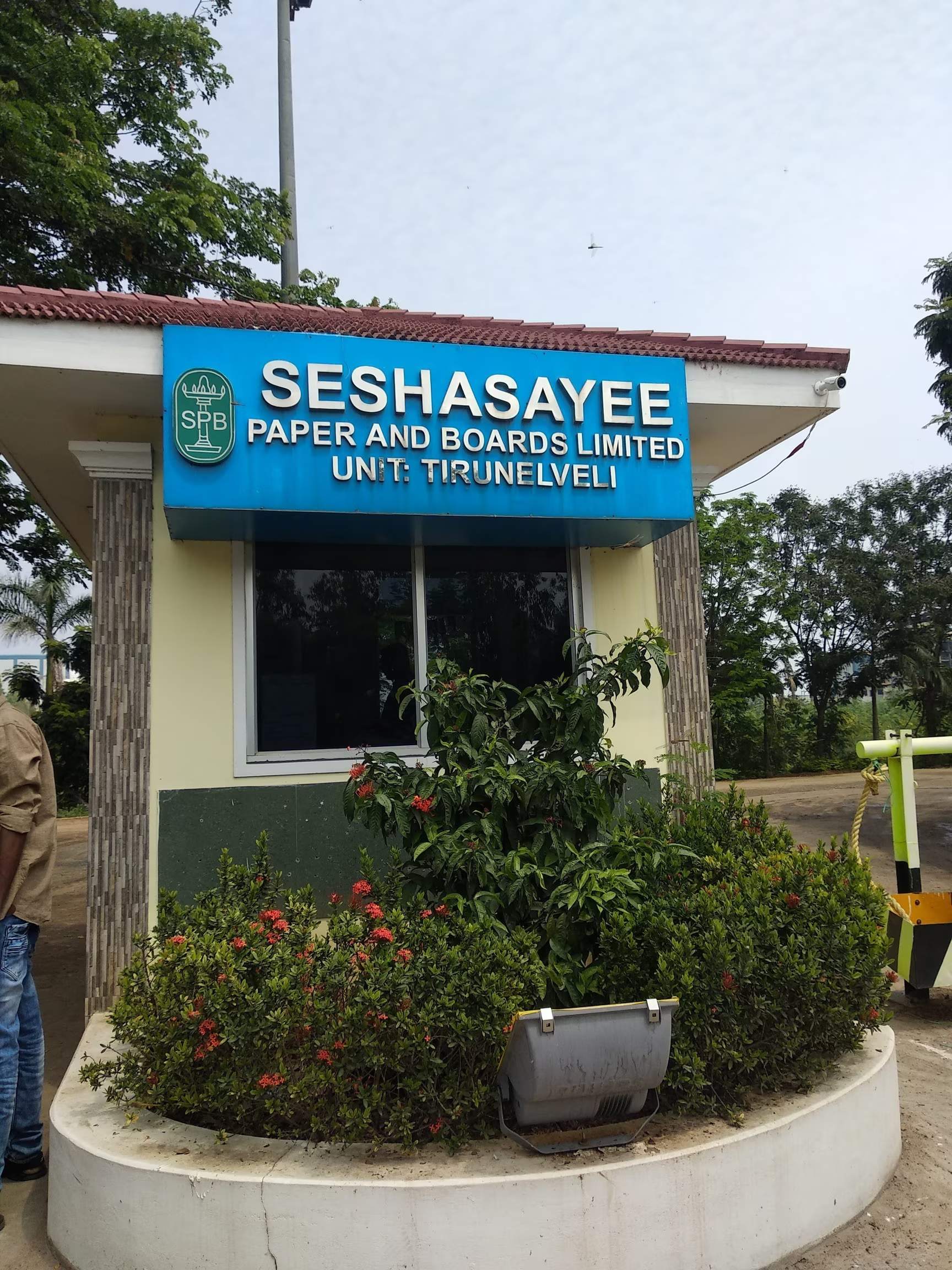
Seshasayee Paper & Boards Ltd Q2FY26 – When Margins Vanish Faster Than Paper in Rain, Yet the Mill Keeps Rolling
1. At a Glance
At ₹254 per share and a market cap of ₹1,605 crore, Seshasayee Paper & Boards Ltd (SPBL) stands like an old-school industrialist in a Gen Z world obsessed with SaaS, not sawdust. Despite a heritage older than most Dalal Street analysts’ fathers, this 65-year-old paper baron from Tamil Nadu is fighting a battle against cheap imports, cost inflation, and the occasional existential crisis.
The Q2FY26 results? Sales ₹346 crore, PAT ₹22.4 crore, both down sharply (-13% and -21%). Even the OPM has shrunk to 4.78%, reminding investors that this isn’t a tech stock — it’s a pulp-to-paper grind.
Still, it trades at a P/E of 19.7x, P/B of 0.81, and boasts a debt-to-equity of just 0.04, making it one of the cleanest balance sheets in the pulp jungle. A dividend yield of 0.98% sweetens the deal slightly, though profits have fallen faster than an origami crane in water.
2. Introduction
Seshasayee Paper isn’t new to market meltdowns. Founded in 1960, when “GoI” meant a handwritten letter from Nehru, this company has seen the paper industry evolve from typewriter reams to digital receipts. Yet it still stands tall in Erode and Tirunelveli, rolling out writing and printing paper under brands like Sprint, SPD, Color Sprint, and Success — because nothing says success like naming your paper Success.
Its distribution network spreads across 70+ distributors in India and about 10-11 export agents, selling to the USA, Sri Lanka, Nepal, and the Middle East. That’s impressive — except when you realize domestic sales form 88% of the revenue, meaning global ambitions remain as faint as carbon copies.
2024 wasn’t kind. The company’s profits fell as global pulp prices, imported paper dumping, and wood cost hikes made margins thinner than tracing paper. Still, management isn’t folding — they’ve got an ambitious Mill Development Plan-IV (MDP-IV) of ₹700 crore to boost Erode capacity by 20% per phase. That’s optimism — or insanity — depending on how you look at commodity cycles.
3. Business Model – WTF Do They Even Do?
In one line: they take trees, squeeze them, bleach them, and turn them into something that your printer eats for breakfast.
Seshasayee manufactures printing and writing paper, supplying to educational institutions, government departments, publishers, and packaging segments. They don’t make tissue or fancy stationery; they make the humble paper you find under your hand in every office meeting that could’ve been an email.
The company operates two manufacturing units — Erode (Tamil Nadu) and Tirunelveli — with a combined capacity of 2.55 lakh tonnes per annum, running at 100% and ~84% utilization, respectively. It’s a rare industrial setup that still smells like lignin and nostalgia.
With eco-friendly initiatives and renewable energy additions (now 52.8 MWp solar and 9 MW wind), SPBL is trying to rebrand itself as green paper. But let’s be real — paper manufacturing will always be the kid caught bunking in sustainability class.
Their 2023 acquisition of Servalakshmi Paper Ltd for ₹105 crore under IBC added 75,000 tonnes of capacity. Now, they’re reviving it as Unit-III, another 20% bump to output — because when life gives you pulp, make more pulp.
Commentary: Margins are fluttering like loose pages in monsoon, but profitability survived — thanks to ₹18 crore of “other income,” mostly from investments. At this point, the company’s mutual funds seem more productive than its mills.
5. Valuation Discussion – Fair Value Range (Educational Only)
Method 1: P/E Basis Industry median P/E = 18.3x EPS = ₹14.2 Fair Range = ₹200 – ₹275
Method 2: EV/EBITDA Basis EV = ₹1,014 Cr EBITDA (FY25) = ₹111 Cr EV/EBITDA = 9.1x Industry Average = ~7x Fair Range = ₹210 – ₹260
Method 3: Simplified DCF Assume FCF = ₹80 Cr, growth 4%, discount 12% → Intrinsic value around ₹220
Educational Fair Value Range: ₹200 – ₹260
Disclaimer: These values are for educational purposes only and are not investment advice. Because the only DCF that always works is “Don’t Count Fully.”
6. What’s Cooking – News, Triggers, Drama
2025 has been anything but dull for this Erode-based veteran.
Oct 25, 2025: Q2FY26 results drop. H1FY26 revenue ₹759 crore, PAT ₹34.86 crore.
May 2025: SPB increases renewable stake — now 52.8 MWp solar + 9 MW wind, investing ₹26 crore in a new SPV.
Sep 2024: Approves ₹405 crore expansion (MDP-IV Phase 1) and ₹100 crore revival of Unit-III (Servalakshmi).
Mar 2024: The sad demise of long-time MD K.S. Kasi Viswanathan, a major emotional and managerial loss.
Apr 2024: ₹16.5 crore investment in a hybrid power project in Tamil Nadu.
So, between mourning, modernizing, and managing margins, SPBL’s leadership has had a hectic year. The Mill Development Plan-IV aims to boost capacity by 40% over two phases, possibly by FY27. The renewable investments could lower energy costs — a critical factor since power and fuel are the silent killers in