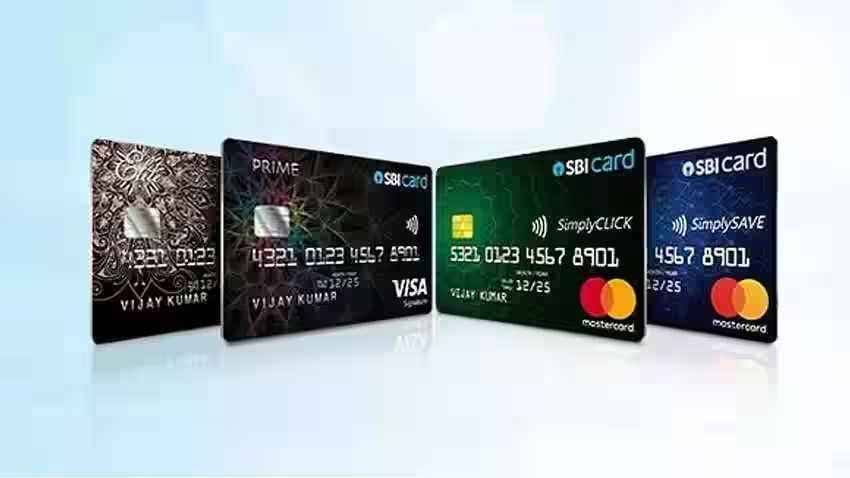
1. At a Glance
India’s plastic-money prince, SBI Cards, has swiped its way to another quarter of double-digit growth. For Q3 FY26 (Dec 2025), the company reported revenue of ₹5,353 cr and PAT of ₹557 cr, up a spicy 45 % YoY, proving Indians are spending on everything except financial discipline.
Market cap sits around ₹73,343 cr, CMP ₹771, and the P/E flirts at 35 ×, which screams “credit card luxury pricing.” Debt has ballooned to ₹49,225 cr, but hey—it’s an NBFC, debt is its oxygen.
In three months, the stock is down 11 %, probably because investors expected cashback on patience too. Yet, with ROE 14.8 % and ROCE 10.4 %, this card issuer is still swiping profits like a pro while Gross NPA (2.86 %) quietly reminds everyone—easy money isn’t free.
2. Introduction
Remember when getting a credit card felt like elite access to adulthood? SBI Card turned that rite of passage into a ₹70,000-crore business.
Backed by the mothership State Bank of India, this Gurgaon-based non-deposit NBFC has built India’s largest pure-play credit-card empire. With 1.85 crore cards in force, it owns 18.9 % market share, though the glory days of 19 + % dominance are slowly fading.
Q3 FY26 numbers confirm India’s buy-now-cry-later culture is thriving. Revenue growth clocked 11 % YoY, PAT jumped 45 %, and EPS at ₹5.85 signals a comeback after two sluggish quarters. The problem? Margins keep playing hide and seek as NPAs inch up.
Investors may grumble about valuation, but SBI Cards remains the country’s credit-consumption thermometer—if it sneezes, discretionary spending catches a cold.
3. Business Model – WTF Do They Even Do?
At its core, SBI Cards lends you money you don’t have, charges you interest you can’t ignore, and rewards you with points you’ll never redeem.
It earns through:
- Interest income (45 %) – from revolvers who treat due dates as vague suggestions.
- Spend-based fees (29 %) – merchant commissions whenever someone buys that 4th iPhone EMI.
- Subscription & instance fees (26 %) – the annual
- and one-time charges ensuring revenue even when you’re broke.
The company categorises its cards into Super Premium, Core, and Co-branded (Reliance Retail, Aditya Birla, Apollo HealthCo, Tata Neu, Punjab & Sind Bank, etc.). Basically, if there’s a brand, there’s an SBI Card version.
Sourcing channels? Both SBI’s existing customer base and open-market digital pushes via its slick SPRINT platform. Think of it as Tinder for credit cards—swipe, verify, and fall into EMI love.
4. Financials Overview
Quarterly Results (Figures ₹ crore)
| Metric | Q3 FY26 (Dec 25) | Q3 FY25 (Dec 24) | Q2 FY26 (Sep 25) | YoY % | QoQ % |
|---|---|---|---|---|---|
| Revenue | 5,353 | 4,619 | 4,961 | 15.9 % | 7.9 % |
| EBITDA (≈ Financing Profit + Other Inc) | 805 | 738 | 635 | 9.1 % | 26.8 % |
| PAT | 557 | 383 | 445 | 45.2 % | 25.2 % |
| EPS (₹) | 5.85 | 4.03 | 4.67 | 45.2 % | 25.2 % |
Annualised EPS = ₹ 5.85 × 4 = ₹ 23.4 per share
Commentary: Credit card spends and fee income lifted the top line, while controlled provisions restored profitability. NPAs are stabilising, but the 11 % financing margin whispers that SBI Card’s real enemy isn’t competition—it’s the RBI’s rate math.
5. Valuation Discussion – Fair Value Range Only
Method 1 – P/E Multiple
Peers trade 20–32× earnings. SBI Cards @ 35× TTM EPS ₹ 22 = ₹ 770. Fair band (25–35×) ⇒ ₹ 585–₹ 820.
Method 2 – EV/EBITDA
EV ₹ 1.19 lakh cr ÷ EBITDA ₹ 6,070 cr ≈ 19.6×. Fair zone 15–20× ⇒ ₹ 650–₹ 850.
Method 3 – Simplified DCF
Assuming 12 % growth, 11 % COE, 4 % terminal ⇒ intrinsic around ₹ 720–₹ 800.
📜 Fair Value Range
