01 — At a Glance
The Needle Shop Wants Your Money. Badly.
- IPO Size (Total)₹408.79 Cr
- Fresh Issue₹285.00 Cr
- Offer for Sale₹123.79 Cr
- Lot Size (Min)38 shares
- Min Investment (Retail)₹14,896
- Book Running Lead ManagerArihant Capital
- RegistrarBigshare Services
- Listing DateApr 2, 2026
- TTM EPS (Sep 2025)₹5.43
- Pre-IPO NAV/Share₹35.98
Flash Summary: Sai Parenteral’s is a ₹409 crore IPO at 72.19x P/E. The company makes injectable drugs, has four WHO-GMP facilities, and is pivoting to CDMO services for the global market. Sep 2025 PAT was ₹7.76 crore on ₹89.43 crore revenue. Pre-IPO promoter stake: 61.23%. Post-IPO: they’ll dilute to 51.2%. The valuation is what we call “enthusiastic.” And yes, the IPO is already live. Day 1 subscription: 0.01x across all categories. Yes, you read that right — nearly nobody applied. This could be the shortest IPO party in market history.
02 — Introduction
Who Exactly Is Injecting What Into The Market?
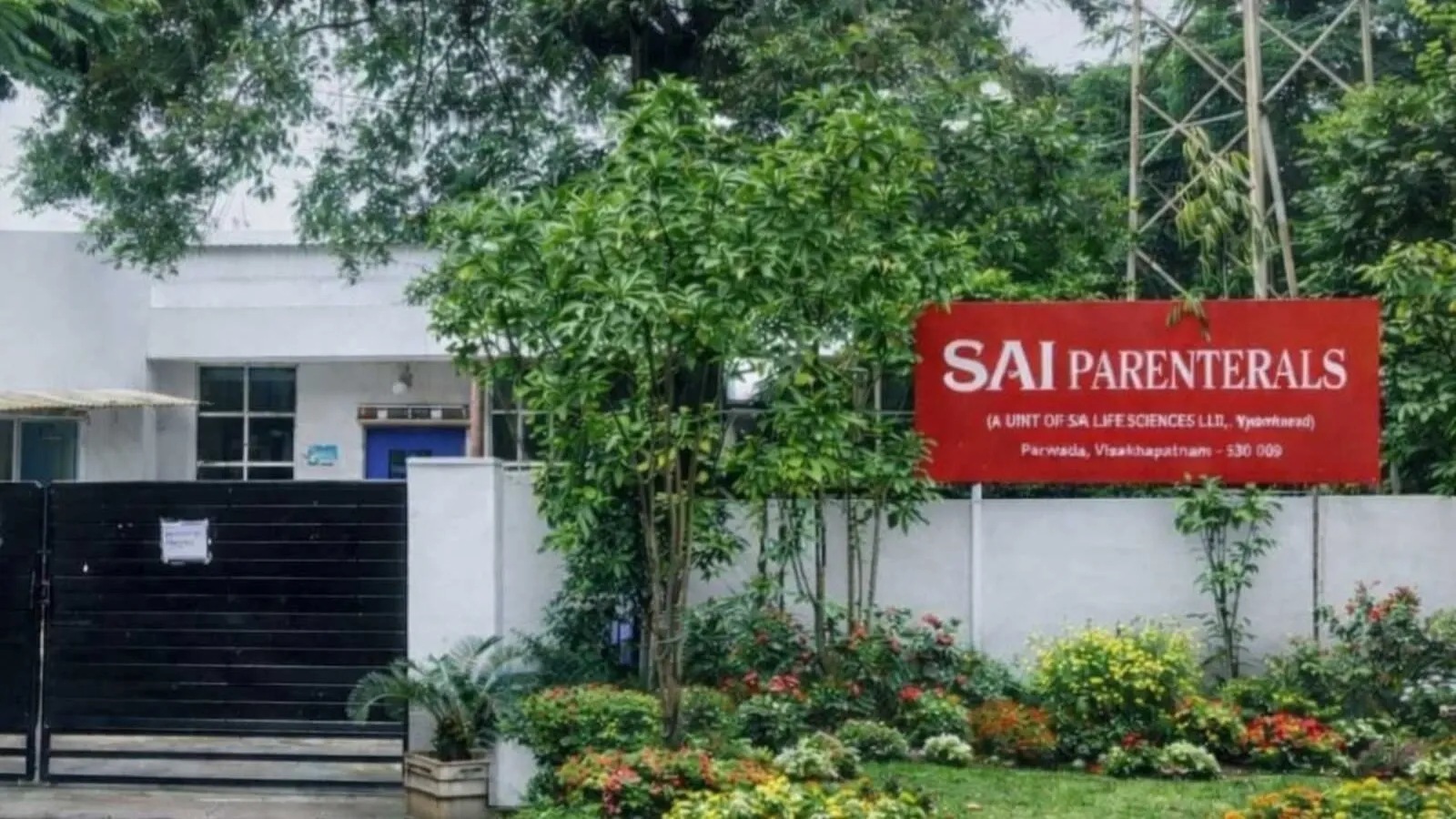
Let’s rewind. Founded in 2001 by Anil Kumar Karusala, Vijitha Gorrepati, and Karusala Aruna, Sai Parenteral’s Ltd. is what the pharmaceutical world calls a “formulations company.” Translation: they don’t discover drugs. They manufacture them. And they make them really well — but almost nobody outside the industry knows they exist.
The company operates in two segments: Branded Generic Formulations (think Crocin, Amoxycillin, all those things your doctor prescribes) and Contract Development and Manufacturing Organisation services (CDMO — the sexy part where foreign pharma companies outsource production to Indians like they always have, except now Sai wants to charge them more for it).
They own five manufacturing facilities in India. Four in Hyderabad (including a WHO-GMP injectable unit, a TGA-Australia accredited unit, and a PIC/S accredited solid oral unit), and one in Ongole, Andhra Pradesh via subsidiary Revat Laboratories. In September 2025, they had 298 employees. In March 2025, they reported ₹14.43 crore in PAT. In September 2025, that dropped to ₹7.76 crore. If you know nothing about pharmaceutical cycles and margin compression, welcome — neither do most retail IPO applicants.
The Spin: They’re the “next big CDMO play.” The narrative is that Indian pharma companies are moving up the value chain, doing more complex work for global clients, earning better margins, and becoming the “contract manufacturers to the world.” All of that is true. Whether Sai Parenteral’s is the vehicle for your wealth creation? That’s the question. Currently, the market says “nope” — the IPO is subscribed just 0.01x on Day 1.
03 — Business Model: Making Pills So Others Don’t Have To
You Give Us A Formula. We Give You A Bottle. You Give Us Your Money. Simple.
Sai Parenteral’s business model is ancient and elegant: you take raw materials, apply technical expertise and regulatory compliance, and convert them into marketable pharmaceutical products. Their revenue comes from two sources:
Branded Generic Formulations (BGF): These are off-patent drugs sold under the company’s own brand or as white-label products to distributors and hospital chains. Think antibiotics, diabetes medications, pain relievers, vitamins. The margins are thinner than a rupee note, competition is fiercer than Bigg Boss eliminations, and the business is commoditized. But it’s cash-generative and it pays the rent.
CDMO Services: This is the future — allegedly. Global pharmaceutical companies, especially those that outsource manufacturing to cut costs, approach Sai with a drug formula and say: “Make this for us, to our specifications, to regulatory standards, and invoice us.” Sai makes it. The margins are theoretically better. The customer base is international. The problem? Building these relationships takes years, regulatory approvals take forever, and customers can shift to competitors (or India’s larger CDMO players like Aurobindo or Laurus) at will.
Facilities5in operation
WHO-GMP Units2qualified
Employees (Dec 2025)298full-time
Export Markets6+since FY23
Fun fact that isn’t fun: They have 500+ dossiers in the pipeline. A “dossier” is regulatory documentation for a drug. 500+ dossiers means they have the approvals (or are seeking them) to manufacture 500+ different drug formulations. Sounds impressive until you realize Aurobindo has over 1,000 and Cipla has a similar ballpark. The IPO brochure makes it sound like having 500 dossiers is rare. It’s not. It’s called “managing a pharmaceutical manufacturing business.” The real question: how many of these dossiers will translate into actual revenue?
04 — Financials: When The Numbers Don’t Match The Excitement
Sep 2025: Revenue Up, Profit Down. The Classic IPO Timing Move.
Result type: Half-Yearly Results (H1 FY26) | H1 (Apr–Sep 2025) Revenue: ₹89.43 Cr | H1 PAT: ₹7.76 Cr | Annualised EPS: ₹2.17 | Pre-IPO Price Band Mid: ₹382 | Resulting P/E: 176x
| Metric (₹ Cr) |
H1 FY26
Sep 2025 |
FY25
Mar 2025 |
FY24
Mar 2024 |
YoY %
(H1 vs FY25) |
| Revenue | 89.43 | 163.74 | 155.18 | -45.4% |
| EBITDA | 16.24 | 39.44 | 31.70 | -58.8% |
| EBITDA Margin % | 18.2% | 24.1% | 20.4% | -390 bps |
| PAT | 7.76 | 14.43 | 8.42 | -46.3% |
| EPS (₹) | 5.43 | 10.07 | 5.87 | -46.1% |
The Uncomfortable Math: They reported H1 (half-yearly) results for Sep 2025. Full-year FY25 (Mar 2025) had ₹163.74 crore revenue. Six months later (Sep 2025), they’ve done ₹89.43 crore. That’s 54.6% of annual revenue in just six months. Either they’re having a bad H2, or H1 was not representative. Given the IPO is live right now, we’ll never know until they file Q3. Meanwhile, PAT dropped 46% YoY. EBITDA margin compressed from 24.1% to 18.2%. These are not the metrics you want to advertise when you’re asking strangers to give you ₹14,896.
💬 If you were a mutual fund manager sitting on ₹50 crore in new IPO allocation money, would you dump it into a company whose half-yearly PAT is half its full-year PAT from a year ago? Or would you wait for Q3 results? Drop your diagnosis in the comments.
05 — Valuation: The Math That Tells A Story
72.19x P/E. Or 176x. Depends On Whether You Like Whole Numbers.