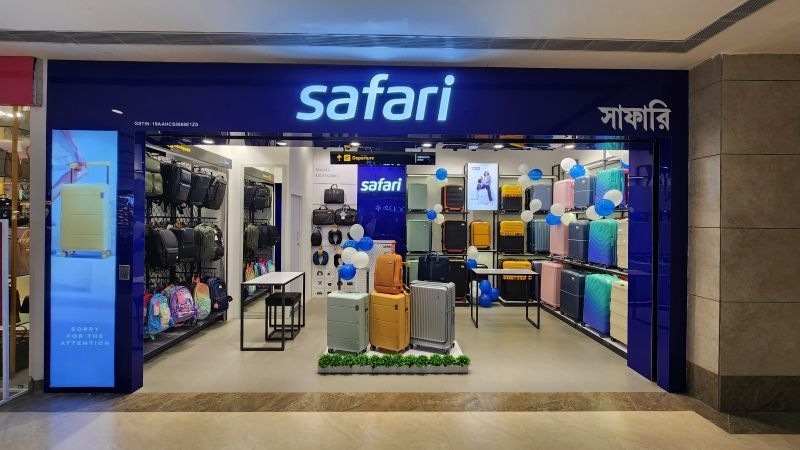
Safari Industries (India) Ltd Q2FY26: From Plastic Dreams to Hard Luggage Royalty — ₹534 Cr Sales, ₹46.9 Cr Profit, and a 64.6x P/E That Thinks It’s Louis Vuitton
1. At a Glance
If Louis Vuitton had a desi cousin who took manufacturing seriously and glamour lightly, it would be Safari Industries (India) Ltd. Trading at ₹2,191 per share with a market cap of ₹10,732 crore, Safari has gone from being the “other luggage company” to a serious challenger in India’s ₹10,000 crore travel gear market.
And if you think this is just another plastic box maker, think again. Safari’s ROE of 15.8% and ROCE of 18.7% make it a lean, mean luggage machine. Debt? Barely ₹113 crore. Dividend? A modest ₹2 per share, enough to buy one zipper pull.
But the spicy part — a P/E of 64.6x, which means the market thinks Safari bags belong next to Gucci, not near the airport carousel.
2. Introduction
Once upon a time, when middle-class Indians traveled with metal trunks and padlocks, Safari was a brand your dad trusted and your mom dusted. Fast-forward to FY26, and Safari Industries is the silent assassin in the Indian luggage market, slicing into VIP Industries’ dominance with hard luggage precision.
In the post-pandemic travel boom, Safari decided it would no longer play second fiddle. The company rolled out new polypropylene (PP) luggage that costs less than polycarbonate but still looks like something James Bond might pack his tuxedo in.
From ₹705 crore sales in FY22 to ₹1,925 crore in FY25 — that’s a growth trajectory so steep even your airline baggage fees can’t keep up.
And yet, Safari still maintains its “middle child” personality: humble roots, flashy results, and a P/E ratio that refuses to be grounded.
The company’s ability to execute expansion plans like a caffeine-charged operations manager has made it one of the most aggressive manufacturers in the consumer durables segment. The new greenfield unit in Jaipur (₹215 crore capex) and capacity of 6.5 lakh pieces per month means this company isn’t just traveling light — it’s traveling fast.
3. Business Model – WTF Do They Even Do?
Safari Industries basically makes and sells what everyone uses but no one really thinks about: luggage. The company has two core product families — hard luggage (54%) and soft luggage (46%).
Hard Luggage: Made from PolyPropylene (PP) and Polycarbonate (PC). Think tough, scratch-resistant, and “can survive an IndiGo baggage handler.”
Soft Luggage: Made of imported fabric; still stylish but dependent on global supply chains.
Their brand stable includes:
Safari – The OG, the functional one.
Magnum – The “boss-level” serious traveler’s choice.
Genie – Cute, colorful, school-bag energy.
Genius – Backpacks for laptop lovers and startup interns.
Urban Jungle – Their latest “casual premium” entry into the influencer luggage club.
Their products reach consumers via multiple channels — standalone stores, canteen stores, B2B contracts, and e-commerce platforms like Amazon and Flipkart. And the company’s websites (safaribags.com, genietravel.com, urbanjungle.shop) show Safari’s push toward direct-to-consumer (D2C).
In short, Safari is like that cousin who went from making suitcases in Gujarat to running a pan-India fashion-tech hybrid. Only here, instead of AI, it’s A.I.R. – Aspirational Indian Retail.
That’s like paying Hermès prices for Samsonite margins — but investors clearly think this luggage is designer-grade.
5. Valuation Discussion – Fair Value Range (Educational Purposes Only)
Method 1: P/E Method
Annualized EPS: ₹38.3
Industry P/E: 47.4
Safari P/E: 64.6
👉 Fair Value = ₹38.3 × (50–60) = ₹1,915 – ₹2,298
Method 2: EV/EBITDA Method
EV/EBITDA: 36.8
Annualized EBITDA = ₹74 × 4 = ₹296 Cr
EV = ₹10,640 Cr
So, EV/EBITDA suggests market fully values Safari’s future capacity expansion. A fair range around 30–35x EV/EBITDA gives EV range ₹8,880–₹10,360 Cr — close to current EV.
Method 3: DCF (Simplified) Assuming FCF grows at 15% CAGR for next 5 years, discount rate 10%, terminal growth 4%, intrinsic value lands roughly between ₹1,900–₹2,300/share.
🧾 Disclaimer: This fair value range is for educational purposes only and is not investment advice. Safari might still pack surprises.
6. What’s Cooking – News, Triggers, Drama
If luggage had gossip, Safari would be the lead in every WhatsApp group. Here’s the drama:
Jaipur Greenfield Unit: ₹215 crore capex approved, ₹65 crore infusion planned via subsidiary. Lease deed executed in December 2023 for ₹53 crore. Jaipur will soon roll out “Make in India” trolleys faster than you can say “boarding gate change.”
Preferential Allotment: January 2024 — Lighthouse India Fund IV AIF invested ₹229 crore (12 lakh shares at ₹1,908/share). Basically, a private equity suitcase full of cash.
Capacity Boost: August 2023 expansion took Halol’s capacity from 2.25 lakh to 3.5 lakh pieces per month. Total manufacturing capacity now 6.5 lakh/month — one suitcase for every delayed Air India passenger.
Credit Rating Upgrade: From CRISIL A+ to CRISIL AA-/Stable (July 2024). That’s like your banker finally acknowledging you pay EMI on time.
Dividend: ₹2 per share announced November 2025 — proof that Safari believes in rewarding patient passengers.