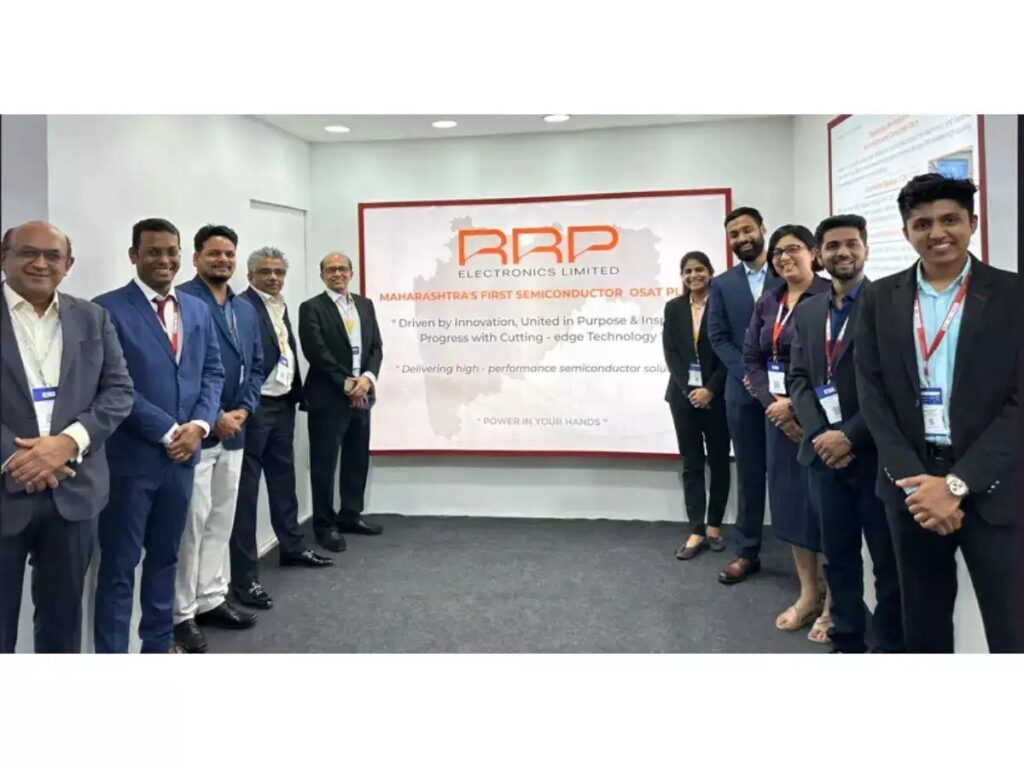
1. At a Glance
Ladies and gentlemen, presenting the miracle stock of Dalal Street – RRP Semiconductor Ltd, a company that moved from trading to semiconductors faster than your cousin moved from “I’m learning Python” to “crypto influencer.” Market cap? A spicy ₹15,736 crore. Latest close price? ₹11,550 – yes, per share, not per kilogram of silicon. Return in one year? 10,490% – that’s not a typo, that’s an exorcism of basic valuation logic.
The company’s sales for the quarter stood at ₹ -6.82 crore (negative, because apparently even revenue walked out), and PAT was ₹ -7.15 crore, a heroic loss that somehow still coexists with an ROE of 209%. Welcome to the semiconductor world, where numbers are complex and so is the management’s imagination.
With a ROCE of 80.2%, a Debt to Equity ratio of 1.56, and a Price-to-Book of 1,683x, this isn’t a balance sheet; it’s an expensive piece of modern art. Yet, the company trades on dreams of OSAT plants, silicon wafers, and YouTube-fueled hype.
So grab your popcorn. This is the Indian semiconductor story that makes Nvidia look like an NGO.
2. Introduction
If you woke up in 2025, opened your trading app, and saw RRP Semiconductor up 8000%, you probably assumed your broker was hacked. But no — this is real. RRP’s stock turned into a rocket while its income statement stayed firmly grounded.
Formerly known as G.D. Trading and Agencies Ltd., this company reinvented itself in May 2024, jumping from “trading miscellaneous goods” to “building semiconductors.” Because, of course, when in doubt — just say the word semiconductor and watch your valuation multiply faster than a Ponzi spreadsheet.
To spice up the drama, RRP went on a preferential issue spree, raised ₹16.23 crore, and loaned ₹6.35 crore to its group company, RRP Electronics Limited, to “set up” an OSAT manufacturing facility. OSAT, for the uninitiated, stands for Outsourced Semiconductor Assembly and Testing. For the rest of us, it stands for Outsource Somebody And Talk.
Then came the renaming, board resignations, auditor swaps, and an open offer pending before SEBI. At one point, BSE had to ask for clarifications because even the regulators couldn’t keep up with RRP’s plot twists.
Somewhere between “trading garments” and “manufacturing chips,” RRP found enlightenment — and retail investors found a miracle.
3. Business Model – WTF Do They Even Do?
RRP Semiconductor says it’s in the business of electronics and digital chips, but the screener dump reads like a Bollywood plot where everyone’s pretending to be an engineer. The company claims to engage in semiconductor design, manufacturing, and OSAT services through its group arm, RRP Electronics Limited.
Its objectives include “manufacture, process, trade and market, design, and build any form of advanced digital chips using semiconductors.” Which is as broad as saying “we’ll do everything, just not profit.”
They even plan to take over companies related to semiconductor trading, consultancy,
or design — an ambitious vision for a firm that reported negative sales this quarter.
To finance this grand dream, RRP raised ₹16.23 crore and promised to spend it on “technology, human resources, fixed assets, working capital, and general corporate purposes.” In corporate translation: “we’ll figure it out later.”
And that OSAT plant? It’s like that gym membership you bought in January — the intent was real, the follow-through is missing.
Still, credit where it’s due: they did make a police complaint against YouTubers for spreading false claims about their ₹6.15 crore exports. Because in the new-age stock market, FIRs are the new financials.
4. Financials Overview
| Metric (₹ Cr.) | Sep 2025 (Latest Qtr) | Sep 2024 (YoY Qtr) | Jun 2025 (Prev Qtr) | YoY % | QoQ % |
|---|---|---|---|---|---|
| Revenue | -6.82 | 5.66 | 0.00 | -220% | -∞ |
| EBITDA | -6.93 | 1.63 | -0.14 | -525% | -4850% |
| PAT | -7.15 | 1.82 | -0.29 | -493% | -2365% |
| EPS (₹) | -5.25 | 1.34 | -0.21 | -492% | -2400% |
P/E not meaningful because EPS is negative. But the market still found meaning.
Commentary:
RRP’s financials look like a semiconductor wafer—thin and full of defects. Revenue has gone into reverse gear, EBITDA has evaporated faster than startup funding, and PAT has gone from “profit” to “pain after tax.” The only thing compounding here is confusion.
5. Valuation Discussion – Fair Value Range (Educational Purpose Only)
Let’s attempt the impossible: valuing a company with negative earnings but positive delusion.
Method 1: P/E Method
EPS = ₹ -1.81 (FY25), P/E not meaningful.
But assuming future EPS = ₹10 (wild optimism), and industry P/E = 30x → Fair value = ₹300.
Method 2: EV/EBITDA Method
EV = ₹15,748 Cr, EBITDA = ₹0.81 Cr → EV/EBITDA = 19,438x.
If it traded at even 30x (peer average), fair EV = ₹24 Cr → Fair value ≈ ₹20–₹25 per share.
Method 3: DCF (Dreamy Cash Flow Fantasy)
Assume ₹20 Cr future cash flow growing at 10% for 10 years, discount at 12%. Present value ≈ ₹114 Cr. Divide by 13.62 Cr shares → ₹8–₹9 per share.
✅ Fair Value Range (Educational Purpose Only): ₹8 – ₹300 per share
This
