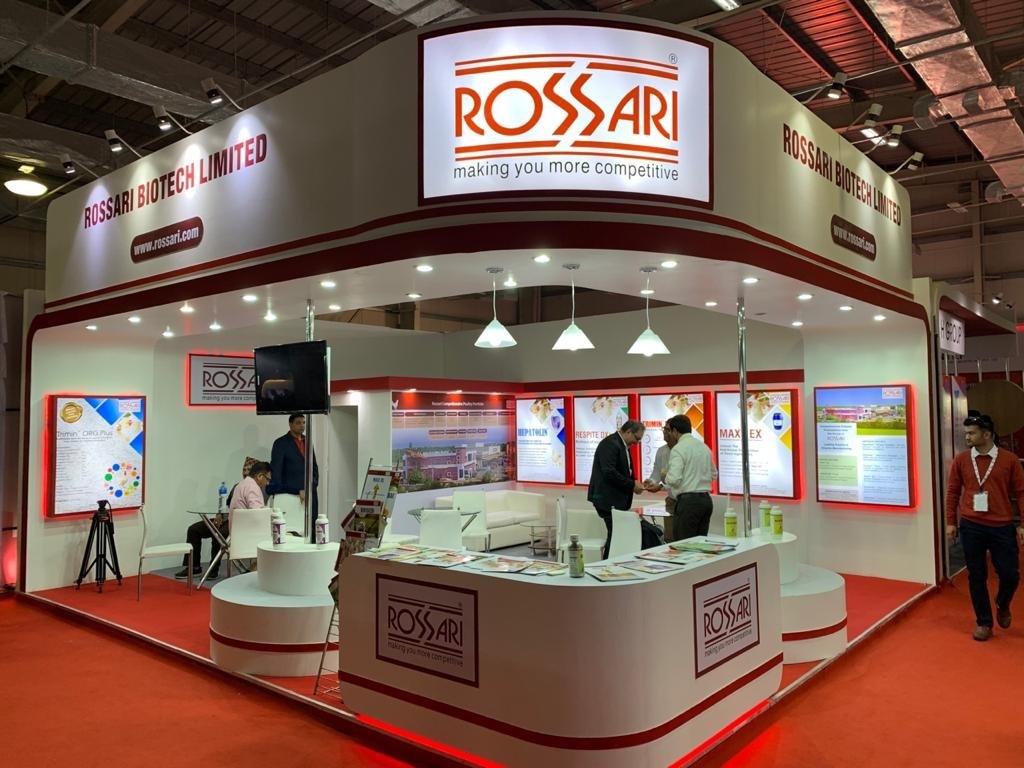
01 — At a Glance
The Soap Opera That Forgot to Write Bad Scripts
- 52-Week High / Low₹768 / ₹394
- Q3 FY26 Revenue₹581.7 Cr
- Q3 FY26 PAT₹32.8 Cr
- Q3 FY26 EPS₹5.92
- TTM EPS₹24.87
- Book Value / Share₹226
- Price to Book1.81x
- Total Assets (Sep 2025)₹2,088 Cr
- Return over 3 Months-29.9%
- Return over 5 Years-17.4%
Flash Summary: Rossari Biotech just announced Q3 FY26 revenues of ₹581.7 crore, up 13% YoY. PAT came in at ₹32.8 crore, growing just 3.4% YoY — not exactly fireworks. EBITDA margins compressed to 11.8% from 12%+. But wait, the board approved an in-principle greenfield manufacturing facility in Saudi Arabia, infused ₹8 million (₹8 crore equivalent) into its Saudi subsidiary, and is busy commissioning 30,000 MTPA of ethoxylation capacity. The stock is down 30% in 3 months and down 17% over 5 years. So investors are either panicking or sleeping through a transformation. Maybe both.
02 — Introduction
The Chemistry Nerd’s Dream Company That Nobody Talks About
Rossari Biotech was started in 2003. It’s one of India’s largest manufacturers of specialty chemicals. Three main categories: Home, Personal Care and Performance Chemicals (HPPC), which is their bread-and-butter; Textile Specialty Chemicals (TSC), where they compete with names most people can’t pronounce; and Animal Health and Nutrition (AHN), because apparently, making shampoo wasn’t enough — they also wanted to make your cattle look good.
The company manufactures 4,280+ products across 7 manufacturing units in Gujarat. They serve 1,000+ clients and distribute through 400+ distributors. They export to 50+ countries. So this is a company that’s been quietly building infrastructure for two decades while you were scrolling Instagram. Their instalation capacity is 332,100 MTPA — that’s the kind of number that makes a plant manager weep with joy.
Q3 FY26 is interesting because it tells a story: top-line growth of 13% is solid but not spectacular. Bottom-line growth of 3.4% is downright disappointing for an industrial company. Yet, management is confidently talking about new markets, new capacities, and now a greenfield plant in Saudi Arabia. The company is making its classic movie comeback — where the hero doesn’t look good in the middle chapters but is clearly heading somewhere important.
Management Clarity (Jan 2026 Concall): CEO Sunil Srinivasan Chari stated growth came from “volumes itself” — translation: they sold more stuff, prices didn’t move. EBITDA margin of 11.8% vs. normalized 15–16% was tied to “ongoing investments in capacity expansion, product development and market-seeding initiatives” plus higher employee costs. The message: margins will bounce back, but not today. Today is investment phase.
03 — Business Model: WTF Do They Even Make?
They Make The Chemicals You Don’t Know You’re Using Every Day
Rossari is essentially a specialty chemical manufacturer. They buy raw materials like acrylic acid, silicone oil, and petrochemical derivatives. They process them. They sell them to downstream customers who turn these chemicals into soaps, shampoos, textiles, paints, coatings, animal feed, and stuff you use every morning without thinking about who made the precursor chemicals.
The business model is straightforward: buy cheap (they do have sovereign positioning), add value through formulation and quality, sell at a markup. The complexity comes from the fact that each segment has different customers, different geographies, and different growth rates. HPPC is growing modestly (11% YoY in Q3). TSC is growing faster (18% YoY) because of exports. AHN is the rockstar (39% YoY) because they’re pushing into Nepal, Bangladesh, Egypt, and other markets.
The company operates in a viciously competitive market. Pidilite Inds. has P/E of 57.7x. Deepak Nitrite has P/E of 33.8x. Rossari at 15.9x looks cheap. But cheap can also mean “the market is waiting for something.” Could be a re-rating. Could be further disappointment. Could be both.
HPPC Segment76%of revenue
TSC Segment19%of revenue
AHN Segment5%of revenue
Exports33%of Q3 revenue
Fun fact: Management revealed that 300 tons of bio-surfactants are expected to be sold next year. These are “green” versions of their chemicals — made through fermentation instead of petrochemical synthesis. The best personal care company in the world has already approved them. Two big multinationals have signed off. This is the kind of orderly transition from commoditized chemicals to specialized biotech that quietly compounds into 50-70% margin products. But it takes time. And capital. Lots of it.
04 — Financials Overview
Q3 FY26: The Plot Thickens, But Not Quickly
Result type: Quarterly Results | Q3 FY26 EPS: ₹5.92 | TTM EPS: ₹24.87 | P/E Ratio: 15.9x
| Metric (₹ Cr) |
Q3 FY26
Dec 2025 |
Q3 FY25
Dec 2024 |
Q2 FY26
Sep 2025 |
YoY % |
QoQ % |
| Revenue | 581.7 | 513.3 | 586.3 | +13.3% | -0.8% |
| EBITDA | 68.9 | 61.9 | 71.9 | +11.3% | -4.2% |
| EBITDA Margin % | 11.8% | 12.1% | 12.3% | -30 bps | -50 bps |
| PAT | 32.8 | 31.7 | 37.0 | +3.4% | -11.4% |
| EPS (₹) | 5.92 | 5.73 | 6.66 | +3.3% | -11.1% |
What Just Happened? Revenues grew 13% YoY but fell 0.8% QoQ. EBITDA margins compressed to 11.8%, down 50 bps from Q2. PAT growth was a meek 3.4% YoY. This is what happens when you’re investing heavily in new capacity, hiring aggressively post-labor code changes, and seeding new markets. Management flagged it clearly: “ongoing investments in capacity expansion, product development and market-seeding initiatives” plus “higher employee-related costs following the implementation of the new labor codes.” Translation: profitability took a hit, but it’s intentional. The question is whether the payoff is worth it.
💬 The margin compression is temporary, says management. But investors are punishing the stock down 30% in 3 months anyway. Do you think this is panic selling or prescience? Comment below.
05 — Valuation Discussion
Fair Value Range Calculation