01 — At a Glance
₹120 Crore Market Cap per Crore Revenue. Do the Math.
- 52-Week High / Low₹166 / ₹99.3
- Q3 FY26 Revenue₹275 Cr
- Q3 FY26 PAT₹48 Cr
- Q3 FY26 EPS₹1.75
- Annualised EPS (Q3×4)₹7.00
- Book Value₹42.8
- Price to Book2.79x
- Dividend Yield0.00%
- Debt / Equity0.00x
- 9M FY26 PAT₹141 Cr
The Setup: Rolex Rings just delivered Q3 FY26 results on Feb 10, 2026. Revenue landed at ₹275 crore (flat QoQ, +5.8% YoY). But here’s the kicker—PAT went from ₹44 crore (Q2) to ₹48 crore (Q3) despite zero topline growth. How? Magic. Or “other income.” Mostly other income. The company is basically a forging shop that has become an accidental finance company.
02 — Introduction
Rajkot’s Forging Empire Hits a US Tariff Wall. Bounces. Moves On.
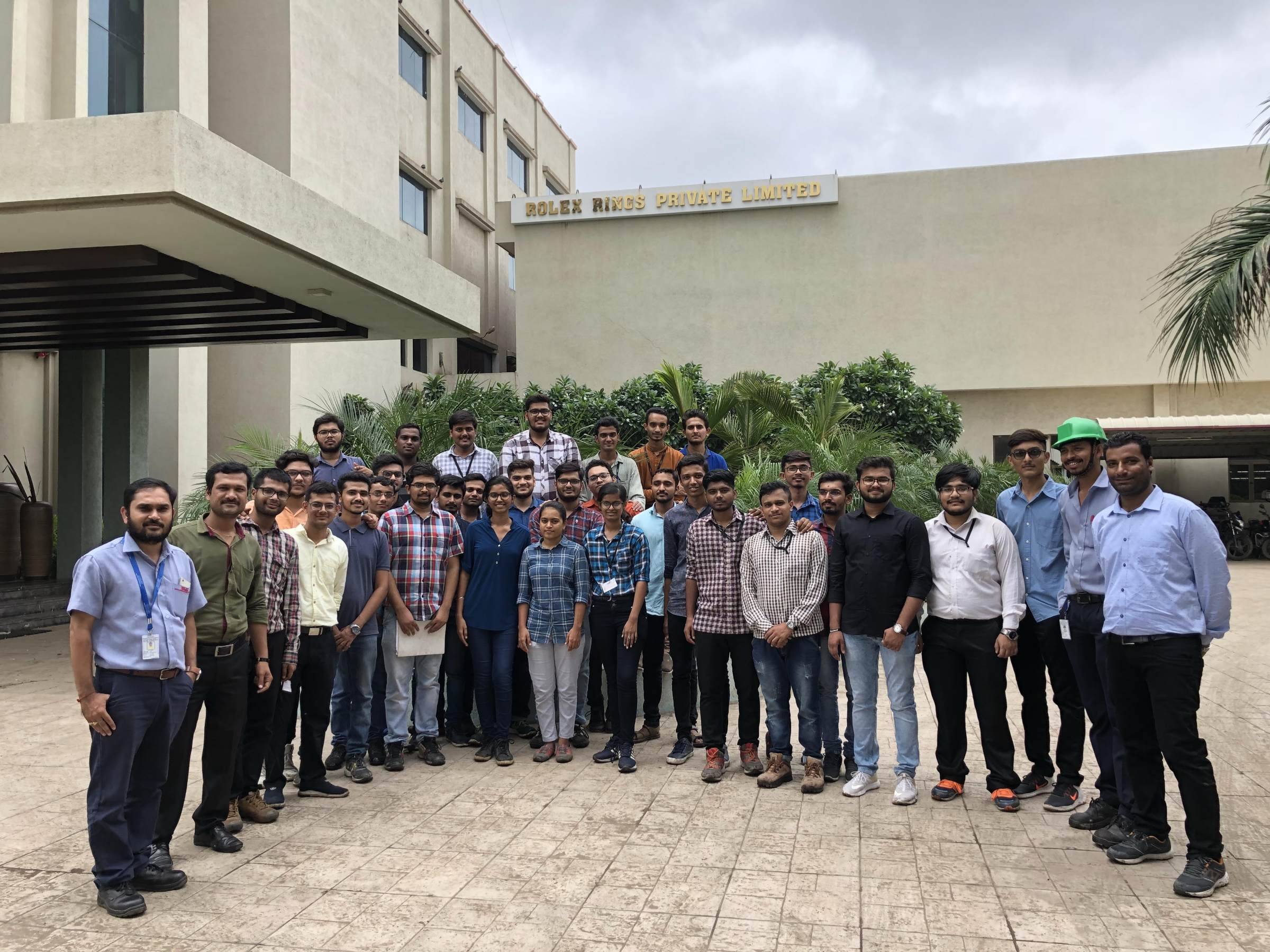
Let’s talk about Rolex Rings. No, not the watch. The company. Established in 1980 by Rupesh Madeka in Rajkot—a city that’s been forging metal since before India had GST forms. Rolex Rings manufactures bearing rings and automotive components. Bearing rings are the metal circles inside ball bearings. Sounds boring? Wait until you learn that these rings end up in cars, wind turbines, railways, and industrial machinery across 15 countries.
The company listed in Aug 2021 at a time when everyone wanted smallcap growth stories. Rolex delivered. Revenue CAGR of 11.6% over 5 years. Profit CAGR of 28.8% over the same period. ROCE at 22.8%. Zero debt. Over ₹300 crore in free cash. This is what disciplined capital allocation looks like when a family actually runs the business—no vanity projects, no acquisitions disguised as “synergies,” no pivot to cryptocurrency.
Then America decided to wage trade wars. And suddenly, 43% of Rolex’s revenue comes from a market that’s become as stable as a Delhi monsoon. The Feb 2026 concall revealed the full extent of the damage: US customers held back 50%+ of imports for 6–8 months due to tariff uncertainty. Customers literally shut plants. Rolex’s US volume fell 30% year-to-date compared to FY25. But because 47% of revenue still comes from exports, and Europe is printing money, the overall topline held up. Barely.
Concall Reality Check: “More than 50% of their imports held back. Customers temporarily closed plants. Zero supply as of date for two large US programs.” Management was matter-of-fact about this. No dramatics. No “we remain optimistic” corporate-speak. Just facts. That’s either confidence or resignation. Probably both.
03 — Business Model: Forging Metal. Literally.
They Make Rings. Bearing Rings. You Pour Oil. They Spin. Civilization Happens.
Rolex Rings operates three manufacturing plants in Rajkot with 24 forging lines and 594 machining spindles. Total capacity: 165,000 MT per annum (forging) + 75 million pieces per year (machining). They forge hot metal, machine it to precise tolerances, and sell to Tier-1 suppliers who sell to OEMs.
Revenue split: 58% bearing rings, 42% auto components. Bearing rings go into everything with a rotating shaft. Auto components include engine blocks, transmission gears, axle shafts, exhaust manifolds—basically parts where precision and strength matter more than aesthetics.
Geography: 54% domestic, 46% exports. Of exports, ~33% to US, ~48% to Europe, remainder to Mexico, Canada, Thailand. End-user industries: 52% passenger vehicles, 24% commercial vehicles, 17% industrial, 7% EV/hybrid. The 7% EV exposure is laughably small, but it’s growing. Management says they have 70% OEM approval for EV-grade components. Translation: they’re hedging their ICE bet before it becomes a funeral pyre.
Top 10 customers account for 84% of revenue. That’s not diversification—that’s dependency masquerading as a business model. But they’ve been suppliers to the same customers for 10+ years, so switching costs are astronomical. These are Tier-1 auto suppliers like SKF, ABC Bearings, Schaeffler, Carraro Group. Not the kind of customers who kick out suppliers on a whim—they need to certify replacements, negotiate prices all over again, conduct audits. Too painful. That’s Rolex’s moat.
Bearing Rings58%of Revenue
Auto Components42%of Revenue
Capacity Util.62–63%9M FY26
04 — Financials Overview: Q3FY26
The Numbers Game. Spoiler: Margins Win.
Result type: Quarterly Results | Q3 FY26 EPS: ₹1.75 | Annualised EPS (Q3×4): ₹7.00 | Recalculated P/E: ₹120 ÷ ₹7.00 = 17.1x
| Metric (₹ Cr) |
Q3 FY26
Dec 2025 |
Q3 FY25
Dec 2024 |
Q2 FY26
Sep 2025 |
YoY % |
QoQ % |
| Revenue | 275 | 260 | 271 | +5.8% | +1.5% |
| EBITDA (Gross) | 75 | 60 | 69 | +25.0% | +8.7% |
| EBITDA Margin % | 27.3% | 23.1% | 25.5% | +420 bps | +180 bps |
| PAT | 48 | 20 | 44 | +140% | +9.1% |
| EPS (₹) | 1.75 | 0.74 | 1.63 | +136.5% | +7.4% |
The Plot Twist: Q3 FY25 had a massive exceptional item—Labour Code gratuity liability hit them for ₹2.5 crore. Strip that out, and YoY PAT growth is more modest, but still solid. More importantly: EBITDA margins jumped to 27.3% from 23.1% YoY. How did revenue stay flat but margins expand by 420 bps? Cost discipline. Operating leverage. And about ₹15 crore of “other income” (mostly from financial investments and interest)—which management flagged explicitly on the concall. Net EBITDA (excluding other income) sits at ~21%, still healthy.
05 — Valuation: Fair Value Range
Is ₹120 A Deal Or A Trap?