1. At a Glance — Blink and You’ll Miss the Turnaround
Rane (Madras) Ltd is that quiet auto ancillary stock that suddenly wakes up the market with a +1,190% QoQ PAT growth and then goes back to sipping filter coffee in Chennai like nothing happened.
Current price sits around ₹840, market cap ₹2,322 Cr, trailing P/E ~27, EV/EBITDA at ~9.1x, and a balance sheet still carrying ₹811 Cr of debt — which is both the problem and the story.
Q3 FY26 delivered ₹1,019 Cr revenue, ₹94.8 Cr EBITDA, and ₹30.5 Cr PAT, marking a clean operational quarter without the usual impairment horror show that haunted FY23–FY24. ROCE at 11.9% and ROE at 8.4% won’t win beauty contests, but remember — this company was busy amputating a loss-making US limb till recently.
Auto demand is steady, PV-heavy exposure is helping, exports are creeping up, and asset monetisation (Velachery land sale) is being used like a financial defibrillator.
Is this a turnaround? Or just one good quarter with good behaviour?
Let’s pop the bonnet. 🔧
2. Introduction — A Group Veteran With a Mild Identity Crisis
Founded in 1960, Rane (Madras) Ltd (RML) is part of the larger Rane Group — a name that OEM procurement teams trust blindly but public market investors side-eye cautiously.
Why?
Because historically, RML has done everything right operationally — but kept sabotaging its own P&L with overseas adventures, impairments, debt, and restructuring charges that arrived like uninvited wedding guests.
FY23 and FY24 were especially brutal:
- Impairments worth ₹223 Cr (FY23) + ₹122 Cr (FY24)
- US subsidiary losses of ₹40–50 Cr annually
- Debt-funded survival mode, not growth mode
By FY25–FY26, management finally said: “Bas. Enough Silicon Valley dreams.”
The US loss-making entity RLMC was sold after clearing USD 16 mn debt, and the group started behaving like a boring, sensible auto ancillary again.
Q3 FY26 is important not because profits were high — but because they were clean.
No
exceptional write-offs.
No “adjusted EBITDA” gymnastics.
Just boring metal, brakes, steering, and cash flows.
And in markets, boring + consistent often beats exciting + chaotic. Agree?
3. Business Model — WTF Do They Even Do?
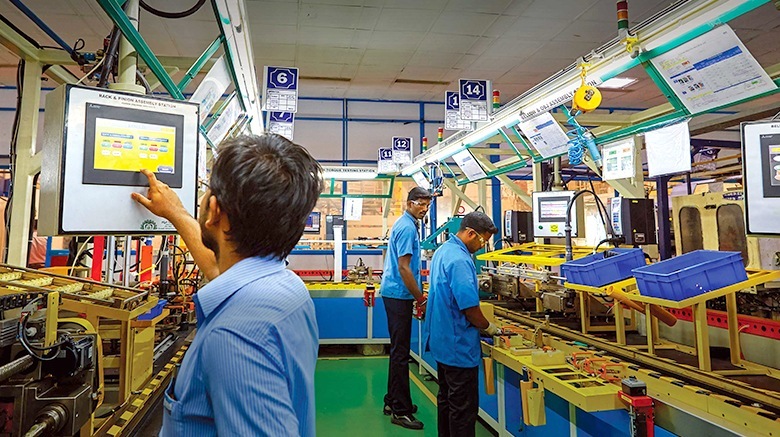
Think of Rane (Madras) as the mechanical nervous system of vehicles.
A. Steering & Linkages (The Breadwinner)
- Manual steering gears
- Suspension components
- Steering linkages & hydraulic products
This segment alone contributes ~51% of revenue and has an order book of ₹280 Cr, of which ₹170 Cr is export-led. Translation: OEM trust + global homologation + pricing discipline.
B. Brake Components (The Reliable Side Hustle)
- Brake linings
- Disc pads
- Railway brake blocks
- CV brake pads
Order book here is modest (₹25 Cr), but margins are steady and customer stickiness is high.
C. Engine Components (The Specialist)
- Engine valves
- Valve guides
- Mechanical tappets
Export orders of ₹3 Cr won’t excite anyone, but this is a precision, high-qualification business.
D. Aftermarket (The Underrated Cash Cow)
- Steering, suspension
- Engine & cooling products
- Brakes, transmission, fluids
Aftermarket revenue is cyclically defensive and CV-heavy (56%), which matters when OEM cycles wobble.
So yes — RML is boring.
But boring businesses survive recessions better than PowerPoint unicorns.
Would you rather own hype or horsepower?
4. Financials Overview — The Quarter That Didn’t Self-Destruct
Quarterly Comparison Table (₹ Cr)