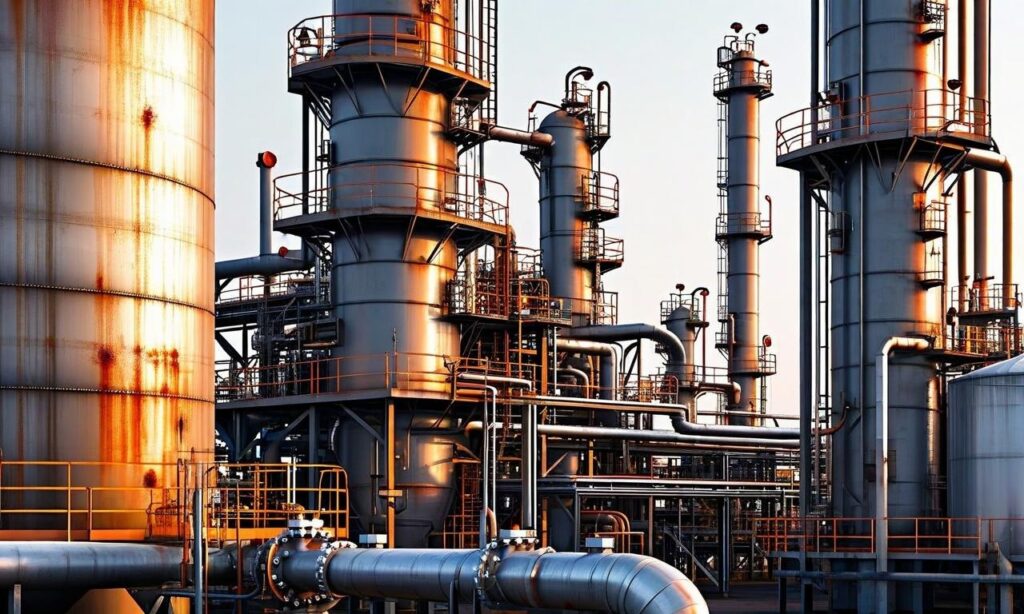
1. At a Glance – Blink and You’ll Miss the Business
Rama Petrochemicals Ltd (RPL) is a ₹14.6 crore market-cap company trading at ~₹13.9 per share, which already tells you this is not your typical “institutional darling.” Once a methanol manufacturer, today RPL is essentially a trading company with legacy baggage, recurring losses, and a balance sheet that looks like it skipped leg day for a decade.
Sales for FY25 stood at just ₹0.47 crore, while PAT was a brutal loss of ₹7.19 crore. Debt sits at ₹68.3 crore, which is nearly 5× the market cap—a rare achievement unlocked only by companies that refuse to quit despite gravity.
Recent stock returns look deceptively decent (1Y ~47%), but fundamentals are waving a red flag big enough to cover the BSE building. The latest quarterly sales were ₹0.13 crore with a quarterly loss of ₹1.85 crore. If vibes could pay interest, lenders would already be rich.
2. Introduction – From Methanol Dreams to Trading Reality
Rama Petrochemicals was incorporated in 1985, back when petrochemicals were cool, capex was king, and balance sheets still had self-respect. The company earlier operated in methanol manufacturing, but that chapter is now closed—permanently.
Today, RPL has pivoted into trading activities, contributing ~96% of FY25 revenue. The problem? Trading without scale, margin, or consistent volumes is not a business model—it’s more like a side hustle with statutory audits.
Losses have piled up year after year, eroding net worth into deep negative territory. Despite this, the company continues to survive, largely funded by debt and promoter support.
So the big question: is this a turnaround story waiting to happen, or just a listed shell doing financial yoga to stay flexible?
3. Business Model – WTF Do They
Even Do?
Let’s simplify this.
Earlier:
✔ Methanol manufacturing
✔ Industrial plant
✔ Capex heavy, cyclical, risky
Now:
✔ Trading of goods
✔ Trading of shares
✔ Interest income
That’s it.
FY25 revenue breakup tells the full story:
- Sale of traded goods – ~96%
- Sale of shares – ~2%
- Interest income – ~2%
There is also a menthol production unit in Raigad, along with an effluent treatment plant. But operationally, this asset base is barely contributing meaningfully to revenues.
In short, RPL today is a trading company with legacy infrastructure, negative margins, and no visible operating leverage.
4. Financials Overview – Numbers That Hurt a Little
Quarterly Comparison (₹ crore)
| Metric | Latest Qtr (Dec 25) | YoY Qtr (Dec 24) | Prev Qtr (Sep 25) | YoY % | QoQ % |
|---|---|---|---|---|---|
| Revenue | 0.13 | 0.03 | 0.13 | 333% | 0% |
| EBITDA | -0.23 | -0.33 | -0.26 | NA | NA |
| PAT | -1.85 | -1.77 | -1.77 | -4.5% | -4.5% |
| EPS (₹) | -1.77 | -1.69 | -1.69 | NA | NA |
Annualised EPS (Q3 rule):
Average of Q1, Q2, Q3 EPS × 4
= (-1.66 + -1.69 + -1.77) / 3 × 4
≈ -6.87, which matches TTM reality nicely (unfortunately).
Witty takeaway: Revenue grew 333% because the base was microscopic. Losses stayed loyal.
5. Valuation Discussion – Fair Value Range (Purely Academic)
Let’s be clear: valuation here is more
