01 — At a Glance
The Belt Company That Belied All Expectations
- 52-Week High / Low₹1,784 / ₹1,220
- Q3 FY26 Revenue₹151 Cr
- Q3 FY26 PAT₹35.3 Cr
- TTM EPS₹80.2
- Annualised EPS (Q3 Avg)₹103.52
- Book Value / Share₹468
- Price to Book3.10x
- ROE (Last Year)20.7%
- Debt to Equity0.05x
- Net Debt PositionNegative (Cash Rich)
Flash Summary: PIX Transmissions dropped a Q3 FY26 PAT of ₹35.3 crore — a spine-tingling 58.5% jump YoY. Gross margins at 29%, ROCE at 26.9%, and a 0.05x debt-to-equity ratio that makes most finance professionals weep with joy. CARE upgraded their rating to A+ in March 2025. But here’s the twist: the P/E of 18.1x is *exactly* the industry median. Which means the market is finally admitting PIX is quality. No discount. No premium. Just fair value. The solar capex? Just the cherry on the samosa.
02 — Introduction
The Company Your Dad’s Dad Knew, But You’re Just Meeting
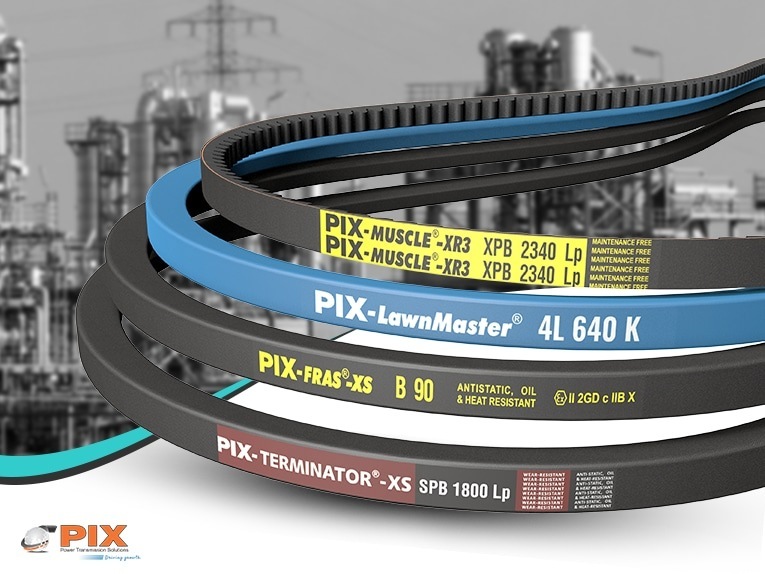
Incorporated in 1981, PIX Transmissions is India’s leading manufacturer of mechanical power transmission belts. Think of them as the unsung heroes behind every rotating machine in India — from a farmer’s harvester in Punjab to a textile mill in Tamil Nadu to a food processor in someone’s kitchen. The company makes industrial belts, agricultural belts, automotive belts, synchronous belts, timing belts, and enough SKUs to make your head spin like a pulley at 3,000 RPM.
Here’s the kicker: they sell over 80% of their products under their own brand name, mostly into the after-market (replacement) segment. This is extremely elegant economics. Farmers don’t wake up dreaming about belt brands. But when their belts break, they ask the local dealer. And the dealer usually stocks PIX. That’s called customer stickiness. And PIX has 40+ years of it.
Nagpur-headquartered, promoted by the Sethi family (led by CMD Amarpal S Sethi, who has over five decades in the industry), PIX operates two manufacturing units at Hingna and an automated rubber mixing facility at Nagalwadi. They export to 100+ countries. In FY25, exports accounted for 50% of revenues. Translation: they’re not just a desi industrial company pretending to be global. They’re actually global.
CARE Ratings Reaffirmation (March 4, 2026): CARE A+; Stable / CARE A1+ across long-term and short-term bank facilities. The rationale is almost comforting in its simplicity: “healthy profitability margins, comfortable capital structure, strong liquidity.” No drama. No warnings. Just competence acknowledged by the rating agency.
03 — Business Model: WTF Do They Even Make?
Rubber + Friction + Rotation = Cha-Ching
PIX’s business is deceptively simple. They manufacture belts — rubber transmission belts with different profiles (V-belts, synchronous belts, ribbed belts) for different applications. A belt is a consumable. It wears out. It breaks. You need a replacement. This is *not* a capital equipment sale. This is recurring revenue from the after-market.
Unlike selling a tractor to a farmer (one-time, infrequent), PIX is selling the tractor belts that need replacing every few years. The margins are consistent. The demand is predictable. The customer base is sticky. It’s the kind of business model that makes CFOs sleep well.
Revenue is split roughly: 50% domestic, 50% export (FY25). Major export destinations: USA, Europe, Asia. They’ve set up marketing subsidiaries in UAE, UK, and Germany. These are not full manufacturing operations — they’re distribution arms. This geographic diversification is crucial. If one market coughs, they have five others.
Export Revenue50%of FY25
Operating Margin29%Q3 FY26
Workforce661as of Mar 2025
Product FocusAfter-Market80% of sales
Fun fact: PIX products have a shelf life of over seven years. So inventory sitting in a warehouse isn’t “dead” inventory — it’s just waiting for its moment. This is why their working capital cycle is elongated but not dangerous. They’re not worried about belt obsolescence like an electronics company would be about outdated chips.
04 — Financials Overview
Q3 FY26: The Numbers Went Kaboom