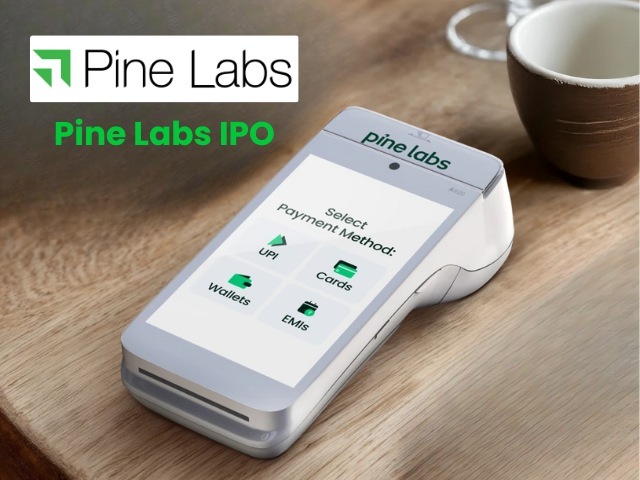
Pine Labs IPO (Nov’25): Fintech Unicorn Files ₹3,899.91 Cr Offer – Profits Finally Appear, Valuation Still Flying Higher Than A UPI QR Code
1. At a Glance
Pine Labs — the fintech kid that graduated from “card-swipe machine” to “digital commerce empire” — has finally entered Dalal Street’s arena with a ₹3,899.91 crore IPO. The offer splits neatly into ₹2,080 crore of fresh equity and ₹1,819.91 crore of OFS, giving early VCs and angels one last chance to cash out in style. The IPO opened on Nov 7, 2025, and closes on Nov 11, listing scheduled for Nov 14 on NSE and BSE.
With a price band of ₹210–₹221 per share, the minimum retail investment stands at ₹14,807 (67 shares), and anchor investors have already parked ₹1,753.83 crore — because apparently, fintech FOMO is still alive.
Despite a recent quarter finally showing a profit (₹4.79 crore in Q1FY26), Pine Labs is asking for a post-issue P/E of 1,325x. That’s not a typo — that’s “Zomato before it learned EBITDA” level optimism.
Its market cap post-listing is pegged near ₹25,376 crore, which is a lot of zeroes for a company that until this year specialised in making elegant losses look like innovation.
So, what’s this unicorn really selling? Let’s find out — and laugh responsibly.
2. Introduction – India’s Fintech Fairytale Finally Rings the IPO Bell
Remember those tiny POS machines that beeped every time your card declined at CCD in 2014? That was probably a Pine Labs terminal.
Back then, Pine Labs was just a hardware play — a quiet merchant solution company from Noida, founded in 1998, long before fintech became sexy. Today, it’s selling the full stack — payments, loans, loyalty, and cloud-based merchant analytics. The kind of buzzwords that make even RBI officers open a Google Sheet.
After years of surviving in private markets — funded by the likes of Temasek, Sequoia, and Mastercard — Pine Labs is finally testing public investor appetite. The company claims to enable 988,304 merchants, 716 brands, and 177 financial institutions as of June 2025.
But while the top line has grown 28% YoY to ₹2,327 crore in FY25, it’s the bottom line resurrection that caught everyone’s eye. From losses of ₹341.9 crore in FY24 to a mere ₹145.49 crore in FY25 — and then a positive ₹4.79 crore in Q1FY26 — the fintech phoenix might actually be learning accounting.
The catch? At ₹221, investors are paying for hope, not history.
Still, if you enjoy high-growth fintechs where profit is a rumour and “cloud infrastructure” is an expense line longer than your Paytm passbook, welcome aboard.
3. Business Model – WTF Do They Even Do?
Pine Labs isn’t your average payments company. It’s more like the Swiss Army knife of merchant commerce.
Smart POS Devices: Those sleek white card machines that accept everything — card, UPI, QR, wallet, EMI, or just your patience.
BNPL (Buy Now Pay Later): A gift to millennials who can’t say no at checkout. Pine Labs partners with banks and brands to enable instant EMIs.
Merchant Financing: The platform that lends you working capital to pay rent for the machine you bought to collect digital payments.
Loyalty & Gift Cards: Qwikcilver — Pine Labs’ baby — powers reward programs and digital gift cards for brands like Amazon and Flipkart.
E-commerce APIs: Payment gateway and checkout solutions for online sellers.
In essence, Pine Labs connects merchants, consumers, and financial institutions in a single transactional ecosystem. It earns via transaction commissions, service subscriptions, device rentals, and financing margins.
So yes, Pine Labs monetises both your purchase and your guilt about it.
4. Financials Overview
Let’s break the recent numbers down — because fintech jargon aside, rupees don’t lie.
Commentary: The company finally crossed the “EBITDA positive” finish line, waving a tiny ₹4.79 crore flag. The PAT is barely visible without a magnifying glass, but in fintech land, that’s a parade-worthy milestone.
5. Valuation Discussion – Fair Value Range Only
Let’s crunch this circus into sanity:
(a) P/E Method: Post-issue EPS = ₹0.68 At ₹221/share → P/E = 325x At ₹210/share → P/E = 308x → Fair Value (P/E 150–200x for growth fintechs) = ₹102–₹136
(b) EV/EBITDA Method: FY25 EBITDA = ₹356.72 Cr; EV ≈ ₹25,376 Cr Market Cap + ₹888 Cr Debt – ₹2,327 Cr Cash = ₹23,937 Cr EV/EBITDA = 23,937 / 356.72 ≈ 67x → Reasonable EV/EBITDA range for fintech peers: 30–50x → Fair Value ≈ ₹135–₹170
(c) Simplified DCF: Assuming EBITDA grows 25% CAGR for 5 years and stabilises at 20% margin, discounting at 12% → Fair Value ≈ ₹140–₹160
📊 Educational Fair Value Range: ₹102 – ₹170 per share (This range is for educational purposes only and not investment advice.)
6. What’s Cooking – News, Triggers, Drama
The IPO’s purpose reads like a to-do list from a startup founder after Series F:
₹532 Cr for debt repayment — a rare fintech that actually acknowledges borrowing.
₹60 Cr for international subsidiaries in Singapore, Malaysia, and UAE — because India’s already too crowded with UPI QR codes.
₹760 Cr for IT and cloud infrastructure — translation: servers,