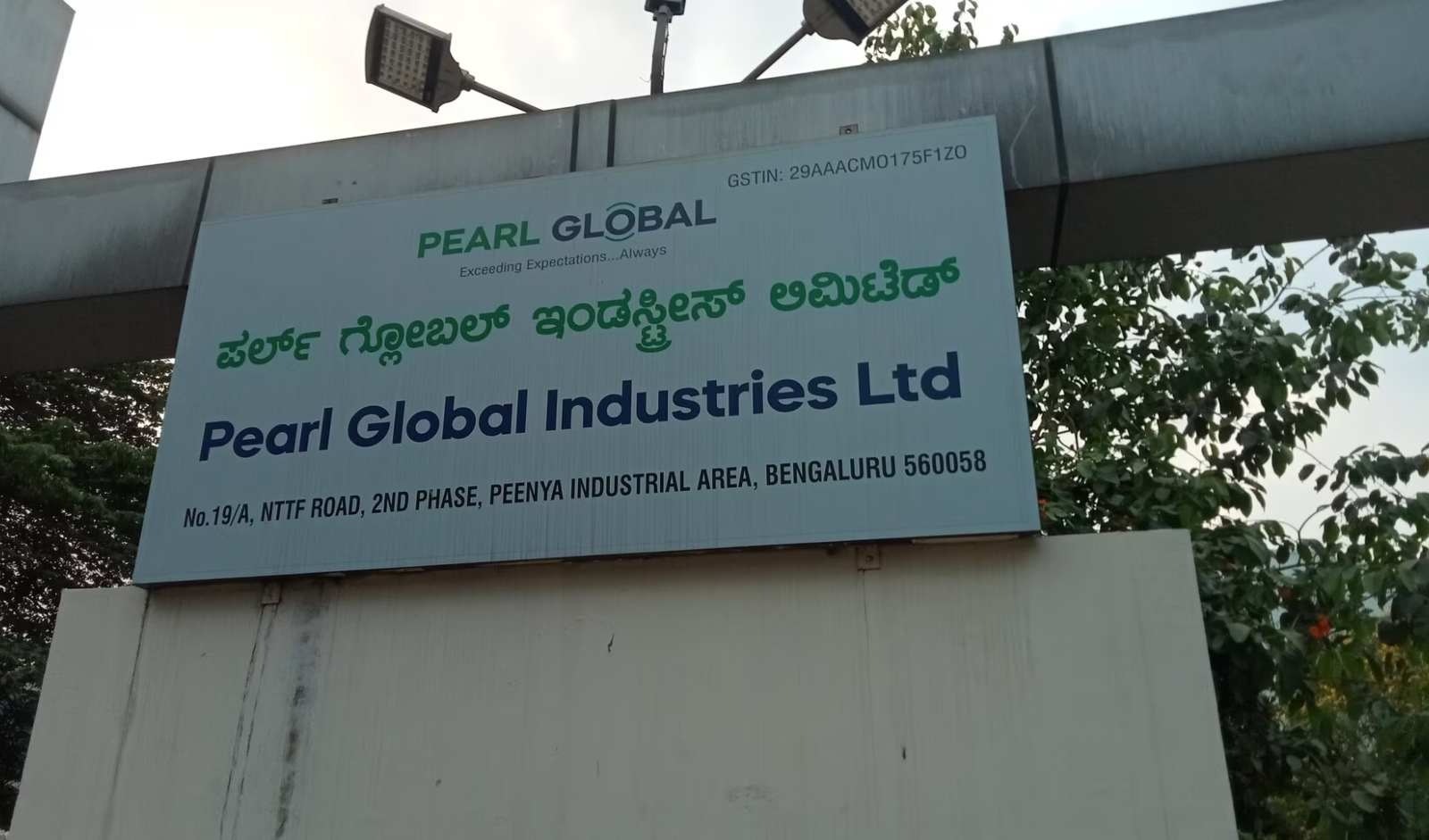
Pearl Global Industries Ltd Q2 FY26 – The Exporter That Stitched Its Way to ₹ 1,313 Cr Quarterly Revenue, ₹ 73 Cr PAT, and a ROE So Sharp It Could Cut Denim
1. At a Glance
If you ever wondered how your H&M shirt, your Zara dress, and your GAP jeans found their way into your closet faster than your salary into your account — thank Pearl Global Industries Ltd (PGIL). This 1987-born apparel juggernaut has quietly become India’s couture ninja for the world, operating 16 owned and 9 partnered factories across India, Bangladesh, Vietnam & Indonesia.
As of Nov 2025, the stock trades at ₹ 1,688, up 34.3 % in 3 months and a mind-blowing 68.5 % in 1 year, giving it a market-cap of ₹ 7,772 Cr. With a P/E of 29.5, ROE 24.3 %, and ROCE 22.1 %, PGIL is not a fast-fashion fad — it’s a compounder disguised as a fabric mill.
The company clocked Q2 FY26 revenue of ₹ 1,313 Cr, up 9.24 % YoY, while PAT rose 18 % to ₹ 73 Cr. Management rewarded shareholders with a ₹ 6 interim dividend per share, proving that good tailoring can indeed stitch wealth.
And as the Bhagavad Gita says, “Karmanye vadhikaraste ma phaleshu kadachana” — Pearl’s karma is making global garments; the “phala” (profits) just follow naturally.
2. Introduction
India’s textile export story often swings between “labour-intensive” and “margin-defensive.” Somewhere in between sits Pearl Global Industries Ltd — the quiet middle child that went international before it was cool.
While the street chases unicorn startups burning cash, Pearl has been busy sewing profits since the 80s. It exports 73.5 % of revenue, manufactures for brands like Walmart, Primark, Tommy Hilfiger & Calvin Klein, and still manages to maintain a clean balance sheet with Debt-to-Equity 0.58.
FY25’s ₹ 4,792 Cr sales and ₹ 263 Cr PAT are no joke. That’s roughly ₹ 13 Cr profit every fortnight, or as your CA would say, “enough to buy three Bandra apartments and still pay GST on time.”
Over the past five years, Pearl’s sales have grown 21.7 % CAGR, profits 57.2 % CAGR, and its stock has delivered 83 % CAGR. If compounding had a wardrobe, it would wear a Pearl Global shirt.
3. Business Model – WTF Do They Even Do?
Pearl Global is an OEM + ODM apparel manufacturer. Translation: it designs, produces, and ships clothes for some of the world’s largest retailers. From women’s dresses and men’s shirts to kids’ wear and outerwear, they cover the entire wardrobe spectrum except your bank balance.
Their product lines span: woven (72 %), knits (28 %), with a strong focus on design and supply-chain efficiency. With 93 Mn pieces capacity per annum across India, Bangladesh, Vietnam & Indonesia, they run a multi-country model that hedges geopolitical and cost risks like a pro.
The company is moving to an asset-light model — out of 23 plants, 9 are run through collaborations. This means less CAPEX, more ROCE (22 % FY25), and fewer headaches with labour laws.
Revenue split is simple: India (26.5 %), Exports (73.5 %). Their clients are retail royalty — Walmart, Target, Primark, Gap, Old Navy, Muji, Calvin Klein. If you’ve ever bought clothes from a mall and felt good about yourself, you’ve probably just subsidised Pearl’s next plant in Bangladesh.
4. Financials Overview
Source table
Metric
Latest Qtr (Q2 FY26)
Same Qtr LY (Q2 FY25)
Prev Qtr (Q1 FY26)
YoY %
QoQ %
Revenue (₹ Cr)
1,313
1,202
1,228
+ 9.24 %
+ 6.91 %
EBITDA (₹ Cr)
121
111
112
+ 9.0 %
+ 8.0 %
PAT (₹ Cr)
73.3
62
72
+ 18.0 %
+ 1.8 %
EPS (₹)
15.95
14.86
14.76
+ 7.3 %
+ 1.3 %
Annualised EPS ≈ ₹ 63.8 → P/E ≈ 26.4× @ ₹ 1,688.
Commentary: Revenue grows like a gym bro on creatine — slow and steady till it suddenly bulks up. Operating margins hover around 9 %, and the company has mastered the art of keeping textile EBITDA above double digits (rare in this sector). Net profits continue to expand thanks to leaner operations and a well-tailored tax strategy (average tax rate ~9 % this quarter).
5. Valuation Discussion – Fair Value Range
Let’s not call it “target price.” Let’s call it educational valuation therapy.