1. At a Glance – The “Still Standing Somehow” Edition
Omaxe Ltd is that one real estate stock which refuses to exit the party even after tripping over the carpet, spilling the drink, and knocking over the DJ table. As of early February 2026, the company sits at a market cap of ₹1,451 crore, trading around ₹79 per share, down ~16% over the last one year but somehow still alive enough to spark debates on Twitter and Telegram.
The latest Q3 FY26 (Dec 2025) consolidated results show revenue of ₹302 crore and a loss of ₹153 crore, continuing the tradition of red ink with impressive consistency. Operating margins remain deeply negative at -51%, ROE looks like a math error at -506%, and ROCE at -61.4% politely asks investors to lower expectations.
Debt? A comfortable (for thriller writers) ₹1,419 crore.
Book value? Negative ₹30.4 – yes, that’s not a typo.
Promoter holding? A solid 74.14%, because if anyone still believes in this story, it’s the promoters.
And yet—projects are launching, PPP deals are happening, debt is being repaid selectively, and press releases keep coming. So the obvious question: Is Omaxe a turnaround candidate, or just India’s most optimistic real estate soap opera?
Let’s dig in.
2. Introduction – A Builder, A Dream, And A Very Long Construction Timeline
Omaxe is not a new kid on the block. This company has been around long enough to remember when Indian real estate margins were fat, approvals were “manageable,” and townships were sold on brochures rather than litigation updates.
The business model is straightforward: build homes, malls, townships, commercial spaces, sell them, collect cash, repeat. In theory. In practice, Omaxe’s journey over the last decade looks more like a roller coaster designed by a stressed civil engineer.
Between FY2014 and FY2018, the company was profitable, respectable, and boring (the best compliment in real estate). Post FY2020, things changed. Sales collapsed, costs ballooned, interest expenses ate whatever survived, and profitability went on a long vacation without a return ticket.
Despite this, Omaxe kept expanding geographically, entering PPP projects, talking about Tier-2 and Tier-3 India before it was fashionable, and signing MoUs like it was collecting Pokémon cards.
So why does the market still care?
Because real estate turnarounds are
violent—when they happen. And Omaxe owns land, projects, approvals, and optionality. The problem is time, cash, and execution discipline.
Is Omaxe rebuilding the house brick by brick—or just repainting cracks? Let’s see.
3. Business Model – WTF Do They Even Do?
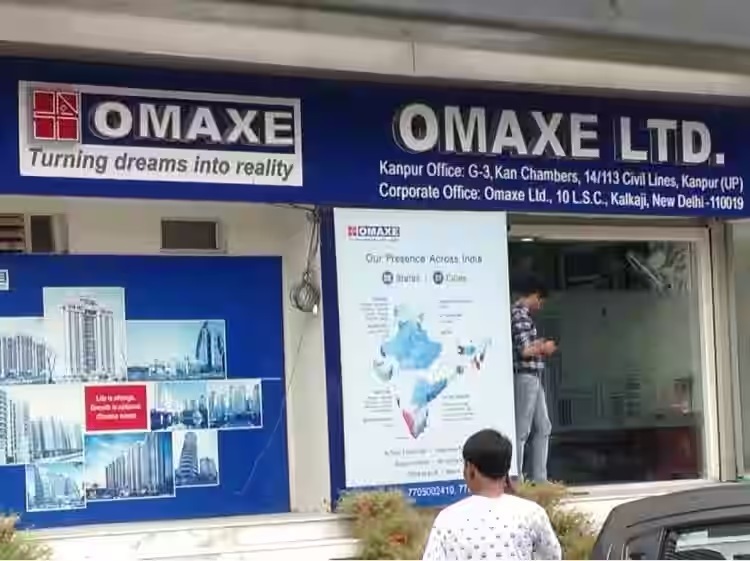
At its core, Omaxe is a pan-India real estate developer with presence across 27 cities in 8 states. The portfolio spans:
- Residential projects
- Integrated townships
- Commercial offices
- Retail malls
- PPP-based civic-commercial developments
- Construction contracting (yes, they build for others too)
Since inception, Omaxe claims to have delivered ~132 million sq. ft. of developed area. That’s not small. That’s “Google Maps zoom-out” large.
The Twist: PPP Projects
Unlike many peers who stick to pure residential or premium commercial, Omaxe has leaned into Public-Private Partnership (PPP) projects. The poster child here is Omaxe Chowk, Chandni Chowk, a 3.83 lakh sq. ft. redevelopment project in Delhi.
The logic is simple:
- Government land
- Long-term leasehold
- High footfall
- Lower land acquisition risk
The risk?
- Bureaucracy
- Timelines that move slower than municipal files
- Returns that take patience (and antacids)
Geographic Focus
Omaxe isn’t chasing Mumbai or South Delhi vanity projects. It prefers Tier-2 and Tier-3 cities—Lucknow, Indore, Amritsar, Ludhiana, Faridabad, New Chandigarh.
This keeps ticket sizes lower, but volumes higher. Or at least that’s the plan.
Question for you:
Would you rather build in Mumbai with insane margins and insane competition—or in Indore with patience and fewer rivals?
4. Financials Overview – When Numbers Speak, They Mostly Sigh
Quarterly Comparison Table (₹ Crore)
| Metric | Latest Qtr (Q3 FY26) | YoY Qtr (Q3 FY25) | Prev Qtr (Q2 FY26) | YoY % | QoQ % |
|---|---|---|---|---|---|
| Revenue | 302 | 289 | 321 | 4.5% | -5.9% |
| EBITDA | -155 | -127 | -169 | -22% | 8.3% |
| PAT | -153 | -150 | -166 | -2.0% | 7.8% |
| EPS (₹) | -8.38 | -8.23 | -9.11 | -1.8% | 8.0% |
