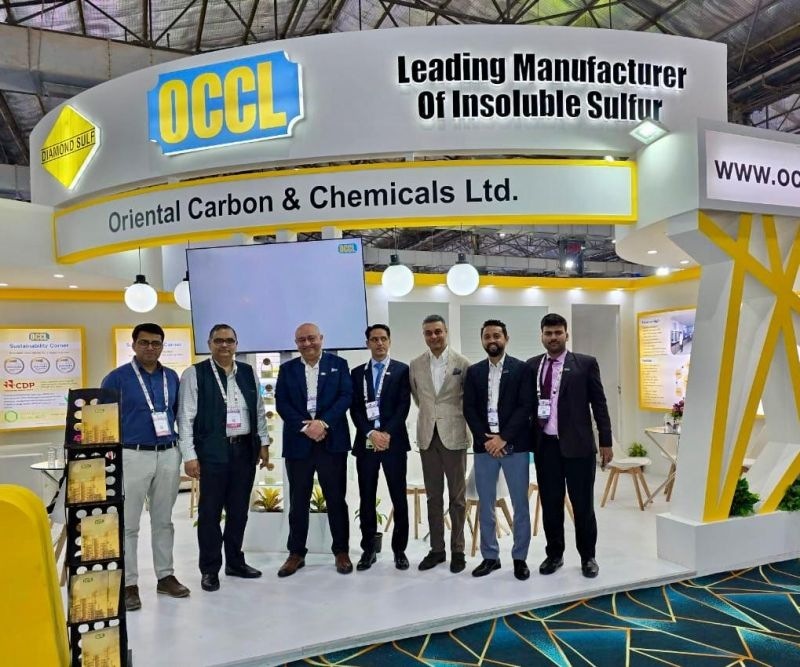
1. At a Glance
OCCL Ltd is that rare Indian listed chemical company which wakes up every morning and says: “Relax, I have no domestic competition.” Born in 2024 via a demerger, OCCL now stands on its own two sulphur-stained feet with a ₹470 Cr market cap, a stock price of ₹94, and a valuation that screams “I’m cheap but don’t rush.”
The company clocked ₹114 Cr in Q3 FY26 revenue, up 18.7% YoY, while PAT jumped 69.7% YoY to ₹8.9 Cr. Operating margins hover around 17–18%, which is respectable for a commodity-adjacent chemical business. Debt sits at ₹75 Cr, debt-to-equity at a comfortable 0.18, and interest coverage at 11×, meaning lenders are sleeping peacefully.
Valuations? P/E ~11.9×, EV/EBITDA ~6.25×, P/B ~1.15×. Dividend yield is 1.58%, because even monopoly chemicals like to pretend they’re FMCG sometimes.
But here’s the masala: OCCL is India’s only manufacturer of Insoluble Sulphur, with 55–60% domestic market share and about 10% global share. Add anti-dumping duty on China & Japan (June 2025), and suddenly margins smell better than sulphur usually does.
Sounds perfect? Wait. One product. One end-industry. Tyres. If the tyre gods sneeze, OCCL catches a cold. Curious already? Good. Keep reading.
2. Introduction – From Demerger Drama to Chemical Spotlight
OCCL didn’t IPO with drumrolls. It arrived via a corporate divorce. The parent company decided, “Chemicals deserve their own life,” and spun off the chemicals business into OCCL Ltd, while investments chilled out in AG Ventures Ltd.
This restructuring did two things instantly:
- OCCL became a pure-play insoluble sulphur company. No confusion, no conglomerate headache.
- Liquidity remained strong despite prepayment of long-term debt in Q1 FY25, which is management-speak for “We cleaned up before the guests arrived.”
Operationally, FY24 was basically a warm-up lap with a tiny loss of ~₹6 lakh. Real business kicked in from FY25 onwards. By FY26, OCCL is already throwing ₹39 Cr+ PAT on a TTM basis, which is impressive for a company that legally existed yesterday.
However, investors should pause and appreciate the irony: OCCL is both boringly
simple and strategically risky. Simple because it makes one main product exceptionally well. Risky because that same simplicity ties its fate tightly to tyre demand, rubber cycles, and auto sector mood swings.
So the big question: Is OCCL a future monopoly cash cow, or a one-product wonder praying for tyre cycles to stay friendly?
3. Business Model – WTF Do They Even Do?
Let’s explain OCCL to a lazy but smart investor.
Imagine a tyre manufacturer saying:
“I need rubber that won’t bloom sulphur all over my tyre and ruin strength.”
Enter Insoluble Sulphur.
OCCL manufactures insoluble sulphur under the brand DIAMOND SULF, which is used as a vulcanising agent in high-performance tyres. This isn’t optional chemistry. If you want radial tyres that don’t self-destruct under stress, you need this stuff.
Revenue mix:
- Insoluble Sulphur – ~86%
- Sulphuric Acid & Oleum – ~14%
Facilities:
- Dharuhera, Haryana (2 units)
- Mundra SEZ, Gujarat (1 unit)
Capacity:
- Insoluble sulphur: ~39,500 MTPA
- Sulphuric acid & oleum: ~88,000 MTPA
The real flex? OCCL is the only domestic manufacturer of insoluble sulphur in India. Imports historically came from China and Japan—until the government slapped anti-dumping duties in June 2025. That’s like locking the stadium gates when OCCL is already inside.
But remember:
One product + one industry = concentration risk.
If tyre demand slows, OCCL can’t suddenly pivot to shampoo or fertilizers. This is chemical tunnel vision—profitable, but narrow.
Would
