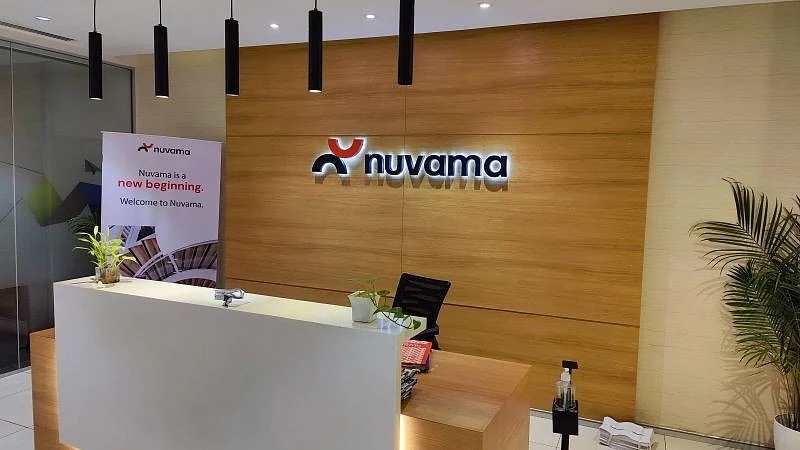
At a Glance – The Giants of Wealth and the Invisible Risks
Nuvama Wealth Management is currently riding a massive wave of Indian financialization, but do not let the shiny ₹4,52,548 crore in client assets distract you from the inherent volatility of this game. This is a business built on the confidence of the ultra-wealthy, and in the world of high finance, confidence is a fragile currency.
The company has successfully transitioned from being a demerged arm of Edelweiss to a standalone powerhouse backed by the private equity giant PAG. While the growth story looks compelling with a 5-year profit CAGR of 39%, the red flags are waving in the wind. Promoters have pledged a staggering 62.8% of their holding. In a market downturn, high pledging is a ticking time bomb that can trigger forced liquidations and crater the stock price.
Furthermore, the business model is increasingly leaning into lending. The loan book has surged to ₹11,544 crore. While this generates high-margin interest income, it exposes Nuvama to significant credit risk. They are essentially lending against volatile securities. If the market tanks, the collateral vanishes faster than a magician’s rabbit.
The transition to “Annual Recurring Revenue” (ARR) is the management’s shield against cyclicality, yet the Capital Markets segment—comprising Institutional Equities and Investment Banking—remains highly susceptible to market sentiment. A dry spell in IPOs or a drop in trading volumes directly hits the bottom line.
Nuvama is playing a high-stakes game of “full-stack” financial services, attempting to be the custodian, the advisor, and the lender all at once. It is a brilliant strategy for capturing the entire wallet share of an HNI, but it also means that a single systemic failure or regulatory crackdown could impact multiple revenue streams simultaneously.
Are the affluent clients sticking around because of superior tech, or is Nuvama just benefiting from a relentless bull market that makes everyone look like a genius?
Introduction – The Wealth Architect of New India
Nuvama Wealth Management Ltd, formerly the wealth management arm of Edelweiss, has emerged as a dominant force in the Indian financial landscape. Listing independently in late 2023, it has spent the last few years aggressively carving out a niche in the Affluent, HNI, and UHNI segments.
The company operates through a complex web of subsidiaries, providing everything from basic stockbroking to sophisticated estate planning and custodial services. With over 1.3 million affluent clients and more than 4,750 of India’s wealthiest families on its books, Nuvama is effectively a proxy for the growth of private wealth in India.
The presence of PAG, one of Asia’s largest alternative investment managers, as a majority shareholder (holding 54.13%) lends a layer of institutional credibility. However, the aggressive growth targets set by management require a constant influx of talent and technology, leading to rising operating expenses.
As the Indian economy formalizes, more physical assets (like gold and real estate) are being converted into financial assets. Nuvama is positioned at the very gate of this transition. They aren’t just selling stocks; they are selling a “full-stack” ecosystem where a client never has to leave the Nuvama umbrella for any financial need.
But in a sector where Relationship Managers (RMs) are the primary assets, the battle for talent is fierce. Nuvama is fighting high-cost wars to retain its top performers, and any mass exodus of RMs could lead to a massive flight of client assets.
Business Model – WTF Do They Even Do?
Nuvama is essentially a one-stop-shop for rich people who have more money than time. They operate four distinct verticals that feed into each other like a well-oiled financial predator.
1. Wealth Management: This is the bread and butter. They advise HNI and UHNI clients on where to park their cash. They charge fees for advice and commissions for products. If a client wants to buy a bespoke startup fund or a pre-IPO deal, Nuvama is the middleman taking a cut.
2. Asset Management: This is where they manufacture their own “alpha.” They run Alternative Investment Funds (AIFs) and Portfolio Management Schemes (PMS). They recently got into Commercial Real Estate (CRE) funds. They are the chefs in the kitchen, cooking up investment products to sell to the clients they already have in the wealth vertical.
3. Asset Services: Think of this as the “plumbing” of the stock market. They provide clearing and custody services for FIIs and large funds. It’s an unsexy, infrastructure-like business that provides stable, recurring fees regardless of whether the market is up or down.
4. Capital Markets: This is the high-adrenaline wing. They do Investment Banking (IPOs, M&A) and Institutional Equities (broking for big funds). It’s wildly profitable when the sun is shining but dries up the moment investors get scared.
In short, they manage your money, lend you more money to play with, store your assets, and help your company go public. They are the concierge of the 1%.
Financials Overview – The Hard Numbers
The latest results show a company that is successfully scaling its “annuity” style income while keeping its head above water in the volatile segments.
| Metric | Latest Quarter (Mar 2026) | Same Qtr Last Yr (Mar 2025) | YoY Change | Previous Qtr (Dec 2025) | QoQ Change |
|---|---|---|---|---|---|
| Revenue | ₹ 1,269 Cr | ₹ 1,120 Cr | +13.3% | ₹ 1,104 Cr | +14.9% |
| EBITDA | ₹ 629 Cr | ₹ 575 Cr | +9.4% | ₹ 607 Cr | +3.6% |
| PAT | ₹ 269 Cr | ₹ 255 Cr | +5.4% | ₹ 254 Cr | +5.9% |
| EPS (₹) | ₹ 14.79 | ₹ 14.20 | +4.1% | ₹ 13.96 | +5.9% |
Annualised EPS Calculation: Since this is the Q4 (March) result, we use the full-year EPS for the current period without annualization. FY26 Full Year EPS = ₹ 57.2
Management Walk the Talk: In previous concalls, management promised a shift toward “Managed Products and Investment Solutions” (MPIS) to drive recurring revenue. Looking at the data, MPIS revenue grew 38% YoY, now contributing 59% of total wealth revenue. Management successfully reduced reliance on one-time brokerage fees. They also promised to scale the Asset Management business; AUM there hit ₹12,807 crore, up 13%. They are delivering on the “recurring income” narrative.
Valuation Discussion – The Price of Prestige
To find the fair value of Nuvama, we must look at how the market prices “wealth platforms” versus traditional “brokers.”
1. P/E Method: The current P/E stands at 26.7x. The industry median is roughly 20.4x. Nuvama is trading at a premium due to its high ROE (27.4%) and its shift toward recurring fee income. FairValue(P/E)=EPS×TargetP/E ₹57.2×24=₹1,372 ₹57.2×28=₹1,601
2. EV/EBITDA Method: Nuvama has an Enterprise Value (EV) of ₹ 17,325 Cr and an annual EBITDA of approximately ₹ 2,441 Cr. EV/EBITDA=7.1x Applying a conservative multiple of 8x and an optimistic 10x: Range:₹1,510to₹1,850
3. DCF Method: Assuming a 15% growth rate for the next 5 years (moderating thereafter) and a discount rate of 12%: The DCF suggests a valuation range of ₹ 1,450 to ₹ 1,720.
Fair Value Range: Based on these metrics, the estimated fair value range for Nuvama Wealth Management is ₹ 1,400 to ₹ 1,750.
Disclaimer: This fair value range is for educational purposes only and is not investment advice.
What’s Cooking – Triggers and Drama
The biggest news in the Nuvama kitchen is the 1:5 Stock Split executed in late 2025. It’s the classic move to make the stock look “cheaper” to retail investors who can’t do basic math.
On the regulatory front, SEBI gave the green light for Nuvama to act as a Mutual Fund Sponsor. This is a massive trigger. It allows them to complete their “full-stack” dream by launching retail-friendly products under their own brand, potentially eating the lunch of established AMCs.
However, it hasn’t been all smooth sailing. The NSE slapped a subsidiary with a ₹1,00,000 fine for various compliance lapses. Then there’s the GST and Tax demand drama—the company had to cough up over ₹40 lakhs in taxes and interest for the 2021-22 period. It’s small change for a giant, but it shows the taxman is watching their complex inter-company transactions very closely.
Also, Nuvama is going global. They’ve opened an office in Dubai (DIFC) to target the NRI wealth pool. They are effectively following the money wherever it flies.
Balance Sheet – The Tower of Debt
Nuvama’s balance sheet is a testament to its aggressive lending strategy. You don’t manage ₹4.5 lakh crore in assets without getting your own hands dirty with some leverage.
| Component | Mar 2026 (₹ Cr) | Mar 2025 (₹ Cr) | Mar 2024 (₹ Cr) |
|---|---|---|---|
| Total Assets | 34,491 | 28,388 | 20,387 |
| Net Worth | 4,121 | 3,490 | 2,894 |
| Borrowings | 11,544 | 7,839 | 6,746 |
| Other Liabilities | 18,827 | 17,059 | 10,747 |
| Total Liabilities | 34,491 | 28,388 | 20,387 |
- Borrowings jumped by nearly ₹3,700 crore in one year. They are basically a bank in a broker’s clothing now.
- The Net Worth is growing, but it’s struggling to keep up with the exploding liability side.
- “Other Assets” at ₹33,844 crore is a giant black box of client receivables and margin funding.
Cash Flow – Sab Number Game Hai
The cash flow statement of a financial services company is always a wild ride. Nuvama is no exception.
| Activity | Mar 2026 (₹ Cr) | Mar 2025 (₹ Cr) | Mar 2024 (₹ Cr) |
|---|---|---|---|
| Operating CF | -3,014 | -371 | -1,658 |
| Investing CF | -128 | -63 | -79 |
| Financing CF | 3,181 | 601 | 1,316 |
Where is the money? It’s not in the bank. The negative Operating Cash Flow of ₹3,014 Cr tells you they are pumping massive amounts of capital into their lending book (Loans Against Shares).
Where did it go? Into the pockets of clients who want to leverage their portfolios.
Where did it come from? They are borrowing from the market (Financing CF of ₹3,181 Cr) to fund this expansion. This is a classic “spread” business. They borrow at X and lend at X+Y. As long as the market doesn’t crash, they win.
Ratios – Sexy or Stressy?
Let’s look at the vitals of this wealth engine.
| Ratio | Value | Judgement |
|---|---|---|
| ROE | 27.4% | Sexy. Management is squeezing high returns out of equity. |
| ROCE | 17.5% | Stressy. The massive debt is dragging down the overall capital efficiency. |
| P/E | 26.7 | Pricey but standard for high-growth wealth platforms. |
| PAT Margin | 22.5% | Very Sexy. Keeping 22.5% of revenue as pure profit is elite. |
| Debt to Equity | 2.80 | Stressy. That’s a lot of leverage for a non-bank. |
Witty Commentary: Nuvama is like a high-performance sports car running on high-octane debt. It’s fast and looks great, but don’t look too closely at the fuel gauge.
P&L Breakdown – Show Me the Money
Revenue is growing, but so are the expenses of keeping the rich happy.
| Metric | Mar 2026 (₹ Cr) | Mar 2025 (₹ Cr) | Mar 2024 (₹ Cr) |
|---|---|---|---|
| Revenue | 4,631 | 4,162 | 3,156 |
| EBITDA | 2,441 | 2,220 | 1,565 |
| PAT | 1,041 | 985 | 625 |
The operating profit margin (OPM) is hovering at 53%. Think about that. For every ₹100 they bring in, ₹53 is left after paying for RMs, offices, and fancy coffee for UHNIs. That is a brutal level of efficiency. However, the interest expense is ballooning—hitting ₹977 crore in FY26. They are paying a lot to the people they borrow from.
Peer Comparison – The Wealth Wars
Nuvama isn’t the only one trying to manage the wealth of the 1%.
| Company | Revenue (Qtr) | PAT (Qtr) | P/E | Market Cap (Cr) |
|---|---|---|---|---|
| 360 ONE (IIFL) | ₹ 1,115 Cr | ₹ 288 Cr | 36.4 | 44,334 |
| Nuvama Wealth | ₹ 1,269 Cr | ₹ 269 Cr | 26.7 | 27,752 |
| Angel One | ₹ 1,459 Cr | ₹ 320 Cr | 29.9 | 27,405 |
| Motilal Oswal | ₹ 2,676 Cr | -₹ 219 Cr | 27.3 | 5,118 |
Sarcastic Notes: 360 ONE is the undisputed prom king with a P/E of 36.4, making Nuvama look like a bargain basement option. Motilal Oswal is currently crying in the corner with a quarterly loss despite massive revenue. Nuvama is the steady middle-child—not as overvalued as 360 ONE, but much more profitable than the traditional brokers.
Miscellaneous – Promoters and The Pledging Ghost
The shareholding pattern is where the real story lives.
| Category | Latest Holding (%) |
|---|---|
| Promoters | 54.13% |
| FIIs | 16.94% |
| DIIs | 8.30% |
| Public | 20.62% |
Promoter Roast: PAG (through Pagac Ecstasy) is the big boss here. They are sophisticated, cold-blooded private equity players. They didn’t come here to play; they came to exit at a 5x multiple. But let’s talk about that 62.8% pledge. If the promoter needs to pledge that much, it usually means they are hungry for cash elsewhere. For an “independent” wealth manager, having your majority owner’s shares locked up with lenders is a bit ironic, isn’t it?
Corporate Governance – Angels or Devils?
Nuvama has assembled an “Avengers-style” board with a mix of veteran bankers and private equity hawks. Ashish Kehair (CEO) is a wealth management lifer, and having Shiv Sehgal lead the Capital Markets side shows they mean business.
However, the “Auditor” in me sees the fines and tax demands as a sign of an organization moving faster than its compliance team can handle. They’ve had to pay penalties for “securities non-receipt” and have been hit with GST orders multiple times.
While these are small relative to their ₹1,000 Cr profit, they suggest a culture of “move fast and break things.” In the world of wealth management, you really don’t want the people holding your money to be “breaking things.” The transition to the “New Labour Codes” also hit them with an 8-crore exceptional item.
Industry Roast and Macro Context
The Indian Wealth Management industry is currently a giant circle-jerk of Relationship Managers poaching each other’s clients. It’s a sector where “proprietary research” is often just a fancy way of saying “we all read the same Bloomberg terminal.”
The macro context is undeniably strong—India’s HNI population is expected to grow by 50% in the next five years. But the industry is facing “yield compression.” Clients are getting smarter and asking why they should pay 1% for a fund that underperforms a Nifty 50 Index fund that costs 0.1%.
Large banks like ICICI and Kotak are also waking up and realizing they shouldn’t let boutiques like Nuvama steal their best clients. The “Wealth Wars” are just beginning, and the cost of customer acquisition is going to skyrocket.
EduInvesting Verdict – The Balanced Wrap-up
Nuvama Wealth Management is a high-conviction play on the “Financialization of Savings” in India. They have successfully diversified their revenue streams so that they are no longer just a “broking” shop. The growth in Asset Management and the stability of Asset Services provide a solid floor.
However, the headwinds are real. The massive promoter pledge is a structural risk that cannot be ignored. The high debt-to-equity ratio means they are highly sensitive to interest rate hikes. If the cost of borrowing goes up, their lending margins get crushed.
SWOT Analysis:
- Strengths: Backing by PAG, dominant position in UHNI segment, high ROE, full-stack ecosystem.
- Weaknesses: High promoter pledge (62.8%), significant leverage, high dependence on Relationship Managers.
- Opportunities: New Mutual Fund license, expansion into NRI markets, AI-led productivity gains.
- Threats: Regulatory crackdowns on fee structures, aggressive competition from private banks, market downturn affecting AUM.
Nuvama is currently a “growth at a reasonable price” story, but only if you believe the Indian bull market has another five years of life in it. If the music stops, the leverage will be the first thing that breaks.
Do you think a wealth manager with 60% of its shares pledged is truly “stable,” or are we just ignoring the elephant in the room because the profits are so good?