01 — At a Glance
The Spindle King That Exports to Zara But Worries About Trump
- 52-Week High / Low₹427 / ₹295
- Q3 FY26 Revenue₹801 Cr
- Q3 FY26 PAT₹44.4 Cr
- TTM EPS₹29.63
- Annualised EPS (Q3 Avg × 4)₹31.60
- Book Value / Share₹244
- Price to Book1.60x
- Exports (% of revenue)61%
- ROCE13.2%
- Yarn Spread₹99/kg
Flash Summary: Nitin Spinners is the only publicly listed cotton yarn pure-play in India making Zara and H&M’s clothes. Q3 delivery was respectable: PAT of ₹44 crore, up 27.7% QoQ but flat -0.8% YoY. Exports are 61% of sales. They’re expanding by 20% in spinning and 88% in weaving. They’re throwing ₹230 crore at solar capacity to cut power costs. And they’re trading at 12.8x P/E — a 41% discount to the textile industry average. The question is: will the tariff cycle let them live long enough to finish the capex?
02 — Introduction
Bhilwara Meets H&M. What Could Go Wrong?
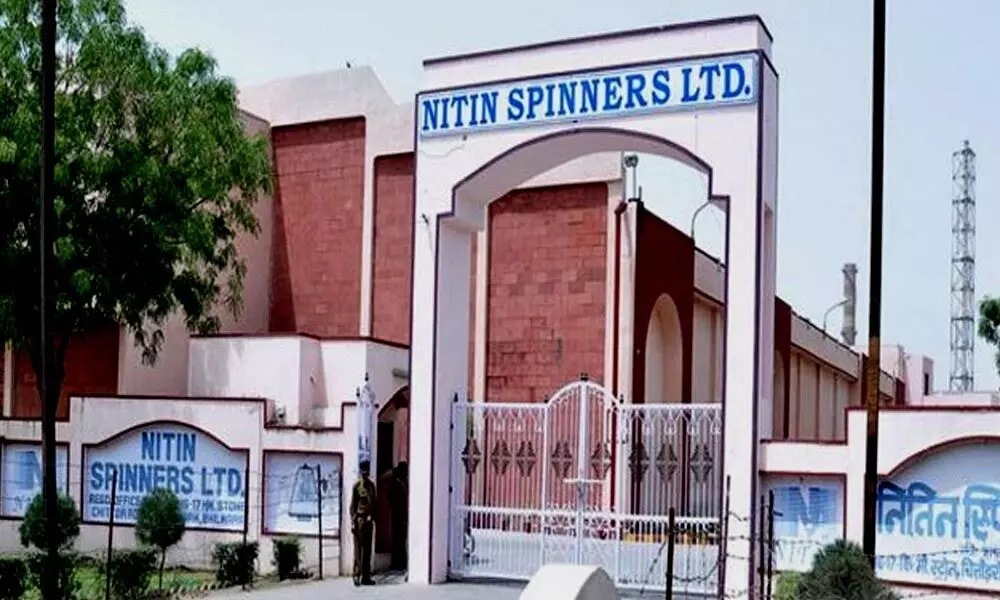
Let’s cut to the chase. Nitin Spinners is a 33-year-old company from Bhilwara, Rajasthan — a place where textile mills are older than Salman Khan’s acting career and twice as controversial. But here’s what makes them different: they actually export to global brands. Zara, H&M, United Colors of Benetton, Marco Polo — these aren’t names they saw on Instagram. These are their customers. In Q3 FY26, 61% of sales came from exports.
The company operates 434,832 spindles, 77 knitting machines, 222 air-jet looms, and 264 rotor positions spread across two plants in Bhilwara and Chittorgarh. They make yarn, knitted fabrics, and woven fabrics. In short: they take raw cotton, turn it into yarn at ₹250/kg, sell it at ₹250/kg (after a ₹99/kg spread that’s “reasonable” according to management), and export 61% of it. Rinse, repeat, pay dividends, and hope the government doesn’t mess with tariffs.
Q3 FY26 was a tale of two cities: revenue was flat YoY at ₹801 crore (down 4.5%), but PAT jumped 27.7% QoQ to ₹44.4 crore. Management blamed the YoY decline on “weaker demand and reduced selling prices” — corporate speak for “the world didn’t want our yarn as much as we hoped.” But QoQ? That was “stable demand and higher sales volumes.” Translation: January was better than September. Always a good sign when Q3 recovers after a weak Q2.
CARE Rating (July 2025): CARE A; Positive (upgraded from Stable). Credit rating agency says the company is solid, capex is manageable, and the merger story is one of structured expansion, not desperation. They expect revenue and profitability to remain “largely stable” in FY26 due to optimal utilisation, with incremental revenue of ₹350-400 crore expected from the new capacity in FY27.
03 — Business Model: WTF Do They Even Do?
They Spin Cotton Into Gold. And Then Pray the Price Doesn’t Drop 40%.
Nitin Spinners is a vertically integrated textile player. They source raw cotton (which costs ₹151/kg), spin it into yarn (which sells for ₹250/kg), then weave or knit it into fabric, and export 61% of everything to 55+ countries. The product mix is roughly 73% yarn, 5% knitted fabric, and 22% woven fabric (as of FY25). But here’s the kicker: they’re about to flip this mix. After the capex, woven fabric will become a much larger piece of the pie — moving from 65-35 to 50-50 ratio (yarn to fabric). Why? Because woven fabric has higher margins and more value addition.
The business model is simple and brutal: cotton prices fluctuate wildly. Raw cotton is 60-70% of their cost of production. If cotton goes up, spreads compress. If it goes down, they either make tons of money or are forced to hold inventory losses. In FY25, they reported a net foreign exchange gain of ₹22.74 crore — meaning forex helped more than it hurt. Their top 10 customers are 24% of revenue (relatively diversified), and they have CARE A credit rating, which means they’re not a scam but also not the strongest balance sheet in town.
Yarn Sales Mix73%of revenue
Woven Fabrics22%of revenue
Knitted Fabric5%of revenue
Export %61%of sales
Fun fact: Nitin Spinners has 434,832 spindles. Most of them are in Bhilwara, a place where textile mills are so densely packed that one mill’s pollution is another mill’s afternoon air quality report. But the company is building a shiny new facility in Chittorgarh with zero liquid discharge technology, solar power, and modern dyeing/printing equipment. It’s as if they looked at the old mills and said, “Let’s build something our kids won’t be ashamed of.”
04 — Financials Overview
Q3 FY26: Flat-ish Revenue. But PAT That Jumped Like a Kabali Dushman