1. At a Glance – Dry Fruits, Dry Valuation?
If you thought dry fruits are boring, NFP Sampoorna Foods Ltd is here to prove you wrong—with a ₹24.53 crore book-built IPO, a pre-IPO market cap of ₹69.49 crore, and margins that look fitter than a gym influencer on almonds.
The issue opens Feb 4–6, 2026, lists on NSE SME, and is 100% fresh issue—no promoter cashing out, only dilution for growth (or debt clean-up, we’ll get there). Price band is ₹52–₹55, face value ₹10, with a chunky lot size of 2,000. Retail entry? A spicy ₹2.20 lakh minimum. This is not a casual “one-lot-and-chill” IPO.
Financially, the company has shown consistent growth: PAT moved from ₹0.41 cr (FY23) to ₹2.67 cr (FY25) and ₹3.49 cr (11M FY26). EBITDA margin expanded to 18.01%, PAT margin to 9.46%. ROE sits at 28.21% (Nov’25). Sounds healthy. But then comes leverage: Debt/Equity 1.59. Oof.
So the big question—is this a premium dry fruits story priced like a premium FMCG, or a trader masquerading as a brand? Let’s peel the cashew.
2. Introduction – Nuts, Numbers & Narrative
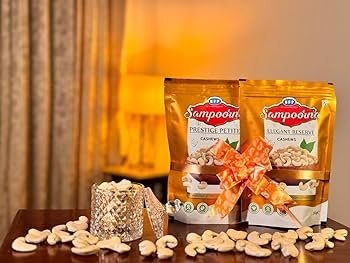
Founded in 2019, NFP Sampoorna Foods operates in a deceptively simple space: processing and trading premium dry fruits, with a heavy tilt towards cashews. The pitch is classic FMCG-meets-commodity: source raw material (cashew kernels imported largely from Africa), process with quality controls, package hygienically, and sell through offline + online channels.
The branding leans on quality certifications—ISO 9001:2015 and ISO 22000:2018—and a portfolio that screams festive gifting and health-conscious snacking. Cashews (W320, W400), almonds, makhana, and gift packs are the stars. Distribution spans Amazon, Flipkart, and the company website, alongside institutional buyers.
From a distance, the story is clean. Up close, it’s a working-capital-heavy, import-dependent, price-sensitive business that needs scale and brand pull to justify premium multiples. The IPO proceeds are telling: ₹7.25 cr for working capital and ₹9.5 cr for debt repayment. Translation? Growth needs cash, and balance sheet needs breathing room.
Before you cheer margins, ask yourself: can they hold these margins when cashew prices swing and competition discounts? Keep that thought.
3. Business Model – WTF Do They Even Do? (In Simple English)
NFP Sampoorna Foods is not growing nuts; it’s buying raw cashews, processing them, and selling finished dry fruit products. Think procure → process → pack → distribute.
- Procurement: Raw cashews are imported, primarily from Africa. This brings forex risk, supply risk, and price volatility.
- Processing: Cleaning, roasting (where applicable), grading (W320, W400), and packaging using modern tech to retain freshness.
- Product Mix:
- Cashews (core revenue driver)
- Almonds
- Makhana (Fox Nuts) – roasted/flavoured/plain
- Gift packs (seasonal margin boosters)
- Sales Channels: Offline distributors + online marketplaces (Amazon/Flipkart) + own website.
- Customers: Retail consumers and institutional buyers.
This is not asset-light SaaS, folks. Inventory sits heavy, cash cycles matter, and margins can evaporate if procurement goes wrong. The upside? Scale + branding can convert a trader into an FMCG-lite play. The downside? You’re one bad cashew season away from margin indigestion.
Would you call this a brand-first company or a margin-first trader? Comment section is open.
4. Financials Overview – Growth with a Side of Leverage
All figures in ₹ crore.
| Metric | Latest Period (11M FY26) | FY25 | FY24 | YoY Trend |
|---|---|---|---|---|
| Total Income | 36.96 | 35.76 | 23.31 | Strong |
| EBITDA | 6.64 | 4.69 | 2.17 | Expanding |
| PAT | 3.49 | 2.67 | 1.02 | Consistent |
| Assets | 44.02 | 27.03 | 16.68 | Ballooning |
| Net Worth | 15.70 | 9.02 | 11.48 | Improved |
| Borrowings | 24.94 | 11.36 | 18.90 | High |
Margins improved nicely—EBITDA margin 18.01%, PAT margin 9.46%. But borrowings jumped to ₹24.94 cr, pushing Debt/Equity to 1.59. That’s not fatal, but it’s uncomfortable for a commodity-linked business.
EPS & Valuation:
- Pre-IPO EPS: ₹3.27 → P/E ~16.8x at upper band
