MRP Agro Ltd Q2 FY26 Results: Grain Trader’s Rollercoaster — Revenue Down 34%, Profit Falls 49%, Yet ROE Still a Juicy 30%
1. At a Glance
If trading agro commodities was a Bollywood movie, MRP Agro Ltd (BSE: 543262) would be the overachiever hero who still manages to lose money in the short term but ends up with a massive fan base. The Madhya Pradesh-based trader of grains, coal, and fly ash has been juggling government licenses, dal mills, and even flour mill dreams — and it shows.
At a current market price of ₹95, the company flaunts a market cap of ₹105 crore, P/E of 14.9, and book value of ₹30.6, giving a price-to-book ratio of 3.1. That’s not cheap, but the business is debt-free — yes, zero borrowings — which is practically rare in SME land. The ROE of 30.3% and ROCE of 39.2% would make even big FMCG players blush.
Yet, all that glitters isn’t urad. The latest September 2025 quarter (Q2 FY26) saw sales drop 34% QoQ and profits shrink by 49%. While operating margins remain near 9.8%, the volatility shows this isn’t a calm grocery store — it’s a trading battleground.
No dividends yet (management clearly prefers expansion over celebration), and promoter holding has slipped from 72% to 65.7%, making investors wonder: is this capital infusion or quiet dilution? Either way, MRP Agro’s story is still cooking — or maybe grinding in its dal mill.
2. Introduction
MRP Agro is that small-town trader who decided not to stop at mandis. Born in 2018, this company has built itself around trading and processing agricultural commodities — with a dash of minerals on the side. Their business model screams B2B efficiency: buy from auctions, check quality, sell to wholesalers. No fancy marketing, no influencer collabs — just pure mandi math.
But like any smallcap drama, MRP Agro’s journey is filled with twists. The company’s revenues jumped from ₹43 crore in FY24 to ₹103 crore in FY25, a 140% leap that would make even FMCG veterans jealous. Its PAT rose to ₹7 crore, with an impressive profit growth of 202% YoY. For a company started barely seven years ago, that’s like turning a kirana store into a wholesale empire overnight.
Still, smallcaps are like Indian marriages — unpredictable and occasionally volatile. The latest quarterly results show cracks in consistency, with both sales and profits slipping sharply. Investors who thought the urad business was a smooth dal curry are now realizing it’s more like a pressure cooker.
But let’s be honest: who doesn’t love a smallcap that’s simultaneously volatile and profitable? MRP Agro has managed to stay debt-free, expand operations, and even plan a flour mill with a ₹19.87 crore capex, which got a ₹8 crore term loan sanctioned recently. Clearly, they’re thinking long-term — or at least long-grain.
3. Business Model – WTF Do They Even Do?
In simple terms, MRP Agro is your local mandi dealer that went corporate. They trade agro commodities, food grains, fly ash, and coal, balancing between farmers and wholesalers. It’s like a trading app, but instead of stocks, it’s pulses and ash.
Their B2B setup means they procure grains via auctions, do quality checks, and sell in bulk — mostly to wholesalers and distributors. They hold a mandi license in Tikamgarh, Madhya Pradesh, which is essential for grain procurement. And when they’re not trading dal, they’re also a registered mineral dealer in Jharkhand, handling fly ash and coal.
The company operates a urad dal mill with a processing capacity of 4 tons/hour and an annual production capacity of 3 lakh quintals. The facility is built on a 96,644 sq. ft. plot, with a 27,000 sq. ft. built-up processing unit. So yes, this isn’t a backyard channi operation — it’s industrial-scale dal business.
Their product range is focused on urad-based items:
Urad Gota (whole gram)
Urad Split Dal (skinned gram)
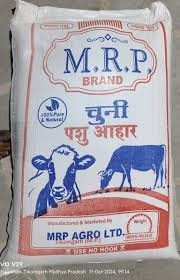
Urad Churi (cattle feed byproduct)
And because branding matters, MRP Agro also markets B2C products under fancy names like Janm Silver, Janm Gold, Black Diamond, and Sikka. If only “Janm Premium” came with stock price protection too.
Now, they’re expanding into flour milling and cold storage, aiming to vertically integrate and improve supply chain control. The upcoming flour mill (250 MT/day) and industrial cold storage facility are expected to be operational by March 2026, both eligible for government subsidies. Translation: lower capital costs, more efficiency, and more scope for “flourishing” puns in the next annual report.
Commentary: If quarterly results were like seasons of a Netflix show, this one was a filler episode. Revenue dropped 34% YoY and nearly halved QoQ — which means someone pressed pause on sales. PAT fell 49% YoY, proving that volatility in agro trading can turn a bumper crop into a burnt toast real quick.
Still, margins above 9% and zero debt keep the balance intact. The company’s annualised EPS of ₹1.32 gives a trailing P/E of ~72, but on full-year FY25 EPS of ₹6.63, it’s a more modest P/E of ~15, perfectly in line with the industry median (15.2).
5. Valuation Discussion – Fair Value Range Only
Method 1: P/E Multiple Method Industry P/E = 15.2 Company EPS (FY25) = ₹6.64 → Fair Value = ₹6.64 × 15.2 = ₹101