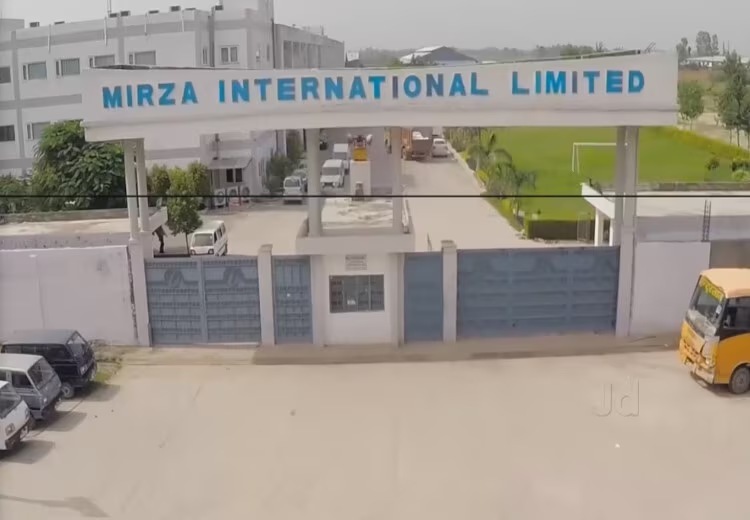
1. At a Glance
Mirza International is one of those companies that looks fashionable from outside — Red Tape shoes, athleisure, global presence — but once you open the financial cupboard, a few skeletons politely wave back. As of early February 2026, the company sits at a market cap of ~₹522 crore with the stock hovering around ₹37–38. Book value is ₹34.8, so yes, the market is valuing Mirza barely above its liquidation diary.
Latest quarterly numbers (Q3 FY26) were not kind. Revenue came in at ~₹107 crore, down ~6% YoY, while PAT clocked a loss of ₹7.83 crore. ROCE is a microscopic 0.64%, ROE is negative, and interest coverage is sitting at a worrying 0.54. Promoters, however, are calm — holding ~73% and even increasing stake slightly.
So the obvious question: Is the market missing a turnaround, or is this a leather jacket that’s lost its shine?
2. Introduction
Mirza International has been around since 1979 — older than many of today’s “new age” brands that burn VC cash for Instagram followers. The company built its reputation on leather, shoes, and exports, later turning Red Tape into a recognisable brand across India and overseas.
But legacy can be a blessing and a curse. Over the last decade, Mirza has slowly slipped from being a high-margin leather exporter to a low-ROCE, inventory-heavy consumer company. Revenues have been shrinking, margins compressed, and capital efficiency has fallen off a cliff.
The big strategic event — the demerger of the branded business into Redtape Limited — was meant to unlock value. Instead, Mirza International today looks like the “leftover” entity trying to rediscover relevance.
So what exactly is left inside Mirza now, and does it deserve attention beyond nostalgia?
3. Business Model
— WTF Do They Even Do?
Mirza operates across three divisions:
- Tannery Division – Converts raw hides into finished leather. Capital intensive, environmentally sensitive, and cyclically painful.
- Shoe Division – Manufactures finished leather footwear, largely export-oriented.
- Garments & Accessories Division – Trading-led business with thinner margins.
Historically, footwear contributed ~60% of revenue, garments ~33%, and tannery ~7%. Exports still account for ~31% of sales, with domestic markets forming the rest.
The problem? This is a vertically integrated model that sounds powerful but demands high working capital, stable demand, and pricing power — all three currently missing.
Explaining Mirza to a lazy investor:
“They make shoes, leather, and apparel… but mostly they manage inventories, working capital cycles, and hope demand comes back.”
4. Financials Overview (Quarterly Results)
Quarterly Comparison (Standalone, ₹ Crore)
| Metric | Latest Qtr (Q3 FY26) | YoY Qtr | Prev Qtr | YoY % | QoQ % |
|---|---|---|---|---|---|
| Revenue | 107.27 | 114.16 | 169.56 | -6.0% | -36.7% |
| EBITDA | -1.83 | 0.78 | 14.56 | NA | NA |
| PAT | -7.83 | -7.37 | 3.99 | -6.2% | NA |
| EPS (₹) | -0.57 | -0.53 | 0.29 | NA | NA |
Annualised EPS (Q3 rule):
Average EPS of Q1–Q3 FY26 ≈ (1.28 + 0.29 – 0.57) / 3 ≈ 0.33
Annualised EPS ≈ ₹1.3
Witty takeaway:
One bad quarter is forgivable. Three mixed quarters and one faceplant? That’s a trend wearing a disguise.
5. Valuation
