1. At a Glance – The “Suspended, Delisted, Returned” Saga
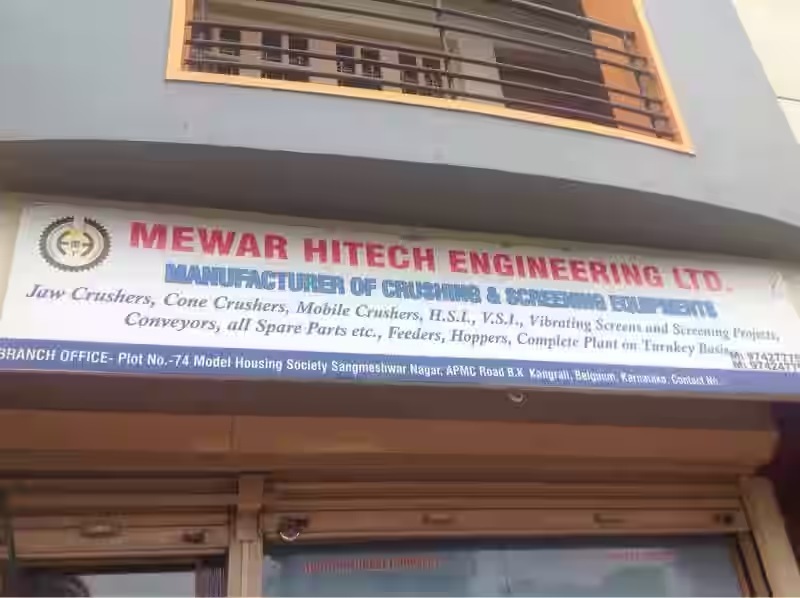
Mewar Hi-Tech Engineering Ltd is one of those SME stocks that feels like it has lived three lifetimes in one decade. Incorporated in 2006, manufacturing crushers and screening equipment in Udaipur, it spent years quietly supplying machines to cement, mining, and infra players, then suddenly found itself suspended on the BSE SME platform in August 2022, slapped with a delisting order in July 2024, and then—plot twist—back in action by December 27, 2024. As of now, the company trades around ₹84 with a market cap of roughly ₹33 crore, a stock P/E of about 10.7, and a book value near ₹30.4. ROE stands at an eye-popping 27.9%, ROCE at 18.5%, and operating margins around 14.4%. In the last three months, the stock is up about 18%, while six-month returns hover near 10%. Latest half-year numbers show revenue of ₹15.78 crore and PAT of ₹0.25 crore. It’s small, leveraged, slightly bruised—but very much alive. Curious already? Good. You should be.
2. Introduction – A Comeback Story with a Rajasthan Accent
If Indian SME stocks were Bollywood characters, Mewar Hi-Tech Engineering would be the gritty supporting actor who disappears for half the movie and then shows up in the climax with a redemption arc. The company has been around since 2006, building crushers, feeders, screens, and conveyors under the “Kingson” brand. This is not a flashy SaaS story or a consumer brand you can Instagram. This is heavy iron, dust, and quarry economics.
The interesting part isn’t just what they make; it’s what they survived. Suspension from trading in 2022, a delisting order in July 2024, and then reinstatement by December 2024 is not exactly a smooth investor-relations journey. Many companies never come back from that. Mewar did. That alone makes it worth reading beyond the headline ratios.
Financially, the business has oscillated. There were years of low margins, years of losses (FY22 was particularly ugly), and then a steady recovery through FY23, FY24, and FY25. Profit growth over the last three years sits above 37%, and trailing twelve-month profit growth is a dramatic 166%. That number looks insane until you realize the base was depressed earlier.
So the real question becomes: is this a cyclical bounce from a beaten-down base, or is there a structurally better business emerging from the dust? Let’s open the file and play detective.
3. Business Model – WTF Do They Even Do?
Mewar Hi-Tech Engineering does one thing, and it does it with brute force: it manufactures crushing, screening, and size-reduction equipment. If you’ve ever seen a stone crusher plant on a highway project or a mining site, that’s their world.
Supporting Equipment: Sand washers and belt conveyors.
All of this is manufactured at their Sukher, Udaipur facility and sold under the Kingson brand. This is capital-goods manufacturing, not trading. Revenue in FY24 came ~95% from supplies of finished goods, with small contributions from job work and trading.
Clients include names like Aditya Birla Group, Shree Cement, SAIL, Jindal Steel & Power, RITES, and MOIL. That client list quietly tells you something important: these machines get used only if infra, mining, and cement capex is happening.
Geographically, revenue is overwhelmingly domestic (99%), with exports barely 1%. There was an overseas project in Tanzania, but this is clearly not an export-led story yet.
So the business model is simple, cyclical, and brutally dependent on infra spending. The moat? Brand recognition in a niche, long relationships, and installed-base servicing potential. The risk? Debt, working capital, and capex cycles. Does that excite you or scare you?
4. Financials Overview – Numbers That Tell a Recovery Story
Important lock-in note: The latest official announcement clearly states “Half Yearly Results” for the period ended 30 September 2025. Hence, EPS annualisation is done by multiplying the latest EPS by 2, not 4.
Half-Yearly Comparison Table (Figures in ₹ Crores, EPS in ₹)
Metric
Latest H1 FY26
H1 FY25 (YoY)
H2 FY25 (Prev)
YoY %
QoQ %
Revenue
15.78
18.82
33.46
-16.2%
-52.8%
EBITDA
1.95
1.27
5.15
53.5%
-62.1%
PAT
0.25
-0.43
2.84
Turnaround
-91.2%
EPS (₹)
0.64
-1.10
7.28
Turnaround
-91.2%
Annualised EPS (Half-Yearly) = ₹0.64 × 2 = ₹1.28
Now let’s talk like adults. Revenue is down YoY and sharply lower versus the immediately preceding half, because H2 FY25 was unusually strong. But profitability has turned positive again versus last year’s loss. Margins remain double-digit at the operating level. This is not linear growth—it’s cyclical recovery with volatility.
Question for you: would you prefer boring linear growth or wild cyclicality with operating leverage?
5. Valuation Discussion – Playing with Ranges, Not Promises