1. At a Glance
Mangalam Cement is that old-school Birla group company which shows up quietly, does its job, and then suddenly reminds you why cement stocks are never boring. Q3 FY26 came in with ₹421 crore revenue, PAT of ₹11 crore, and EPS of ₹4.13 — not fireworks, but not a blackout either.
Market cap sits at ₹2,154 crore, stock price around ₹783, and valuation at 26.5x P/E, which is neither cheap cement nor premium concrete — more like “designer cement bag pricing”.
Returns?
- 3 months: +1.8% (blink and you missed it)
- 6 months: +6.9%
- 1 year: -9.7% (ouch)
- 3 years: +42% (long-term patience rewarded, short-term punished)
Margins are still fragile with OPM ~11%, ROCE 9.9%, and ROE 5.7% — numbers that won’t impress Shree Cement but won’t embarrass you at a family dinner either.
So what is Mangalam today?
A regional cement player with Birla pedigree, decent assets, improving quarterly profitability, and a balance sheet that still sweats under debt. Curious enough? Good. Let’s dig.
2. Introduction
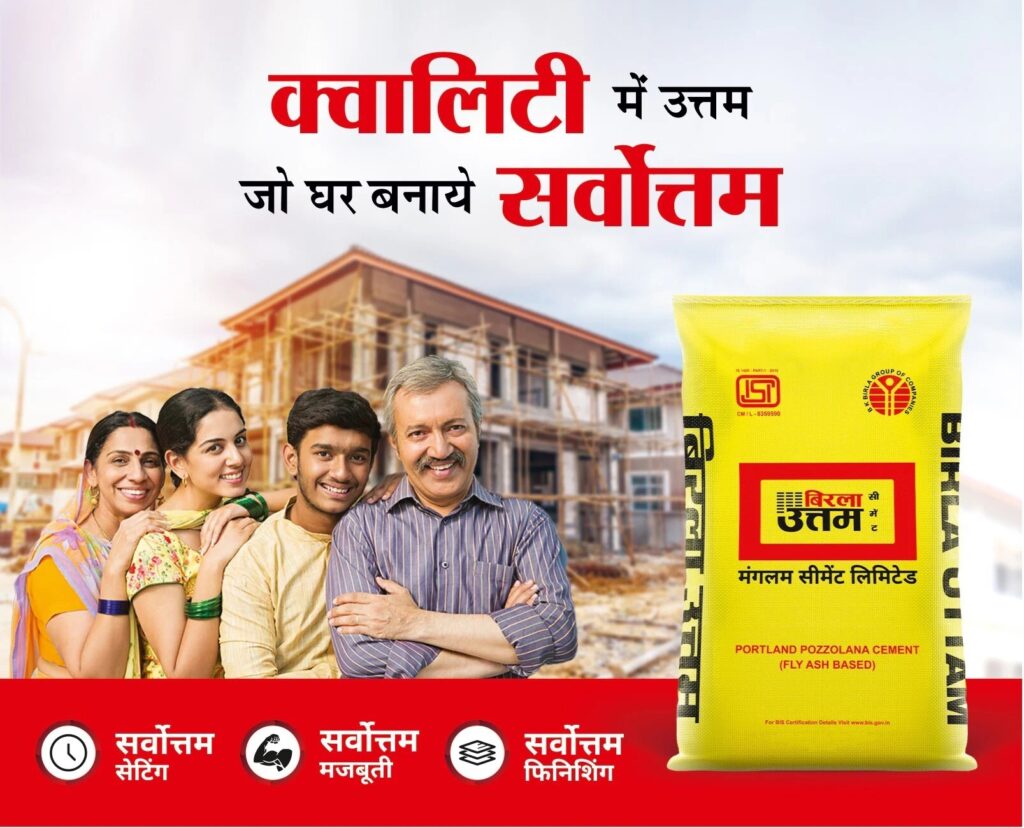
Mangalam Cement was incorporated in 1976, when cement plants were built with ambition, land was cheap, and nobody talked about ESG slides. Fast forward to today, and Mangalam operates two plants — Morak in Rajasthan and Aligarh in Uttar Pradesh — selling cement under the Birla Uttam brand.
The company is professionally run and currently managed by Smt. Vidula Jalan, part of the B.K. Birla lineage. That heritage gives credibility, but markets don’t pay for surnames anymore — they pay for margins and cash flow.
Mangalam’s story over the last decade has been… uneven. Sales growth has been steady-ish, profits have been cyclical, and returns on capital have mostly stayed in the “average student” zone.
But Q3 FY26 showed something interesting:
- QoQ profitability jump
- Better operating leverage
- EPS recovery after a weak Q2
The question investors should ask is simple:
Is this just another cement
cycle bounce, or is Mangalam quietly fixing its structural issues?
Let’s see what they actually do before answering that.
3. Business Model – WTF Do They Even Do?
Mangalam Cement does exactly what its name suggests. No fintech, no AI, no D2C snacks. Just cement, clinker, and power optimisation.
Products
- Ordinary Portland Cement (OPC)
- Pozzolana Portland Cement (PPC)
- Clinker
All sold under the Birla Uttam brand — a strong regional name, especially in North and Central India.
Manufacturing Muscle
- Cement capacity: 44 lakh MTPA
- Clinker capacity: 27 lakh MTPA
Plants are strategically located:
- Morak, Rajasthan
- Aligarh, Uttar Pradesh
Sales Geography
- Uttar Pradesh: 43%
- Rajasthan: 32%
- Madhya Pradesh: 18%
- Delhi & others: balance
This is a regional cement player, not a pan-India juggernaut. That means:
- Lower freight advantages locally
- Limited pricing power nationally
- But better brand recall in core markets
Power & Cost Control
This is where Mangalam actually flexes:
- 35 MW captive thermal power
- 11 MW waste heat recovery
- 14 MW wind power
Between captive coal, WHRS, and renewables, Mangalam has insulated itself reasonably well from power cost shocks — a big deal in cement.
So the business model is simple, heavy, and capital-intensive. No magic. Only execution matters.
4. Financials Overview
Quarterly Performance Table (₹ Crore)
| Metric | Latest Qtr (Dec-25) | YoY Qtr (Dec-24) | Prev Qtr (Sep-25) | YoY % | QoQ % |
|---|---|---|---|---|---|
| Revenue | 421 | 438 | 395 | -3.9% | +6.6% |
| EBITDA | 45 | 43 | 43 | +4.7% | +4.7% |
| PAT | 11 | 8 | 20 | +37.5% | -45% |
| EPS (₹) | 4.13 | 2.84 | 7.31 | +45% | -43% |
