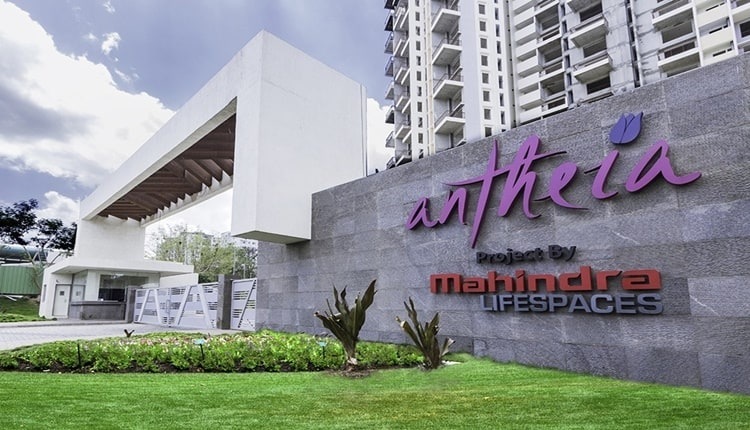
1. At a Glance – Blink and You’ll Miss the Plot
Mahindra Lifespace Developers Ltd (MLDL) currently trades at ₹383, carrying a market cap of ₹8,212 crore—which sounds respectable until you notice it’s sitting in a sector where peers throw around five-digit market caps like Diwali sweets. The stock is up ~4.7% today, down ~6.5% over 3 months, and basically flat over a year. In short: not exactly a moonshot, not a horror show either.
Q3 FY26 numbers look spicy on the surface: quarterly sales jumped 174% YoY to ₹459 crore, while PAT exploded 488% YoY to ₹109 crore. Sounds like a blockbuster comeback, right? Hold your confetti. A big chunk of profits continues to come from other income (₹107 crore in the quarter; ₹475 crore TTM)—which is accountant-speak for “not from selling houses.” Meanwhile, ROE and ROCE hover around a sleepy ~2%, which is… awkward for a capital-intensive real estate developer in the middle of a property upcycle.
So yes, Mahindra Lifespace is reporting strong headline numbers, but the underlying engine still feels like it’s warming up while peers are already doing donuts in the parking lot.
2. Introduction – Mahindra Naam, Real Estate Ka Kaam
Mahindra Lifespace was incorporated in 1999 and carries the unmistakable halo of the Mahindra Group. That surname alone buys it credibility, cheaper capital, and patient institutional investors. The business spans premium housing, value homes (Happinest), and a rather unique niche—Integrated Cities & Industrial Clusters (IC&IC) under Mahindra World City and Origins by Mahindra.
In theory, this is a dream combo: cyclical residential real estate + annuity-style industrial land leasing + strong brand trust. In practice, the numbers over the last decade tell a more uneven story. Sales CAGR over 10 years: -10%. Profit CAGR over 10 years: -17%. That’s not a typo—that’s a real estate developer shrinking over a decade when India’s urban population has been doing the opposite.
Things did start improving post-FY22, with sharper focus on Mumbai, Pune, Bengaluru, and industrial clusters. FY25 and FY26 numbers finally show life. But the
key question remains:
Is this a structural turnaround—or just one very good quarter powered by other income and accounting fireworks?
3. Business Model – WTF Do They Even Do?
Let’s simplify this without MBA jargon.
1) Residential Development (99% of H1 FY25 revenue):
This includes:
- Premium housing in metros (Mumbai, Pune, Bengaluru, Chennai, NCR)
- Value housing under Mahindra Happinest
- Society redevelopment projects (Mumbai specialty)
They typically follow a capital-light-ish JV model, partnering with landowners and financial investors (Actis, HDFC Capital) to limit balance sheet stress. Good idea, but execution matters.
2) Integrated Cities & Industrial Clusters (IC&IC):
This is the crown jewel nobody talks about enough:
- Mahindra World City (Chennai & Jaipur)
- Origins Chennai, and upcoming Ahmedabad industrial cluster
These projects lease land to global manufacturers. In H1 FY25 alone, 34.9 acres were leased to 13 clients for ₹163 crore. This segment is slower but far more stable and less Bollywood than residential real estate.
3) Commercial Leasing (1% revenue):
Rental income from Delhi offices. Frankly, this is pocket change.
So the business model is solid on paper. The problem historically hasn’t been what they do—it’s been how profitably and consistently they do it.
4. Financials Overview – Numbers That Need Therapy
| Metric | Latest Qtr (Q3 FY26) | YoY Qtr | Prev Qtr | YoY % | QoQ % |
|---|---|---|---|---|---|
| Revenue (₹ Cr) | 459 | 167 | 18 | 174% | Massive |
| EBITDA (₹ Cr) | 30 | -25 | -52 | NA | Turned + |
| PAT (₹ Cr) | 109 | -22 | 48 | 488% | 127% |
| EPS (₹) | 5.10 | -1.05 | 2.25 | NA | 127% |
Annualised EPS (Q3 rule):
Average of Q1, Q2, Q3 EPS
