01 — At a Glance
The Fertiliser Play That Exploded When Everyone Was Looking Elsewhere
- Q3 Revenue₹612.4 Cr
- Q3 EBITDA₹66.5 Cr
- Q3 PAT₹31.8 Cr
- Q3 EPS₹3.62
- Annualised EPS (Q3×4)₹14.48
- 9M FY26 Revenue₹1,472 Cr
- 9M FY26 PAT₹90.4 Cr
- 9M FY26 EPS₹10.32
- ROCE18%
- Book Value₹52.3
The Big Picture: MBAPL just printed its highest-ever quarterly revenue at ₹612 crore — a 116% jump YoY. Nine months into FY26, the company has already racked up ₹1,472 crore in sales (93% YoY growth) and ₹90.4 crore in PAT (109% growth). The P/E of 37.7x is screaming valuation caution, but the business momentum is genuine. Management is now guiding FY27 revenue to grow by MORE than 50% thanks to Dhule plant commissioning. New capacity. Old brand. Fertiliser tailwinds. Recipe for fireworks — or recipe for disappointment? Let’s find out.
02 — Introduction
How a Madhya Pradesh Fertiliser Company Became a Crypto-Bro-Level Growth Story
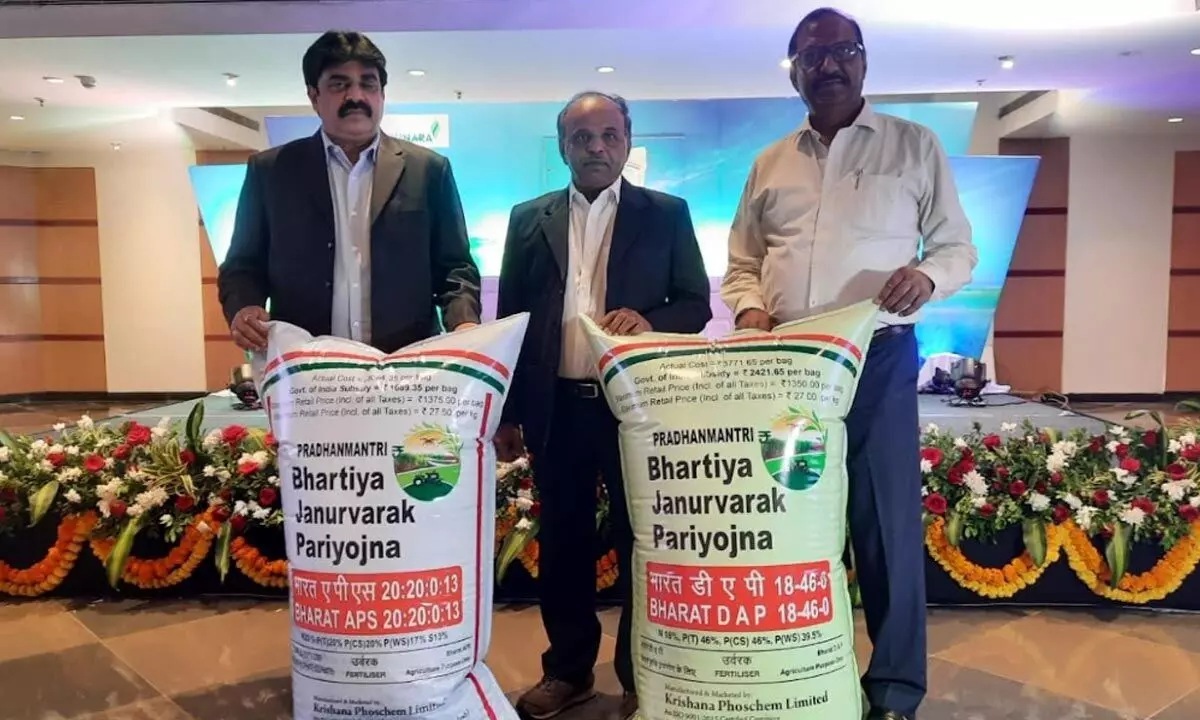
Let’s talk about MBAPL. Not a household name unless your household is a farm. And if your household is a farm, then MBAPL’s “Annadata” SSP and “Bharat” NPK brands are probably sitting in your storage shed right now, slowly feeding your soil and simultaneously printing money for the Ostwal family.
The company isn’t new. It’s been around since 1997. But it was sleepy — a small regional phosphatic fertiliser player with zero glamour and zero velocity. Then something happened around 2023-24: Government subsidy policy stabilised. Domestic fertiliser demand picked up. And someone (let’s call it brilliant capital allocation) decided to buy into the thesis that India needed more domestic phosphatic fertiliser capacity.
Fast forward to Q3 FY26: ₹612 crore revenue in a single quarter. That’s not startup noise. That’s mid-cap momentum on steroids. The Ostwal Group, which also owns the parent company Ostwal Phoschem (OPIL, rated A+/Stable by CRISIL), is now executing a ₹1,000+ crore capex plan to build what could become India’s fourth-largest complex fertiliser player by FY27. No blockchain. No IPO bubble. Just fertiliser, backward integration, and an audacious bet on agricultural demand.
The concall on January 12, 2026 confirmed what the numbers whispered: the Dhule facility in Maharashtra will come online in H1 FY27 with 3.3 lakh MT of DAP/NPK capacity, plus backward integration into phosphoric acid and sulphuric acid. Management even dropped specifics: “trial production sometime in July, commercial production from October.” That’s not guidance — that’s a commitment.
The Reality Check: A 37.7x P/E means MBAPL is trading at 2.3x the sector median of 15.6x. High for a non-hypergrowth fertiliser play? Yes. Justified by 50%+ FY27 revenue guidance and capacity scale-up? Maybe. The stock has already run 48.4% in the past year. Do you buy into the thesis, or wait for a pullback?
03 — Business Model: WTF Do They Even Do?
Fertiliser: The Unglamorous, Unsexy, Absolutely Essential Business
MBAPL manufactures two things: Single Super Phosphate (SSP) and DAP/NPK (diammonium phosphate / nitrogen-phosphorus-potassium complexes). That’s it. That’s the product line. No AI. No sustainability pivot. No “platform play.” Just phosphate molecules that farmers spray into soil to grow food.
Current capacity: 240,000 MTPA of SSP and 240,000 MTPA of DAP/NPK. Operating capacity: 115% (they’re running hot). Future capacity (post-Dhule, FY27): 570,000 MTPA of DAP/NPK alone. The math works like this: more farmers → more fertiliser demand → more MBAPL revenue → more profits → more expansion → more capacity → repeat.
Backward integration is the moat. They’re not just mixing chemicals; they’re controlling inputs. Phosphoric acid? Making it in-house (expanding to 181,500 MTPA by FY27). Sulphuric acid? In-house (expanding to 363,000 MTPA). Rock phosphate beneficiation? In-house with a long-term supply agreement from Jordan Phosphate Mines. This is not a commodity trader. This is a vertically integrated manufacturer.
Distribution reach: 2,500+ wholesalers/dealers and 30,000+ retailers. Government subsidy cycles? Understood. Farmer cash flow? Monitored. Agricultural seasons? Baked into the business plan. The concall emphasised this repeatedly: “distribution discipline” has improved due to government enforcement against black-marketing, meaning Annadata and Bharat brands are moving faster through official channels.
SSP Capacity240K MTExpanding
NPK Capacity240K MT→ 570K MT
Distribution30K+Retailers
Utilisation115%Peak Load
Strategic Misdirection Alert: Management controls one NPK grade (20:20:0:13) in-house but faces demand for other grades. Solution? Import and resell. This is why Q3 saw ₹280 crore of trading revenue out of ₹612 crore total. Great for absolute revenue numbers. Terrible for consolidated EBITDA margins (13% vs 13-15% for manufacturing). We’ll circle back to this.
💬 Real question: Do you think imports are temporary market-seeding until Dhule opens, or a permanent feature of MBAPL’s model? Margins ride on the answer.
04 — Financials Overview
Q3 FY26: The Numbers That Made Everyone Sit Up
Result type: Quarterly Results | Q3 FY26 EPS: ₹3.62 | Annualised EPS (Q3×4): ₹14.48 | 9M FY26 EPS: ₹10.32
| Metric (₹ Cr) |
Q3 FY26
Dec 2025 |
Q3 FY25
Dec 2024 |
Q2 FY26
Sep 2025 |
YoY % |
QoQ % |
| Revenue | 612.4 | 284 | 450 | +115.9% | +36.1% |
| EBITDA | 66.5 | 39.4 | 62 | +68.8% | +7.3% |
| EBITDA Margin % | 11% | 14% | 14% | -300 bps | -300 bps |
| PAT | 31.8 | 17.9 | 30.5 | +77.7% | +4.3% |
| EPS (₹) | 3.62 | 2.04 | 3.48 | +77.5% | +4.0% |
The Margin Compression Story: Revenue is up 116%, PAT is up 78%, but EBITDA margin collapsed from 14% to 11% YoY. Why? Trading volumes with low margins (2.5–6% EBITDA on imports). Management explicitly acknowledged: imported fertilizer carries 2.5–6% EBITDA vs 13–15% for manufacturing. Q3 saw ₹280 crore of trading volume out of ₹612 crore total revenue. Do the math: more trading = higher absolute profits but lower percentages. FY27 guidance of 50%+ revenue growth will depend heavily on how much Dhule capacity comes online vs continued trading reliance. This matters for valuation.
05 — Valuation: Fair Value Range
What’s Fair When Growth Is Exploding But Margins Are Contracting?
Method 1: P/E Based
9M FY26 EPS ₹10.32. Full-year FY26 EPS estimated ~₹13-14 (9M extrapolated + Q4 seasonality). Sector median P/E: 15.6x. MBAPL justified premium for growth trajectory: 1.8x–2.2x sector. Fair P/E band: 28x–34x.
Range: ₹364 – ₹476
Method 2: EV/EBITDA Based
9M FY26 EBITDA ₹185.4 Cr. Annualised FY26 EBITDA: ~₹240–250 Cr (assuming normal Q4 seasonality). Enterprise Value at CMP: ₹4,237 Cr. Current EV/EBITDA: 17.5x. Peers trade 12x–18x depending on growth. MBAPL’s 50%+ FY27 growth justifies 16x–20x. Debt ₹312 Cr.
EBITDA range (16x–20x) on ₹250 Cr: ₹4,000–5,000 Cr EV → Equity Value:
Range: ₹372 – ₹537
Method 3: DCF Based
FY26E EBITDA ₹250 Cr → FCF ~₹80-100 Cr (after capex of ~₹434 Cr partly debt-funded). Growth: 25–30% for 3 years (Dhule ramp-up), normalising to 8–10% thereafter. WACC: 10.5%.
→ PV of 3-year FCFs at 10.5%: ~₹220 Cr
→ Terminal Value (8% growth / 9.5% cap rate): ~₹3,100 Cr
→ Total EV: ~₹3,320 Cr (Debt ₹312 Cr)
Range: ₹325 – ₹480
Fair Min: ₹325
CMP: ₹451
Fair Max: ₹537
⚠️ EduInvesting Fair Value Range: ₹325 – ₹537. CMP ₹451 sits comfortably in the middle. The range is wide because execution risk on Dhule, subsidy timing, and trading mix are all unresolved variables. This fair value range is for educational purposes only and is not investment advice.
06 — What’s Cooking: News, Triggers & Drama
The Dhule Plant. The Green Ammonia Deal. The Expansion Machine Firing.