01 — At a Glance
The Humble Forging Shop That Supply Trucks, Not Scoops
- 52-Week High / Low₹501 / ₹276
- Q3 FY26 Revenue₹414 Cr
- Q3 FY26 PAT₹18 Cr (Down 34%)
- TTM EPS₹17.93
- Annualised EPS (Q3 Avg × 4)₹14.56
- Book Value / Share₹192
- Price to Book2.19x
- Capacity Installed145,000 MTPA
- Capacity Utilization~67%
- Return over 3-Months12.9%
Flash Summary: MM Forgings just reported Q3 PAT of ₹18 crore—down 34% YoY. US truck exports cratered from 16-17% of sales to just 9%. But management’s Q3 concall revealed the chaos story: a 50-60% potential usage capacity gap, a ₹16,500-ton press being commissioned (“just after Q1”), and a conviction that FY27 can deliver 20% growth. The stock is trading at 23.2x P/E, has returned 12.9% in three months, and is backed by a promoter still convinced they’re a ₹10,000-crore company in waiting. Reality check: not yet.
02 — Introduction
A 79-Year Journey: From Royal Enfield Bikes to 150,000-Ton Forging Dreams
Let’s set the scene. In 1946, MM Forgings was retailing Royal Enfield motorcycles. In 1974, they got bored of bikes and opened a steel forging plant in Tamil Nadu. In 1990, they finally ditched the bike business and said, “Let’s just make heavy metal things for trucks instead.” That’s it. That’s the company story. No pivot drama, no IPO hype, just a quiet 50-year climb into becoming one of India’s largest forging houses.
Today, MM Forgings manufactures steel forgings in raw, semi-machined, and fully machined stages. Think of them as the supply chain nerds who make the crankshafts, front axle beams, and steering arms that keep Indian commercial vehicles (CVs) moving. Commercial vehicles are 81% of their revenue. Passenger vehicles are 10%. Everything else—tractors, oil field equipment, off-highway—is 9%.
The installed capacity is 145,000 metric tons per annum (MTPA). They’re running at 67% utilization. Management just went on record saying they’re operating at 50-60% of their actual potential. Do you see the mismatch? There’s capacity. There’s capability. There’s execution lag. That’s the Q3 story right there.
Concall Insight (Mar 2026): Management admitted point-blank: “we are at about 50-60% of our potential… can do 40% more… capability to do double.” Translation: the business is walking on crutches when it should be sprinting. The 16,500-ton press is supposed to fix this. Expected commission: “just after Q1” (their words), with internal target of June, but “could slip to July, August.” No such thing as a “on-time capex commission” in India, apparently.
03 — Business Model: WTF Do They Even Do?
They Pound Steel Into Shapes. It’s Boring. It’s Profitable. It’s Cyclical as Hell.
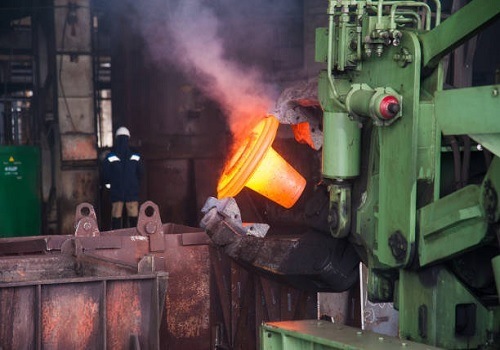
MM Forgings takes raw steel billets, heats them to 1,200°C, and pounds them into forgings using massive presses (largest now 16,500 tons). Each part starts raw, then gets semi-machined, then fully machined in their in-house machine shops. The result: a crankshaft for a truck, a front axle beam, a steering arm—parts that carry multi-ton loads and need zero tolerance for defects.
Their manufacturing plants are spread across Tamil Nadu and Uttar Pradesh. Ten plants total. With in-house tool rooms and machining units. They’ve also installed 35 MW of wind capacity and 3 MW of solar panels to power their furnaces—a ESG flex that everyone clapped for, and management is now cashing in on as a ₹15 crore per annum “green power savings” story.
The business model is capital-intensive capex, cyclical demand, tight margins, and heavy customer concentration. Top 10 customers are 58% of revenue. Most customers are big: Tata Motors, Ashok Leyland, Bharat Heavy Electricals. One customer cuts orders, you’re in trouble. The US market collapsing from 16% to 9% of sales in one fiscal year proves this point. When global truck demand hiccupped, MM got hiccupped.
CV Components81%of revenue
Domestic Sales63%FY24
Export Sales37%FY24
Installed Capacity145,000MTPA
Management flagged one weird problem during the concall: “one manufacturing unit was almost dictating terms of the customer” which caused delivery lags. Translation: they had a plant manager with an attitude problem who was slowing down customer orders. In April, they fired the attitude and “by July onwards, we have changed the paradigm… parts well before they want them.” So yeah, sometimes your own plants are the bottleneck.
04 — Financials Overview
Q3 FY26: The US Hangover Is Real