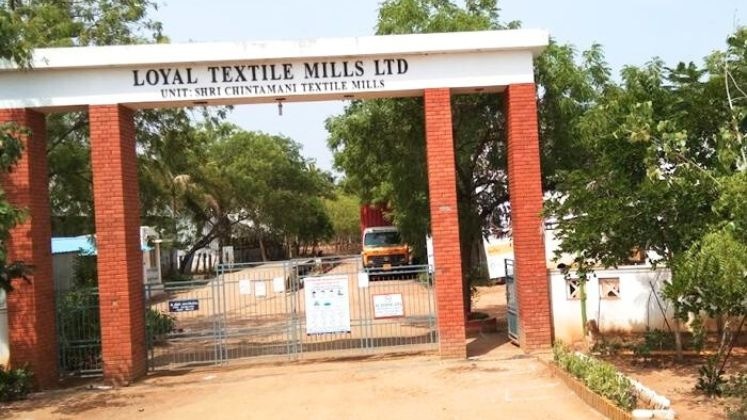
Loyal Textile Mills Ltd Q2 FY2025 – The Once Royal Fabric Giant Now Stitching Together Survival Threads!
1. At a Glance
Once a textile royalty from Tamil Nadu’s spinning heartland, Loyal Textile Mills Ltd (LTM) — with a lineage stretching back to 1946 — now feels more like a nostalgia stock than a thriving manufacturer. The stock trades at ₹212, a deep discount to its book value of ₹501 (a mere 0.42x P/B — basically cheaper than its own machinery scrap value). With a market cap of ₹102 crore, the company’s size now matches a mid-tier Mumbai boutique’s annual rent bill.
The latest Q2 FY2025 numbers weren’t a fashion show either — sales at ₹106.5 crore, down a brutal 42.5% YoY, while PAT stood at a loss of ₹9.66 crore despite some “exceptional income” magic of ₹10.72 crore. The return on equity is an alarming -40.4%, proving that the company is working hard to destroy shareholder value.
But wait — it’s not all threadbare. The promoters still hold 73.5%, windmills still hum with 46 MW capacity, and 75% of the yarn still goes into their own fabric and garments division. The bad news? The company seems to be running out of “captive” everything except losses.
2. Introduction
There was a time when Loyal Textile Mills was the talk of Tirunelveli — known for its fully integrated textile operations spanning spinning, weaving, knitting, garments, and even energy generation. Today, it’s more of a case study on how even the most vertically integrated setups can spiral downwards faster than a power loom on overdrive.
While global textile majors rode the post-COVID export boom, Loyal somehow managed to trip over its own yarn. Despite exporting to the USA, Europe, and the Middle East — where it earns around 70-80% of its revenue — the numbers have been unraveling faster than a cheap polyester blend.
What went wrong? Rising raw material prices, energy costs, and sluggish global demand have punched holes in the company’s balance sheet. Meanwhile, management has been busy restructuring, selling off windmill units worth ₹73.8 crore, and seeking oxygen from cost-cutting measures.
To add drama, multiple subsidiaries abroad were dissolved or shut down, including Loyal Dimco Group (Greece) and Loyal Textiles (UK). Seems like “global expansion” didn’t quite go as planned — unless the plan was to close shop in multiple time zones.
3. Business Model – WTF Do They Even Do?
Let’s decode this old-school textile beast.
Loyal Textile Mills does everything from growing cotton (indirectly) to spinning it into yarn, weaving it into fabric, stitching it into garments, and then exporting the finished product — a full “farm-to-fashion” model. But with recent results, it feels more like a “farm-to-forget” cycle.
Product lines include:
Yarn: White, melange, and specialty yarns — the bread and butter of the mill.
Fabrics: Cotton, polyester, viscose, and blends that are as diverse as their financial outcomes.
Garments: From corporate uniforms to hospital and protective wear — basically, they can dress you for your 9-to-5, your surgery, and your apocalypse.
Home Textiles: Bags, table covers, and other soft furnishings.
Organic Textiles: They’re Global Organic Textile Standard (GOTS) certified — because even when you’re losing money, you can still save the planet.
The business operates through four major spinning mills across Tamil Nadu and Andhra Pradesh, capable of producing 85,000 kg of yarn per day. Around 75% of this is used in-house, proving self-reliance can be expensive when your internal customers are broke too.
4. Financials Overview
Let’s get into the Q2 FY2025 details — where numbers scream louder than any loom.
Metric
Latest Qtr (Sep 25)
YoY Qtr (Sep 24)
Prev Qtr (Jun 25)
YoY %
QoQ %
Revenue
₹106.54 Cr
₹185 Cr
₹135 Cr
-42.5%
-21.1%
EBITDA
₹-7 Cr
₹-37 Cr
₹-20 Cr
81.1% (less loss)
65.0%
PAT
₹-9.66 Cr
₹-51 Cr
₹-17 Cr
81.1%
43.1%
EPS (₹)
-23.5
-105.3
-35.3
77.7%
33.4%
The revenue collapse tells a story of shrinking demand and export fatigue. But the silver lining? Losses are less negative. Management will probably call that “stabilization.”
Operating margin at -6% still hurts, but compared to last year’s double-digit red zone, this is like graduating from ICU to general ward.
5. Valuation Discussion – Fair Value Range (Educational Purpose Only)
Method 1: P/E Based (Not that it has ‘E’) EPS (TTM): ₹ -31.6 → P/E is technically meaningless. If we normalize to its historic average earnings (₹50 EPS pre-FY2022 meltdown) and apply an industry PE of ~20: Fair Value = ₹50 × 20 = ₹1,000 (Educational fantasy).
Method 2: EV/EBITDA Enterprise Value = ₹407 Cr EBITDA (TTM) = ₹ -61 Cr → EV/EBITDA = -6.6x (yes, negative). Even adjusting for normalized EBITDA of ₹100 Cr (historic average), Fair Value Range (EV/EBITDA 6–8x) → ₹600–₹800 Cr → per share ₹1,200–₹1,600.
Method 3: DCF Approach If we assume a modest recovery to ₹30 Cr PAT by FY2028 (a miracle), discount rate 12%, and zero growth terminal: DCF Value ≈ ₹350–₹400 Cr total equity value (~₹700–₹800/share).
✅ Educational Fair Value Range: ₹700–₹1,000/share (Disclaimer: This range is purely educational, not investment advice. Actual investors, please carry a fire extinguisher.)
6. What’s Cooking – News, Triggers, Drama
2025 has been eventful — for all the wrong reasons.
CFO Resignations: Between June and November 2024, two CFOs quit faster