1. At a Glance – Blink and You’ll Miss the Margins
Let’s start with the headline circus. Lakshmi Electrical Control Systems Ltd is sitting at a market cap of ~₹187 Cr, trading around ₹760, down ~13% in 3 months and ~26% over 1 year. Sales for the trailing twelve months stand at ₹227 Cr, while PAT politely whispers at ₹2.7 Cr. That’s not a typo — margins are thinner than a Coimbatore dosa paper.
Despite being almost debt-free (D/E ~0.05) and trading at 0.68× book value, the stock still demands a 68× P/E, which is… ambitious, given ROE of ~1–2% and ROCE ~2–3%. Q3 FY26 didn’t help sentiment either: revenue ~₹58.4 Cr, PAT loss ~₹1.05 Cr, and operating margins went negative.
And yet, this is a Lakshmi Group company, with ~80% revenue dependency on LMW, steady dividends, and decades of operating history. Safe? Maybe. Exciting? That depends on how much thrill you get from stability with zero drama. Curious yet?
2. Introduction – The Comfort Zone Company
Lakshmi Electrical Control Systems (LECS) is the kind of company your conservative uncle loves. Incorporated in 1981, part of the legendary Lakshmi Group, headquartered in Coimbatore, and deeply embedded in India’s textile machinery ecosystem.
The core idea is simple: build control panels and electrical systems that make textile machines actually work. And since Lakshmi Machine Works (LMW) is one of India’s biggest textile machinery giants, LECS became its in-house electrical brain. Over time, plastics, cable harnesses, toolrooms, drives, and even smart meters joined the party.
But here’s the twist:
- Revenue stability comes from the parent.
- Growth limitations also come from the parent.
LECS has survived four decades, paid dividends consistently, and avoided balance-sheet disasters. But in recent years, profitability has slipped, margins collapsed, and ROE has gone on a long vacation. Is this a temporary textile cycle hangover, or
structural complacency from being too comfortable? Let’s dig.
3. Business Model – WTF Do They Even Do?
Think of LECS as the electrical nervous system supplier for machines.
Core buckets:
- Control Panels (Electricals – ~88% FY24 revenue)
- Power Control Centres
- Motor Control Centres
- Automation & PLC–VFD Panels
- Textile machine-specific panels
These are mission-critical components — no panel, no machine movement.
- Engineering Plastics (~11%)
- Insert moulding
- Textile & automobile plastic parts
- Electrical and machinery components
- Commercial Toolroom
- High-cavitation moulds
- Insert & over-moulding
- Some die-casting exposure
- Others (Tiny but fashionable)
- Smart energy meters
- Drives & power supply units
- Wind power generation (~1%)
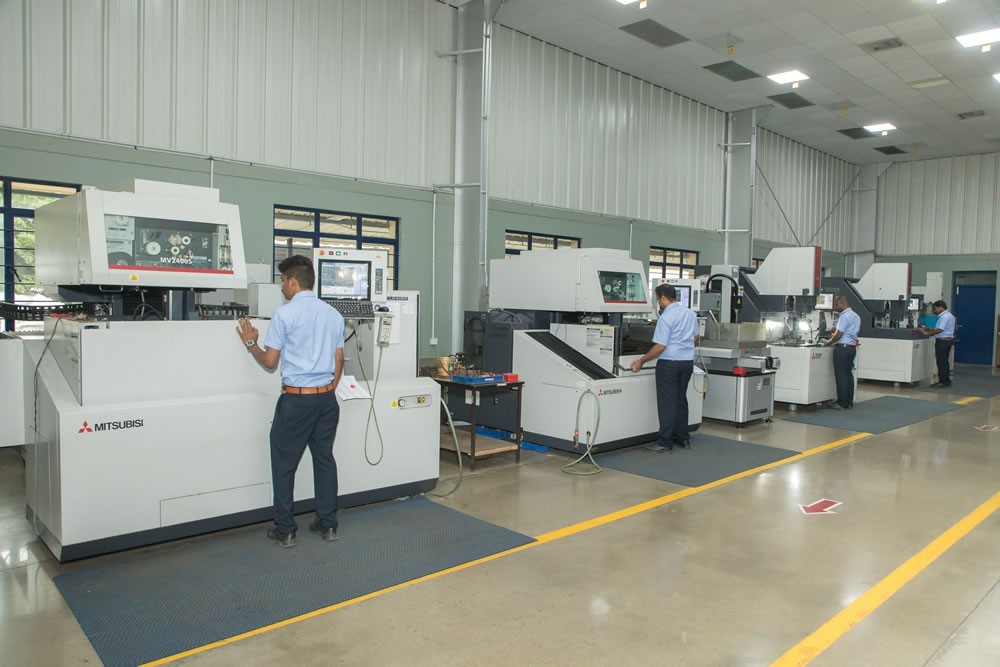
Manufacturing is done across two facilities in Coimbatore, employing ~410 people, servicing 120+ customers. Sounds diversified? On paper yes. In reality, LMW dominates demand. Comfort zone or concentration risk — pick your poison.
4. Financials Overview – Numbers Don’t Lie, But They Do Judge
Quarterly Comparison (₹ Cr, standalone)
| Metric | Latest Q3 FY26 | Q3 FY25 | Q2 FY26 | YoY % | QoQ % |
|---|---|---|---|---|---|
| Revenue | 58.4 | 49.4 | 58.3 | +18.3% | ~0% |
| EBITDA | -1.15 | 0.20 | 0.46 | ↓ | ↓ |
| PAT | -1.05 | 0.13 | 0.48 | -892% | ↓ |
| EPS (₹) | -4.27 | 0.53 | 1.95 | ↓ | ↓ |
Annualised EPS (Q3 rule):
Average of Q1–Q3 FY26 EPS × 4 ≈ low single digit, effectively negligible.
Commentary:
Revenue grew, but profits faceplanted. Costs rose faster than discipline. Other income saved optics earlier, but operating performance is now naked. Should shareholders worry… or just sip filter
