1. At a Glance
₹375 crore market cap. Stock price ₹74.7. Down ~15% in three months, ~41% in one year. And yet—ROCE at a spicy 24.5%, ROE at 18.7%, almost debt-free, and trading at just ~11.5× earnings while the FMCG/edible oil space flirts with 20–60× like it’s a Bollywood item number.
Kriti Nutrients Ltd is one of those classic “boring but profitable” businesses. Soybean crushing, refined edible oils, protein products, lecithin—basically everything that smells like Central India’s agro-industrial belt. Q3 FY26 (Dec 2025) delivered ₹224.3 crore revenue with ₹9.21 crore PAT, YoY sales up ~30% and profits up ~12%. Margins aren’t glamorous, but they’re consistent enough to keep bankers bored and shareholders mildly interested.
The market, however, seems unimpressed. Maybe because this is not a brand-led FMCG darling. Maybe because edible oil is a cyclical, commodity-heavy business. Or maybe because Kriti Nutrients doesn’t shout—just quietly crushes soybeans and prints cash. So, is this value… or value trap? Let’s open the files.
2. Introduction
Kriti Nutrients is what happens when a regional agro-processing business decides not to play startup games. Incorporated in 1992, long before “plant-based protein” became a LinkedIn buzzword, the company has been extracting soybeans, refining oils, and selling protein derivatives while the rest of us were still figuring out what ROCE means.
Part of the Kriti Group, KNL operates largely under the radar. No influencer marketing. No ESG buzz bombs. No “strategic transformation roadmap” slides. Just factories in Dewas, Madhya Pradesh, crushing soybeans, refining oils, and shipping products to FMCG giants, pharma majors, and food processors.
This is a business where margins are thin, volumes matter, and working capital discipline is religion. One wrong bet on soybean prices or oil spreads and profits vanish faster than mutual fund SIP discipline in a bull market. Yet Kriti Nutrients has survived multiple commodity cycles, reduced debt to near-zero, and maintained double-digit ROE over long periods.
But here’s the catch: stock price performance has been… underwhelming. Five-year CAGR barely crosses 10%. One-year return is ugly. So the big question—is the market missing something, or is the market right and this is just a decent business stuck in a boring box?
3. Business Model –
WTF Do They Even Do?
Imagine explaining Kriti Nutrients to a lazy investor friend:
“They buy soybeans, crush them, extract oil, sell the oil, sell the leftover protein, and try not to screw up margins.”
That’s it. But let’s add some colour.
Core Segments
Edible Oils (78% of FY23 revenue):
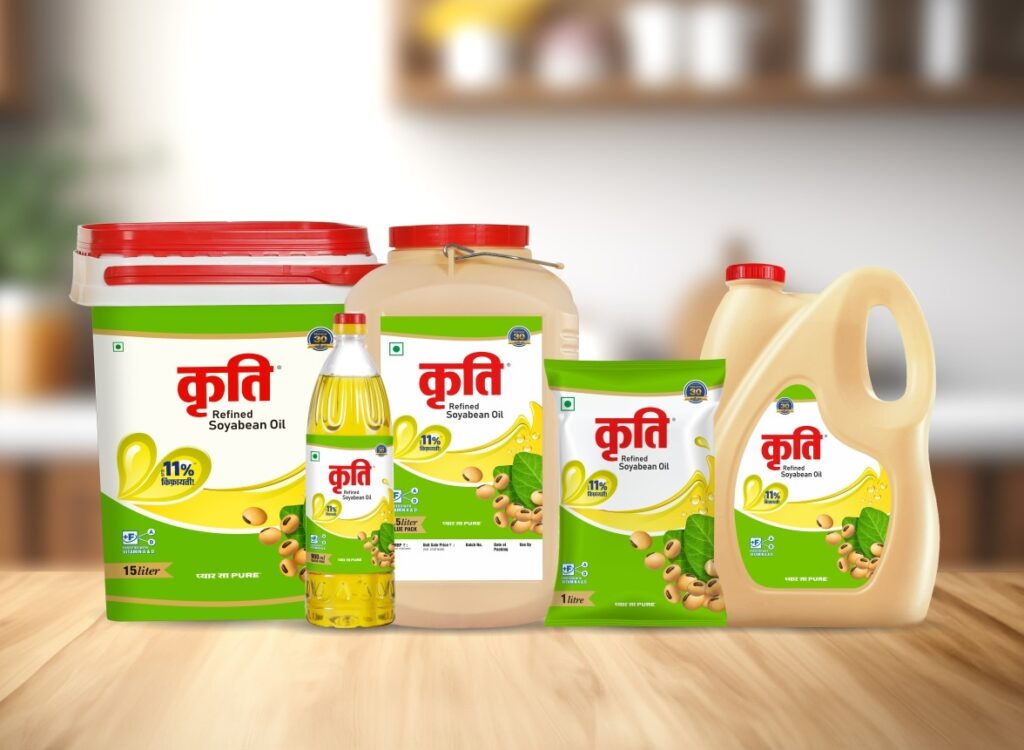
Refined soybean oil is the bread-and-butter. Add sunflower, mustard, and groundnut oils, mostly sold under the Kriti brand in Central India. This is a low-margin, high-volume game where procurement efficiency matters more than fancy branding.
Non-Oil Products (22% of FY23 revenue):
This is where things get interesting:
- Soya Protein & TVP (used in food, aqua feed, poultry)
- Soya Lecithin (pharma, infant food, dairy—yes, baby food margins are better than cooking oil)
- Defatted flakes, hulls, acid oil
These value-added products are the margin stabilisers when oil spreads misbehave.
Manufacturing Setup
One integrated complex in Dewas:
- 700 TPD soybean crushing
- 225 TPD refinery
- Lecithin plant, effluent treatment, packaging—full jugaad, end-to-end
Certified with FSSC, ISO 9001, ISO 22000. Basically, regulators won’t yell at them.
Distribution
- 200+ dealers
- ~20,000 retail outlets
- Stronghold in Central India, expansion focus on Gujarat, Maharashtra, Rajasthan
Exports contribute ~13% of revenue—enough to diversify, not enough to give currency traders heart attacks.
4. Financials Overview
Quarterly Performance Table (₹ crore)
| Metric | Latest Qtr (Dec’25) | YoY Qtr (Dec’24) | Prev Qtr (Sep’25) | YoY % | QoQ % |
|---|---|---|---|---|---|
| Revenue | 224.31 | 172.92 | 212.93 | 29.7% | 5.3% |
| EBITDA | 11.50 | 11.06 | 11.24 | 4.0% | 2.3% |
| PAT | 9.21 | 8.25 | 9.23 | 11.6% | -0.2% |
| EPS (₹) | 1.84 | 1.65 | 1.84 | 11.6% | 0.0% |
Commentary:
Sales growth looks fantastic because commodity prices cooperated. Margins didn’t expand much—welcome to edible oil reality. PAT
